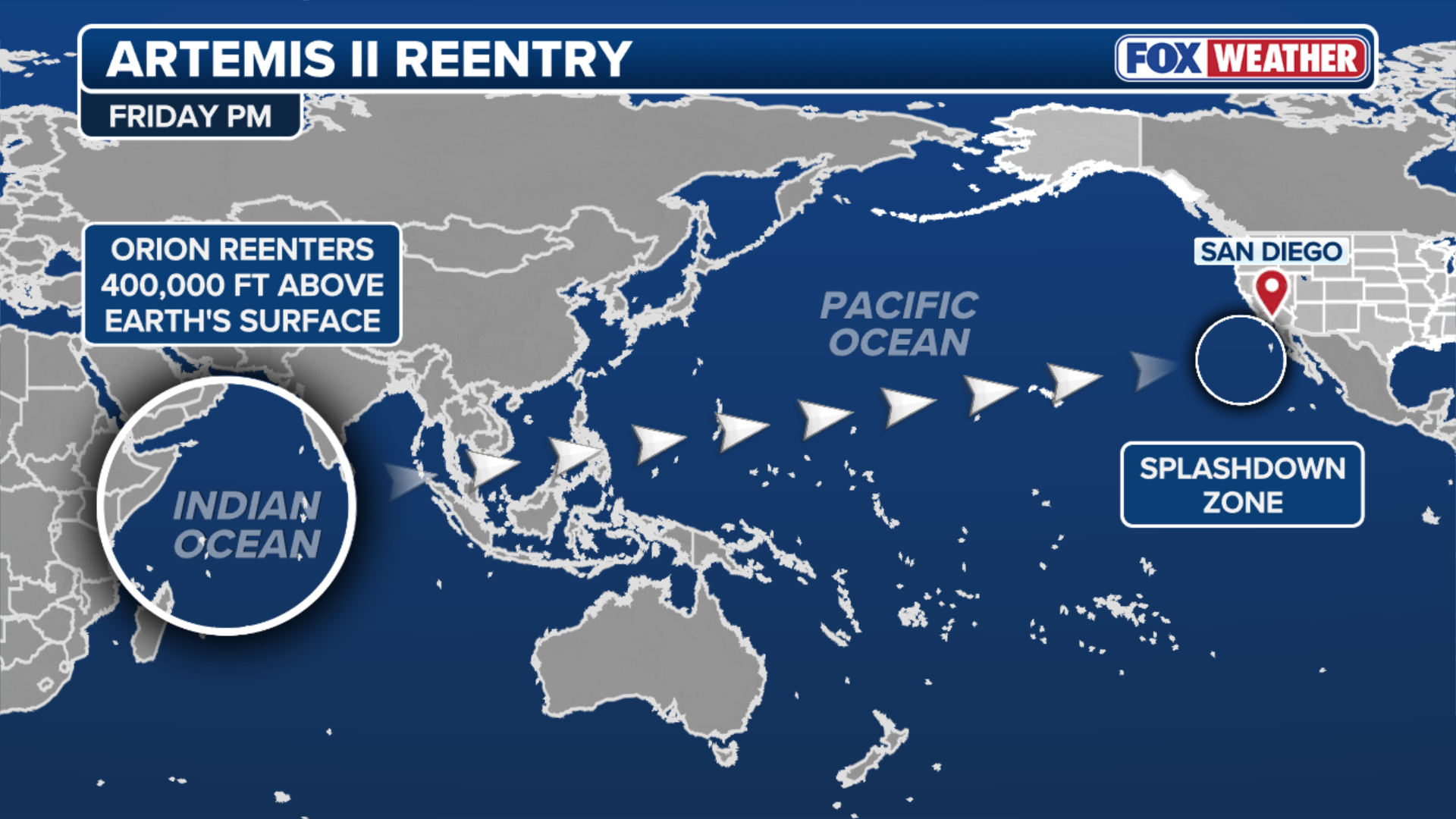
Artemis Ii is making the journey back to Earth, where the Orion spacecraft is planned to splashdown in the Pacific Ocean off the coast of San Diego. However, in order to splashdown, three criteria have to be met, and the forecast shows rain could impede plans.
i eAs Artemis II gets nearer to Earth by the minute, so does the final phase of the mission: splashdown. In order to splash down in the Pacific Ocean off the coast of California, weather conditions have to be just right.
NASA plans to have the Orion spacecraft splashdown off the coast of San Diego at 5:07 p.m. PT, 10 days after the mission launched to go to the moon.
They will re-enter Earth’s atmosphere in the Indian Ocean and make its way over to the Pacific where it will splash down.
(FOX Weather)
In order for Artemis II to splashdown, NASA has strict weather rules in place for the splashdown site:
- There cannot be precipitation or thunderstorms within 35 miles (30 nautical miles).
- Significant wave height should be less than six feet.
- Winds under 29 mph (25 knots)
ARTEMIS II’S SAFE RETURN HINGES ON ITS HEAT SHIELD – NASA IS CONFIDENT IT’S FIXED
The FOX Forecast Center is monitoring the upcoming weather to see if Artemis II will, in fact, make its splashdown at the planned location.
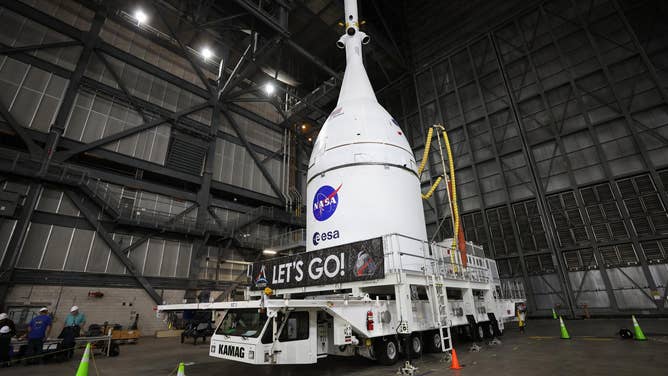
FILE: Technicians with NASA’s Exploration Ground Systems team prepare for integration to attach the agency’s Orion spacecraft on top of the SLS (Space Launch System) rocket in High Bay 3 of the Vehicle Assembly Building at NASA’s Kennedy Space Center in Florida on Friday, Oct. 17, 2025, for the agency’s Artemis II mission.
(NASA/Amber Jean Notvest / NASA)
The Pacific Ocean near San Diego is usually fairly calm, not seeing many strong weather systems, the FOX Forecast Center said.
On Friday, a system could bring some rain showers over the ocean.

(FOX Weather)
The FOX Forecast Center said if any rain falls within 35 miles of the splashdown location, NASA will need to find a new place to have Artemis II splash down.
Winds in the area will be stronger higher up in the atmosphere, but the FOX Forecast Center said they should be fairly light.
Wave heights are also not expected to be a big concern for the splashdown and recovery mission.
A similar situation happened with Artemis I’s splashdown in 2022.
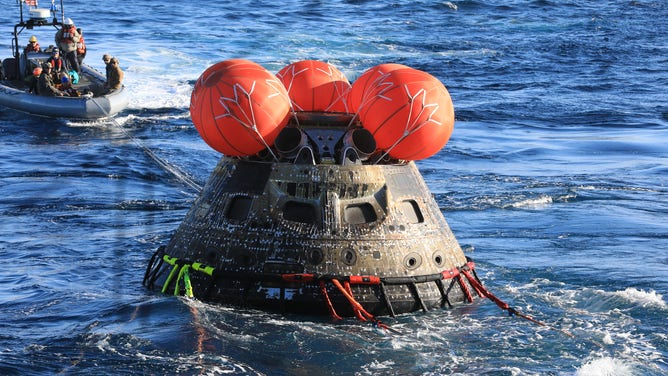
NASA’s Orion spacecraft for the Artemis I mission was successfully recovered inside the well deck of the USS Portland on Dec. 11, 2022 off the coast of Baja California. After launching atop the Space Launch System rocket on Nov. 16, 2022 from the agency’s Kennedy Space Center in Florida, Orion spent 25.5 days in space before returning to Earth, completing the Artemis I mission.
(NASA / NASA)
A cold front produced light rain in the primary recovery zone for the spacecraft, and NASA had to move the splashdown location south near Guadalupe Island, west of Baja California, Mexico.
The USS John P. Murtha, the ship that will recover the Artemis II crew, had already started its journey to the recovery zone, NASA said on Tuesday afternoon.
TIMELINE: A DAY-BY-DAY GUIDE TO THE 10-DAY ARTEMIS II MISSION TO BRING HUMANITY BACK TO THE MOON
Artemis II is the first crewed mission in NASA’s Artemis program, and has proved successful thus far.
-
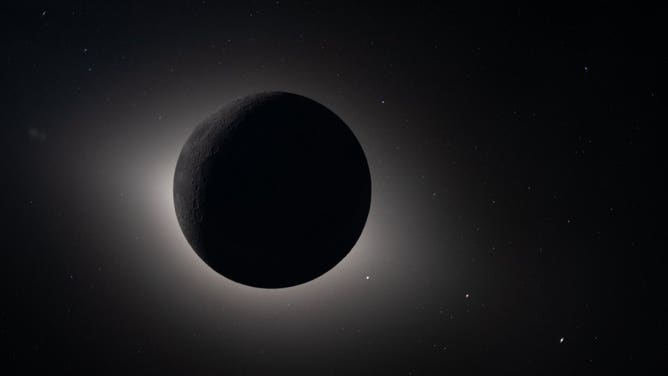
April 6, 2026- The Moon eclipses the Sun, seen from lunar orbit
(NASA) -
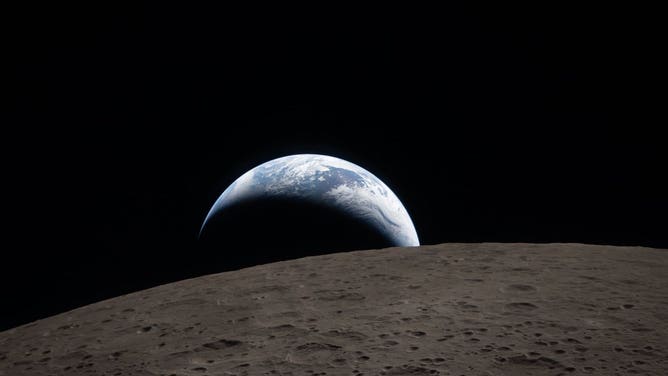
April 6, 2026- Artemiss II crew captures the first photo from the far side of the Moon.
(NASA) -
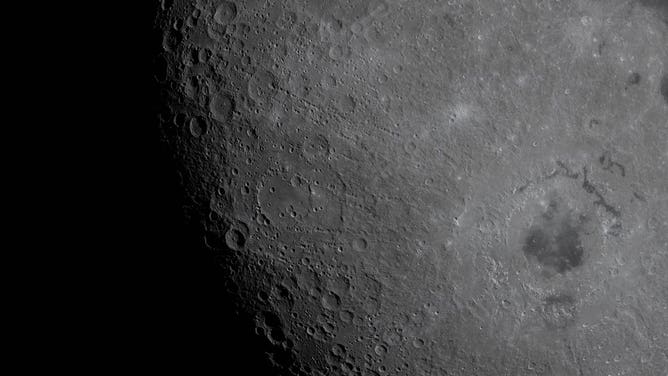
April 6, 2026- Artemiss II crew captures the rings of the Orientala Basin
(@NASAArtemis / X) -
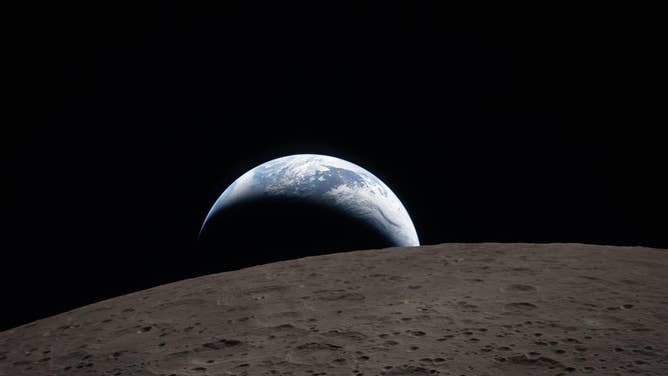
(April 6, 2026) – Earthset captured through the Orion spacecraft window at 6:41 p.m. EDT, April 6, 2026, during the Artemis II crew’s flyby of the Moon. A muted blue Earth with bright white clouds sets behind the cratered lunar surface. The dark portion of Earth is experiencing nighttime. On Earth’s day side, swirling clouds are visible over the Australia and Oceania region. In the foreground, Ohm crater has terraced edges and a flat floor interrupted by central peaks. Central peaks form in complex craters when the lunar surface, liquefied on impact, splashes upwards during the crater’s formation.
(NASA)
The four-person team completed their lunar flyby on Monday, sending back important data, visuals and information to NASA’s Mission Control and science teams back on Earth.
The crew started their four-day journey back to Earth on Monday.