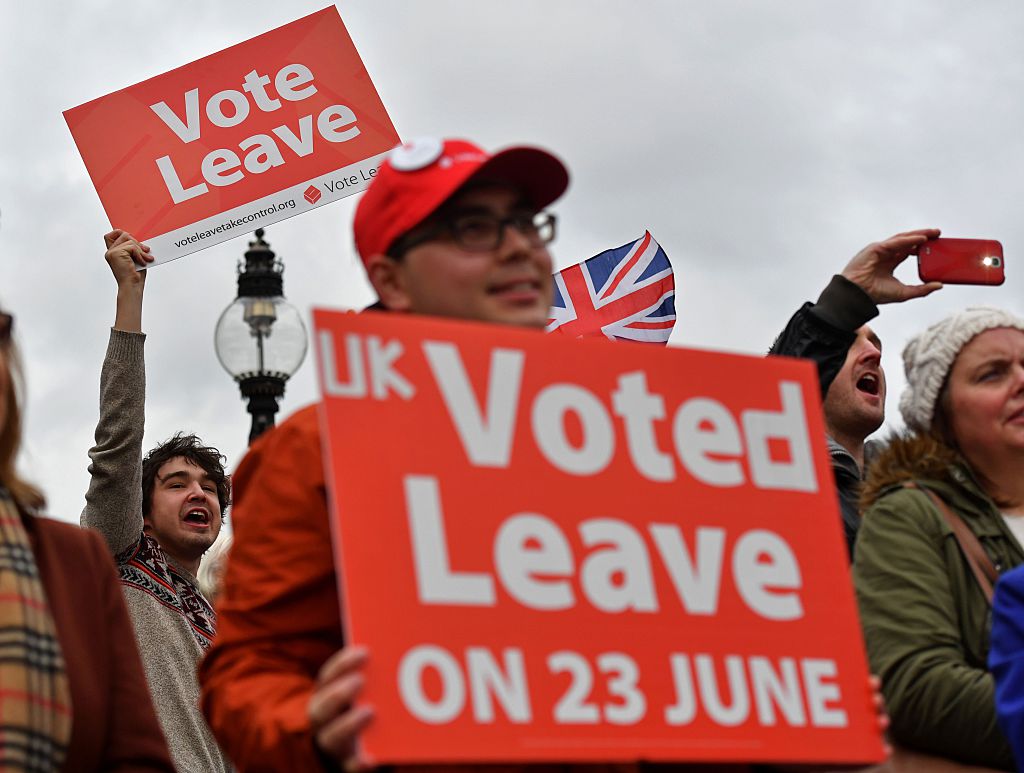
Roughly 10 years ago, the people of the United Kingdom voted to leave the European Union by a margin of 52 to 48. Nearly a decade later, public opinion has shifted, and there are signs that the decision to leave is being questioned by at least some within the governing Labour party.
Perhaps most strikingly, Wes Streeting, until recently Health Secretary and, since his resignation, a vocal critic of Prime Minister Keir Starmer, recently declared that leaving the European Union was a “catastrophic mistake” and went on to argue that Britain’s future lies within Europe. Cue outrage from Brexit supporters and a wave of speculation that a new leader might adopt a far more ambitious approach to relations with the E.U.
But both outrage and speculation overlook key logistical questions. Among them: Where does the U.K. stand when it comes to its relationship with the E.U.? What would it take for the U.K. to rejoin? And if so, how might the E.U. respond?
Brexit’s beginnings
To understand the U.K.’s E.U. U-turn, it’s worth briefly mapping road which led us to this moment. After the June 23, 2016, referendum vote and a lengthy transition period, Brexit formally occurred in January 2020. The U.K. finally exited the single market just roughly a year later, having negotiated the Trade and Cooperation Agreement (TCA), which remains the legal basis for most elements of the bilateral relationship to this day.
Despite bold promises by successive Conservative governments to boost growth by slashing large swathes of E.U. law, many still reside on U.K. statute books. What’s more, the U.K. failed to make use of its newfound regulatory autonomy except in certain limited areas (notably financial services). Then, the Labour Government of Keir Starmer came to power vowing to fix “Boris Johnson’s botched Brexit deal” and to tear down the barriers to trade it had erected.
So began what came to be known as the “reset,” as the new Government set about tinkering with the deal signed by the former prime minister. Yet this tinkering had its limits. Labour did not revisit the underlying principles behind the TCA—a rejection of a customs union, or membership of the E.U.’s single market, and of the free movement of people.
At the U.K.-E.U. summit held in May 2025, the two sides agreed an agenda for negotiations focusing on agriculture, the linking of their respective emissions trading systems, possible U.K. participation in the E.U.’s internal electricity market, and a youth mobility scheme. They also pledged to work together more closely on security, as President. Donald Trump set about undermining the assumptions on which Europeans had based their security thinking since World War II.
Over a year on from that summit, there is not much to celebrate. The French can be happy—they secured a 12-year extension to the deal on fisheries that was more than they’d initially demanded. That aside, there has been precious little obvious progress and some notable setbacks. Foremost among the latter was the breakdown of talks over U.K. participation in the Security Action for Europe (SAFE) program intended to accelerate joint defense procurement. The €150 billion price tag attached to the scheme by the E.U. prompted the U.K. to walk away from the talks, revealing the hollowness of the fine rhetoric about the vital importance of shared security interests.
As for the rest, negotiations continue on the technical areas earmarked for tighter cooperation. Some predictable points of contention have arisen, notably about the breadth of issues over which the E.U. expects the U.K. to align with its laws (with no formal say over what those laws contain). Added to which, discussions on youth mobility seem to have run into trouble over the U.K.’s proposed cap on numbers is unacceptable, but also the E.U.’s demand that European students who study at U.K. universities should be able to pay the (much lower) “home” fees of about £9,500—rather than nearly £60,000 some international students pay when studying in the U.K.
Evidence that things are not going well is provided by the ambiguity shrouding plans for a second U.K.-E.U. summit. The intention, on the U.K. side at least, was that this be an opportunity to announce the deals agreed and lay out a program for future cooperation. The fact that a meeting initially scheduled for May, and then June, is now only tentatively penciled in for July speaks volumes about the current likelihood of progress.
Here, a crucial asymmetry becomes obvious. The British Government is desperate to make progress in tearing down trade barriers. To the point where, not content with current negotiations, it has made it clear that it wants to go further. Yet the E.U., for its part, does not share London’s sense of urgency. Deals on agriculture or electricity matter far less to European policy makers than they do to their British counterparts. The E.U. side is willing to hold the economic negotiations hostage to progress in talks over youth mobility.
And then, following Labour’s appalling performance in local elections held in May, a leadership contest burst out into the open. Wes Streeting made sure relations with the E.U. would be a key element of the debate. In doing so, he sparked a fevered speculation about whether the U.K. might be gearing up for a step change in its approach to the E.U.—and even considering an application to rejoin.
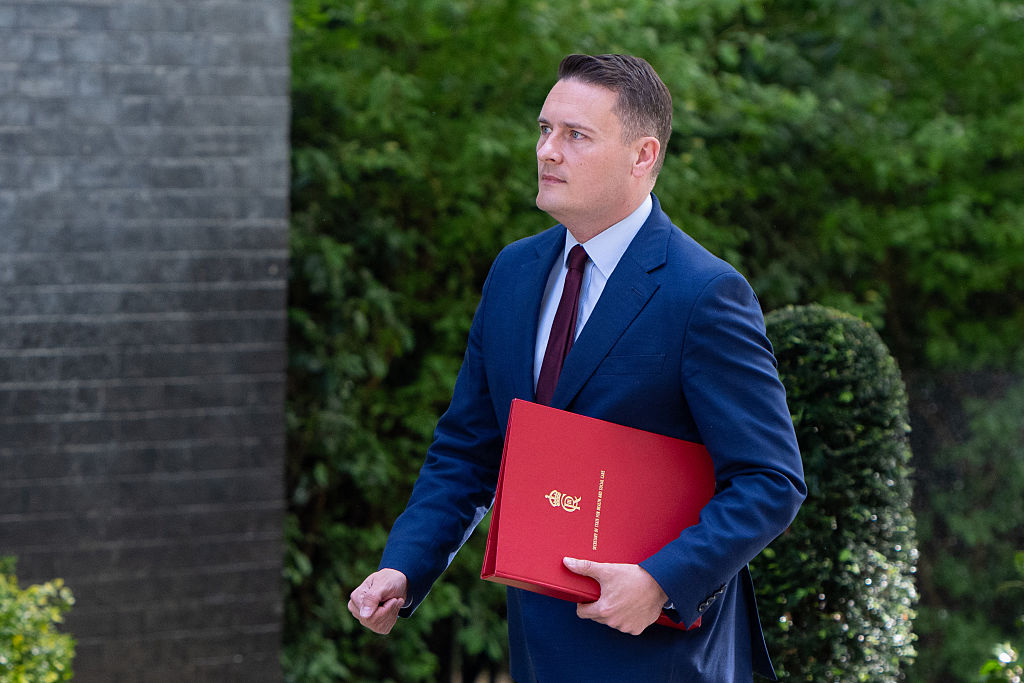
Will the U.K. attempt to rejoin the E.U.?
What, then, should we make of all this? On the one hand, what Streeting said should be treated with a degree of caution. Partly, because he really didn’t say anything at all. He shed little light on what the “special relationship” he called for with the E.U. would entail. And rejoining “one day” is hardly a firm policy pledge
We also must be conscious of the fact that Streeting benefited from his bold, if vague, claims. He is widely expected to be a contender for the Labour leadership if and when there is a contest. And the people who ultimately get to decide who the new Labour leader—and therefore the new British Prime Minister—are Labour party members. This group tends to be more pro-European than the population as a whole. Recent polling suggests that 58% of all likely voters wish to rejoin the E.U., but an overwhelming 84% of Labour votes wish the same.
Consequently, leadership candidates will have to talk the talk on Europe. At best, they will succeed—as Streeting has—in giving off a pro-European “vibe” without committing to anything specific. At worst, they will tie their hands with promises they are unable to keep. But we should treat the pledges made with some skepticism, as recent history makes it all too clear that promises made during leadership elections are not necessarily promises kept.
Plus, while a possible leadership contest has certainly spiced up the debate on relations with the E.U., other factors completely independent of Starmer’s tenuous grip on power are conspiring to induce Labour Party MPs to reconsider that relationship.
For one thing, the economic impacts of Brexit are being more widely discussed. Chancellor of the Exchequer Rachel Reeves has taken to highlighting the economic estimate that Brexit has negatively affected U.K. GDP by 8%. But even if the U.K. gets everything it wants from the “reset” talks currently underway, the measures being discussed would contribute, according to the government’s own forecasts, well shy of 1%. Desperate for growth, seen as key to the prospect of re-election in 2029, Labour MPs are now wondering if closer ties with the E.U. might be a way of achieving this.
Second, changes in world politics have led some on the left to conclude that the U.K. should hug its European neighbors closer still. As President Trump undermines the U.S. security guarantee, there is clearly an incentive for Europeans to seek greater autonomy when it comes to security. More broadly, in a world in which the U.S. is seen as increasingly unreliable, some Labour MPs are asking whether the U.K. should also be more “European” in its approach to regulation in areas such as AI, rather than diverging from E.U. rules in an effort to attract American investment.
Finally, there is politics. Labour have, since the 2024 election, lost a number of voters to parties on the liberal-left of the political spectrum, be that the Greens and Liberal Democrats, or Plaid Cymru in Wales and the SNP in Scotland. In this way, the party has lost more Remain backers than Leave backers, in a context in which Brexit itself is becoming less popular amongst the British public. As such, winning back those voters and attempting to reunite progressive voters under the Labour banner is a key priority. This is prompting some in the Party, such as Starmer himself, to suggest that an “ambitious” approach to the relationship with the E.U. might be one way of achieving this.
For a variety of reasons, therefore, conversations are happening in the governing party about whether more can be done to rebuild the U.K.’s relationship with the E.U. But what would a more “ambitious” agenda mean? Here, things get tricky. We know what the U.K. wants. London quite fancies using alignment to secure market access in sectors beyond those currently under negotiation.
The problem is, the E.U. is not necessarily willing to concede this. Viewed from Brussels, the U.K. is trying to gain the benefits of the single market without signing up to the obligations—notably, significant cash payments and freedom of movement of people. European leaders, therefore, are increasingly making it clear that the U.K. should choose from one of the many models of relationship that have been created for other countries, rather than hoping for its own bespoke deal.
Broadly speaking, there are three models to pick from. The U.K. could negotiate a customs union with the E.U. Or it could join the single market. Neither is without significant problems. The former would deprive London of the ability to negotiate its own trade deals and would have relatively little in the way of economic impact anyway. The latter would certainly have a significant economic impact, but it would commit the U.K. to adopting E.U. rules over which it has no say for the whole economy, while also paying large sums for the privilege and signing up again for freedom of movement.
Which leaves the third option: the U.K. could decide to rejoin the European Union. Some people in the Labour Party, are privately suggesting the party should adopt “rejoin” as its central policy promise before the next election. There are others who are aghast at the idea. How the debate plays out depends on many things, not least the identity of the new Prime Minister. What is clear is that the debate is heating up, and relations with the E.U. are again becoming a key area of debate, at least within the governing party.
How will the E.U. respond?
If the U.K. does choose to pursue a path towards rejoining the E.U., the question shifts. What does the E.U. make of all this? And what will it cost the U.K.?
After all, relations with the U.K. are not the priority for Brussels in the same way relations with the E.U. are a priority for the British Government. Consequently, the E.U. will ensure it benefits from any agreements struck. We’ve already seen this dynamic with the financial demands made of the U.K. during its attempt to join SAFE. We’ve seen it too in the more than half a billion pounds the British Government paid to participate for one year in the E.U.’s student exchange program, Erasmus+.
Not least, the E.U. will strike a hard bargain pour encourager les autres. That is, it will ensure the U.K. accepts obligations as well as ganing rights in order to underline the benefits of membership to others who might be pondering the benefits of weakening the bloc. Many member state governments are confronting populist insurgents who argue that the E.U. is too powerful and interferes too much in national life. Giving the U.K. some kind of bespoke single market access might encourage member states to demand special treatment. Then there is Switzerland, which has just concluded a renegotiation of its settlement with the E.U., and will be watching negotiations with the U.K. closely to ensure that London does not get anything that Bern was denied.
Hence the insistence that the U.K., if it wants to go further, choose from one of the established options on offer. And why not? Should the U.K. join the single market, the E.U. would be able to pass regulations binding on a G7 economy that would have no formal say over the content of them. Whether such an arrangement would survive contact with British politics and the famously outspoken British media is another question entirely.
And what of membership? Should the U.K. apply to join, the E.U. would be obliged by its own treaty to consider the application. But one thing is clear: the kinds of special treatment the U.K. enjoyed when it was a member state (a rebate to its budget contributions, and an opt out from the euro, among others) will simply not be on offer. Wthout Margaret Thatcher’s E.U. budget rebate, the U.K. would likely pay £5 billion a year more for membership than it did before Brexit, which could make selling the idea in the U.K. much more difficult.
From the perspective of Brussels, in contrast, seeing the only member state that had ever left the club come back cap in hand to request re-entry would be little short of a political triumph.
The British governing party is pondering its relationship with the E.U. again. And as ever, all available choices involve difficult trade-offs. The status quo comes with an economic cost. Single market membership short of E.U. membership will significantly constrain British autonomy. Rejoining will necessitate difficult negotiations over the terms of re-entry and, doubtless, a heated argument at home.
Which option the U.K. chooses will hinge on its internal political developments First and foremost, the identity of a new Prime Minister. But also debates within the Labour Party, the state of the polls, the development of public opinion, and the success or otherwise of the government in generating growth by other means.
Whatever the ultimate decision, this much is clear: a decade on from the referendum that led to Brexit, Europe continues to haunt British politics.