Once upon a time, there was only one way to get your hands on a ripe strawberry in winter: be a member of the French royal court.
In 1712, Louis XIV dispatched a spy to Spanish-controlled Chile to smuggle out native white-berried plants. Royal gardeners bred them with European red berries, coddled them in manure hotbeds and warmed them with underground fires, all so that the king could have strawberries in March instead of waiting until June.
Today, Costco shoppers in South Korea, pastry chefs in Dubai and parents of small children nearly everywhere can buy strawberries, raspberries, blueberries and blackberries any time of year — if they can afford them. (Strawberry prices fluctuate throughout the year, from about $3 per pound in San Francisco to $35 in Dubai.) And the biotech that drives modern agriculture ensures that each berry is better than anything the Sun King ever tasted.
In just the last decade, berries have completed the journey from fragile, local, seasonal treat to worldwide refrigerator staple and marketing juggernaut. Global production has tripled since 2000, according to research from the U.N.’s Food and Agriculture Organization, and still cannot keep up with demand. In sales and volume, berries are the fastest-growing category in American produce, according to data from the U.S. Department of Agriculture.
Most of that growth has been driven by Driscoll’s, a $7 billion California company that began as a multifamily farm in 1904, patented its first strain of strawberries in 1958 and is still controlled by family members. In 1989, its board made what the company calls the Meadowood Declaration, a resolution that seemed preposterous at the time: to make all four berries available, in every season, in every part of the world.
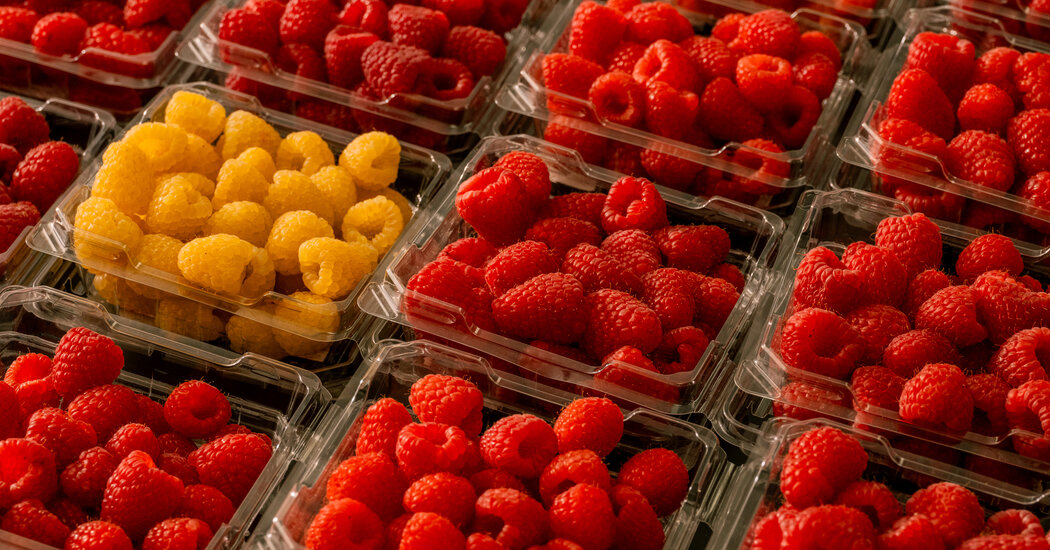
Today the company is the undisputed global market leader, shipping four billion containers of highly perishable fruit across 60 countries each year. (The company developed its signature hinged, ventilated plastic clamshell in the 1990s.) According to Circana, a market research firm, Driscoll’s is now the second-highest-earning brand in American supermarkets, behind only Coca-Cola.
Kristin Kiesel, who teaches agricultural economics at the University of California, Davis, said Driscoll’s has changed the paradigm of modern agriculture and produce marketing.
“A strawberry was a strawberry,” she said. “Now a strawberry is a brand.” And only a huge operation like Driscoll’s, she said, can supply market giants like Costco and Walmart with the premium produce that many consumers are willing to pay for, even as their grocery bills rise.
To that end, Driscoll’s today is less a farming business than a research and marketing enterprise, harvesting berry-related data instead of berries. Instead of owning land, the company owns the genetic material of its berries and the knowledge of how best to plant, pick and transport them. It subcontracts with farmers around the world to grow those breeds according to its specifications, then handles sales and distribution after harvest.
But global access to berries has a cost, measured in metrics like water consumption, pollution, pesticides and labor practices. Driscoll’s has come under fire on all four fronts.
In the 2010s, the company faced boycotts and strikes over wages and working conditions. Academics and activists have pointed out the large carbon footprint of flying berries around the world, and criticized the berry industry’s prolific use of plastic sheeting and containers. In June, a former senior compliance manager sued the company, alleging that Driscoll’s penalized him for flagging excess use of pesticides, and that the company had knowingly shipped berries to Canada that exceeded that country’s more stringent limits.
In a statement, Driscoll’s denied the lawsuit’s allegations and defended its practices: “As a family-owned company, food safety, quality, and integrity are fundamental to who we are. We maintain robust food safety and compliance programs and rigorous standards designed to support compliance with applicable regulatory requirements.”
Driscoll’s has fended off criticism and blown past competitors, most recently with sweeter, juicier versions of the two berries that long resisted commercialization: blueberries and blackberries.
In the Tasting Room
The quest for the perfect berry plays out night and day at the company’s headquarters, a patchwork of fields, farmhouses, spectrometer labs, tasting rooms and worm beds dotting the Pajaro Valley, just south of Santa Cruz, Calif.
On a typically sunny morning in early June — peak raspberry season at the complex — pickers in long sleeves and wide-brimmed hats had been expertly pulling fruit from head-high canes since sunrise. Labor is by far the biggest expense for berry growers: most berries must still be picked by hand, one by one, and competition for skilled pickers is stiff. (The company said the workers earn $20 to $30 per hour, but declined to make them available to be interviewed or photographed, citing concern for their privacy.)
Inside a nearby laboratory, where two full-time sensory scientists make their assessments, 210 raspberry varieties were laid out in a grid of plastic pints. Some had been bred for visual appeal, with more shapely shoulders, uniform drupelets and less “hair” (the thin red styles that sprout where the berry is pollinated). Others were developed to maximize yield, with fewer thorns and better “plant architecture” — tall, fluffy stalks that make the berries easy to pick. Each cultivar is tested for qualities like P.S.I., the interior pressure that determines whether a berry will yield to the teeth with an explosive, juicy pop.
Out of those 210 strains, said Kyle Rak, the company’s chief raspberry scientist, perhaps two will make it to market.
“It can be heartbreaking,” he said, gazing fondly on the berries, which varied from golden to blush to crimson, and differed wildly in shininess, symmetry and size.
And all of that was independent of how the berries actually taste. After sweetness and acid — the basic components of a balanced berry — the tasters evaluate each strain for underlying notes of rose, cotton candy, banana and dozens more.
Driscoll’s global raspberry business was built on a cultivar it patented in 2004: the Maravilla, a berry that was red enough, sweet enough and shelf-stable enough to be grown and shipped globally. Compared with previous strains on the market, it was far less likely to mold or collapse in transit, and soon became the industry benchmark.
The drawback of the Maravilla, Mr. Rak said carefully, is that it doesn’t taste all that good. As anyone who has splurged on a container sadly knows, raspberries can look great but taste tart, dry and stiff. The mission across Driscoll’s 35 test plots around the world is to eliminate that disappointment.
Next, the tasters lined up four varieties that are already in production. Tasted blind, the dark red, sweet and juicy Reyna stood out. A 2023 cultivar, it has quickly become the company’s new global standard, sold in the United States under Driscoll’s premium-priced “Sweetest Batch” label.
But this army of soil analysts, phenotype researchers and data engineers is already chasing the next standard.
Farming Out the Work
Many Driscoll’s berries are no longer planted in soil, but grown in pots filled with carefully balanced mixtures of organic materials like coconut fiber and moss. This system of substrate farming was developed over centuries in the Netherlands to produce maximum yields from minimal land.
It requires a substantial start-up investment by Driscoll’s growers, who also absorb the costs of ever-shifting factors like labor, weather, equipment and rent. The company provides seed plants and “inputs” like soil treatments, along with technical support and marketing dollars. After harvest, the company retrieves the filled clamshells, then compensates the grower according to the price those berries command. According to Driscoll’s, growers receive 75 to 80 percent of the revenue.
The costs and risks of becoming a Driscoll’s grower are formidable. Still, “because demand just keeps going up, my growers are in a good position to negotiate,” said Liz Machoff, head of the New York State Berry Growers Association.
Dr. Kiesel, who has done studies of Driscoll’s operations in California, said most growers felt that joining the company was their best option in an increasingly complex marketplace, allowing them to focus on the plants and outsource marketing, price negotiations and other tasks.
The Driscoll’s model reflects another shift in 21st-century agriculture, away from open-source knowledge developed by public institutions like universities, to fiercely protected intellectual property owned by private companies.
The earliest branded fruits — the Dole pineapple (1933) and Chiquita banana (1944) — were the precursors to today’s Fruitist jumbo blueberries, aggressively priced and marketed as “premium snacks.” When Erewhon, the Los Angeles chain of upscale markets, introduced its wildly popular Strawberry Glaze Skin Smoothie in 2024, then made exclusively with Driscoll’s organic berries, the produce world hailed it as a branding breakthrough.
Demand for berries has exploded in the United States because of overlapping recent trends: more snacking and the rise of “functional” foods that promise specific health benefits, said Jonna Parker, who analyzes the produce market for Circana. Premium berries are expensive, but they are also the kind of small luxuries — so-called “revenge shopping” — that Americans have treated themselves to since the Covid lockdowns ended.
People ate more fruits and vegetables during the pandemic, she said; since then, sales of most produce are down, but berry sales have kept growing. “Only the most convenient foods survive,” she said.
New Countries, New Berries
Berries are shifting entire economies.
In 2023, they became Mexico’s most lucrative agricultural export, surpassing avocados, beer and tequila. On Moldovan plantations and in Andean highlands, growers of low-margin crops like sugar cane and corn have switched to berries, which command premium prices.
In 2025, China overtook the United States as the world’s largest blueberry producer. Driscoll’s, the first foreign berry company allowed to operate there, now has about 8,000 acres under cultivation.
Land is not privately owned in China, but some farmers receive allocations to operate as they wish. Jae Chun, the company’s general manager for the Asia-Pacific region, began by persuading about 40 families who were growing corn and potatoes to switch to berries.
Chinese growers have succeeded because of access to advanced technologies like robots that spray pesticides and automated lighting that prevents mold, he said. “In the U.S., that would cost seven or eight times more.” he said.
Blueberries have been the breakthrough product for the world’s berry growers in the last decade, with sales rising 8 percent every year. Growers appreciate their long shelf life, up to 60 days after harvest, making them a lower-risk investment. (Raspberries last only about 10 days.)
Some farmers are determined to ride the berry boom without being pulled into Driscoll’s ever more powerful orbit. Taylor Doyle, a third-generation fruit farmer in Western New York, just pulled out 95 acres of mature apple trees to make way for blueberry bushes.