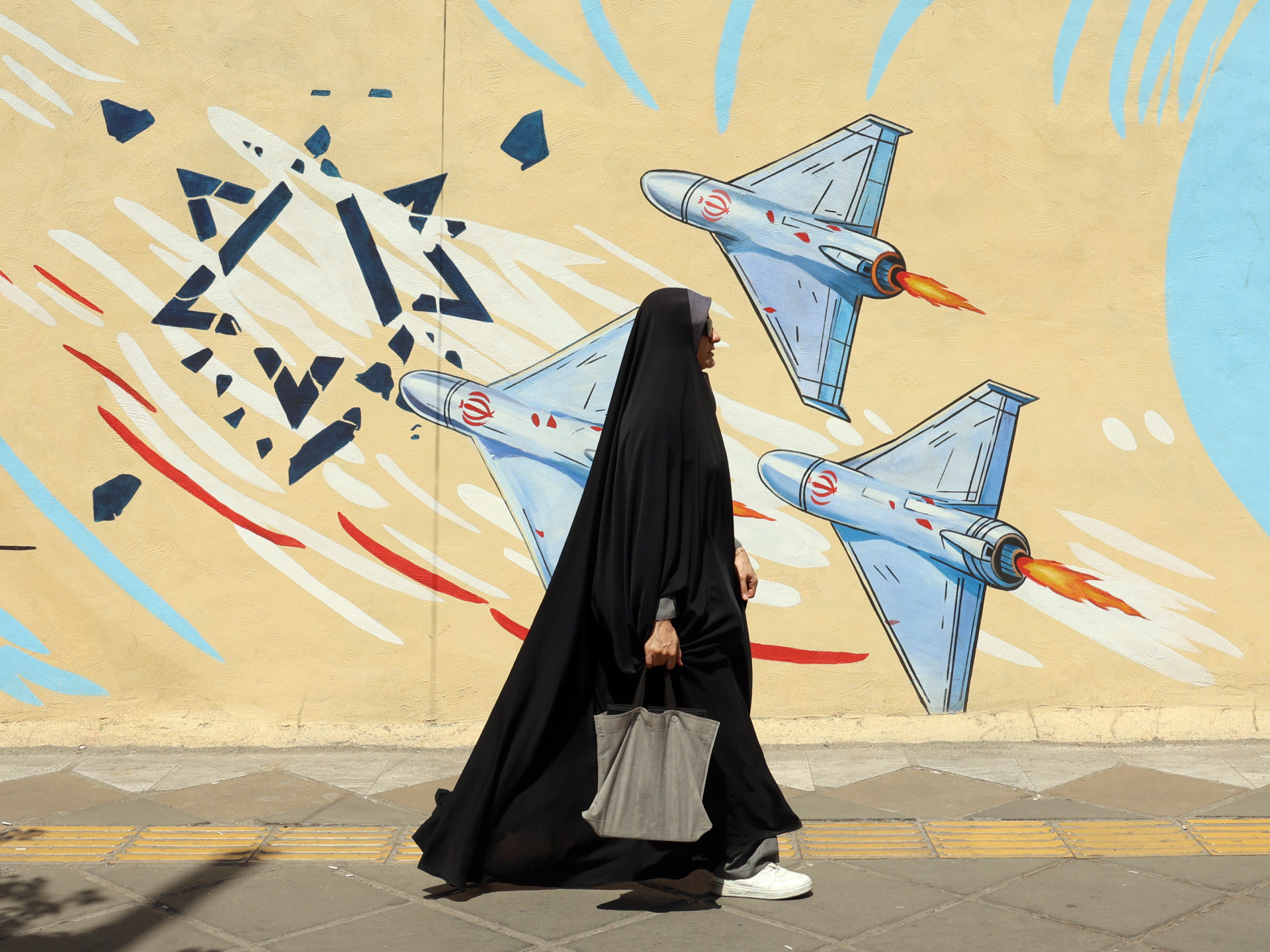
In every major Middle Eastern war, the same illusion returns: the belief that bombs can rewrite history. The US-Israel war on Iran is rapidly and forcefully redrawing the map of the Middle East in ways previously unseen. Yet there are enduring realities that wars and bombs, no matter how precise, cannot erase or alter.
Experts and analysts have not stopped predicting what the region will look like once the fighting ends. Some insist that this war will reshape the Middle East, topple regional axes and produce a new regional order. Part of this is true; historically, major wars leave deep fractures and transformations in maps, systems and demographics. But there is also a methodological illusion that accompanies every war: the belief that it can wipe everything away and produce a blank page on which a new beginning of history can be written, even though history itself repeatedly disproves such illusions.
Across its long history, civilisations and peoples, the Middle East has proven itself exceptional in its ability to absorb massive shocks and reconstitute itself. It has witnessed the Islamic conquests, the Mongol invasions, the Crusades, European colonialism, the Cold War, waves of extremism and civil wars. Despite all this, the Middle East has remained resistant to change except when change has been organic and gradual.
Today, as signs emerge of the approaching end of the US-Israel war on Iran, the question most often absent seems to be: What will not change?
Strategic geography will outlast the war
Since human civilisation first took root in this part of the world, geography has ruled its destiny. The Strait of Hormuz still controls the passage of nearly one-fifth of the world’s oil. The Suez Canal remains one of the most vital arteries of international trade. The Fertile Crescent still links Asia to Europe. This geography is destiny, not choice, and no military force can alter it.
Iran will remain a state overlooking the Strait of Hormuz even after the war ends. Yemen will remain the southern gateway to the Bab al-Mandeb, one of the world’s most vital waterways. Egypt will continue to control the Suez Canal. In some cases, war may change who governs these locations, but it cannot change what they represent geographically. As long as this geography endures, so too will the struggle over who controls it.
The Palestinian issue will not be marginalised
Perhaps the greatest illusion exposed by the war on Iran is the belief that destroying the “axis of resistance” would remove the Palestinian issue from the regional agenda. This is a structural illusion that confuses the instrument with the essence. Iran invested in the Palestinian cause and used it ideologically and strategically, but it neither created the cause nor possesses the key to ending it.
The Palestinian issue existed before the Islamic Republic of Iran was born, and it will remain present regardless of whether the Iranian regime succeeds, survives or fails. The suffering of nearly eight million Palestinians living under occupation will not be altered by the destruction of Iran’s nuclear programme or the assassination of the supreme leader of its Islamic Republic.
The Abraham Accords of 2020 were built on a central assumption: that Iran represented the common existential threat uniting Israel and the Gulf Arab states in one strategic camp and this security alignment would be sufficient to bypass and marginalise the Palestinian issue. Yet the outbreak of war with Iran exposed the fragility and limitations of this equation.
For its part, Iran succeeded in portraying itself as a victim of US-Israel aggression, regaining some of the Arab public sympathy it had lost because of its interventions in Syria, Yemen and Iraq. This complicates the narrative that Iran is the Arabs’ primary enemy.
At the same time, Arab public opinion from the Atlantic to the Gulf, including younger generations living in states that maintain official peace with Israel, remains deeply attached to the Palestinian cause in ways that transcend the official calculations of governments. Any regional order that fails to address the Palestinian question, therefore, will carry within it the seeds of its own instability.
Sectarian divisions will endure
The US-Israel war on Iran has deepened sectarian tensions in several countries across the region, including Iraq, Lebanon and Yemen. But these tensions did not begin with the Iranian Revolution, nor will they end with Iran’s defeat.
The war may weaken Iran’s ability to exploit these divisions and perhaps alter the balance of power among sectarian groups in Iraq, Lebanon and Yemen. But it will not erase sectarian identities themselves. Shia communities in Bahrain, Iraq, Lebanon and Saudi Arabia possess their own grievances and social realities independent of Tehran, and they will continue shaping the political landscape of their countries regardless of the fate of the Islamic Republic.
Arab state fragility will remain
What the war will not change and what it did not create in the first place is the structural crisis of the modern Arab state. Countries suffering from weak political institutions, weak judicial systems, bloated security apparatuses that consume resources needed for development and welfare institutions, and unproductive rentier economies were fragile before the war and will remain fragile after it.
Indeed, there is a danger that the war may deepen this fragility. It distracts Arab governments with security confrontations and temporary alliances while postponing the political and economic reforms that directly affect ordinary citizens. States that invested in confronting Iran instead of investing in education and competitive economies may find themselves facing an enormous domestic bill once the fighting stops.
Those sheltering under the US will remain exposed
Even before the 2003 invasion of Iraq, confidence in the US model in the region had already begun to erode. The Arab street, even in countries allied with Washington, views US policy with a mixture of resentment and, at times, contempt.
The war on Iran may restore some measure of US prestige in the eyes of governments that feared Iranian dominance, but it will not restore broad Arab public confidence in the US vision for the Middle East.
Military dominance alone is no longer sufficient to build political legitimacy or trust. The United States learned this in Afghanistan and Iraq, and it may be forced to learn it again in Iran.
Political Islam will survive beyond Iran’s axis
The war has dealt a severe blow to the Iranian-aligned current of political Islam and contributed to fragmenting the ideological structure of the “axis of resistance”. Yet political Islamist movements in the region are far more diverse and complex than Iran alone.
The Muslim Brotherhood, activist Salafist movements and various nationalist Islamic currents all emerge from local social contexts and political grievances unrelated to Tehran.
What the war will not change is the reality that Islam represents, for millions in the region, a source of identity and a framework for understanding justice, politics and resistance. This reference point will not evaporate with the destruction of the Fordow nuclear facility near Qom. Any vacuum created by the collapse of one axis will most likely be filled by competition among alternative Islamic references, not by the arrival of a liberal secular age.
If there is one lesson history teaches us in this region, it is this: Major wars may change governments, appearances and balances of power, but they rarely touch the underlying essence.
The views expressed in this article are the author’s own and do not necessarily reflect Al Jazeera’s editorial stance.