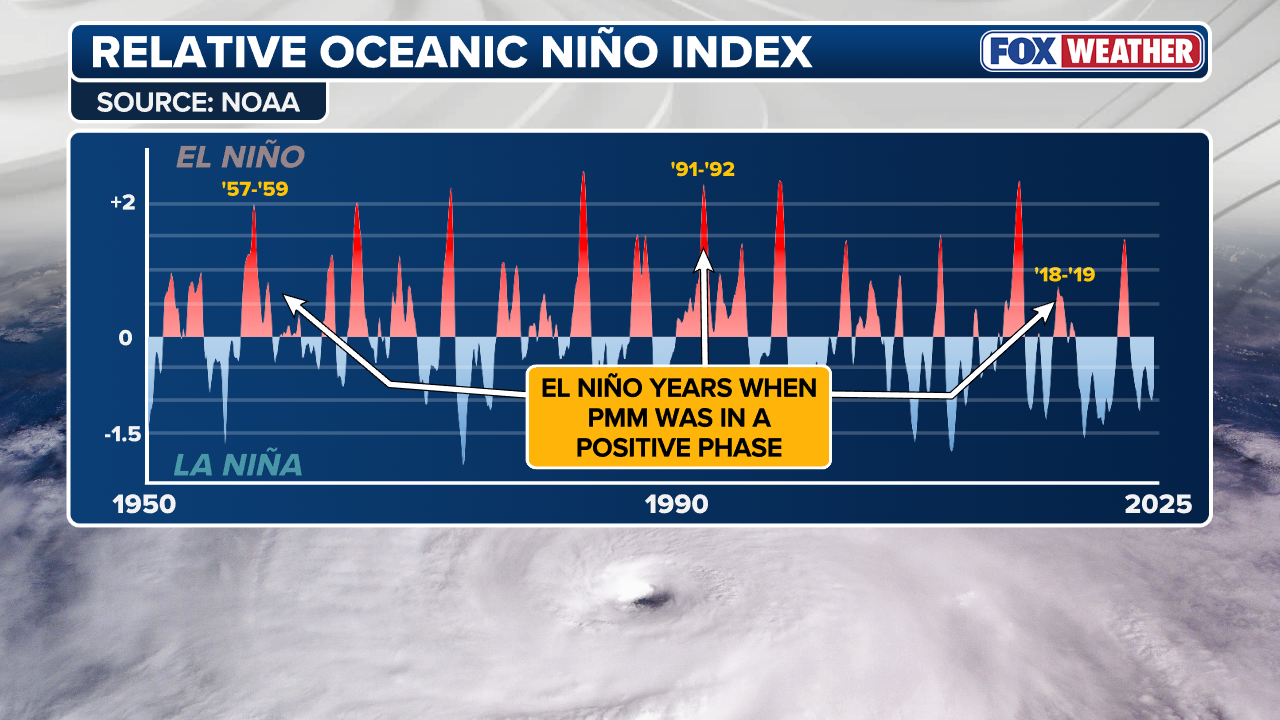
We are two days from the start of the Eastern Pacific hurricane season, and ocean temps are much warmer than normal, signaling the beginnings of the El Niño climate pattern for the season.
History would suggest that the El Niño development would mean more hurricane activity in the Eastern Pacific, but that’s not always true for Hawaii.
El Niño alone doesn’t necessarily mean more tropical activity for the Hawaiian Islands, but a positive Pacific Meridonal Mode (PMM) combined with El Niño, could increase activity.
PMM is a climate pattern involving changes in ocean temperatures and trade winds north of the equator. It develops when trade winds weaken, allowing ocean temperatures to warm. A positive PMM phase can not only help trigger El Niño, but also strengthen it, according to the FOX Forecast Center.
WHAT ARE EL NIÑO AND LA NIÑA CLIMATE PATTERNS?
(FOX Weather)
When the PMM is in a positive phase, warmer than average water develops off the west coast of Mexico and can extend into the central Pacific near Hawaii.
Warmer waters further into the central Pacific could help storms forming in the Eastern Pacific maintain their strength longer as they move westward toward the islands, according to the FOX Forecast Center.
NEW DATA REVEALS 100% CHANCE OF STRONG ‘SUPER’ EL NINO FORMING THIS YEAR
(FOX Weather)
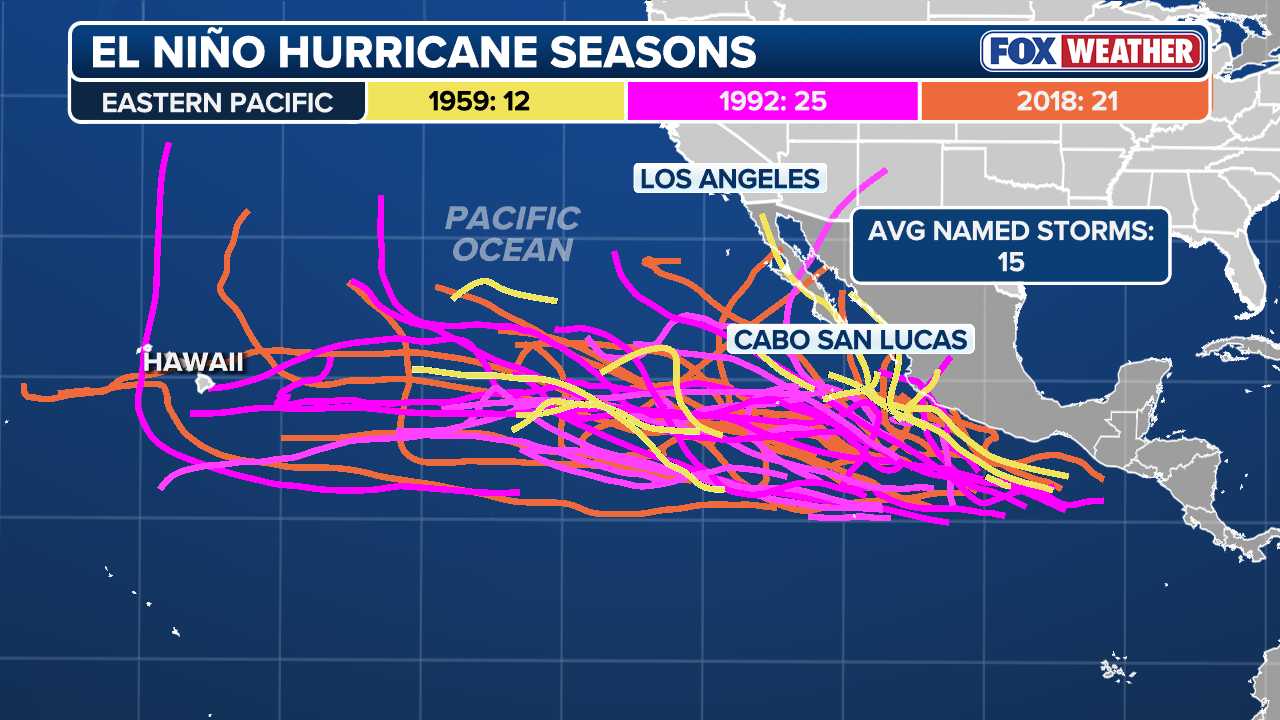
In past years, a positive PMM has led to several notable hurricane seasons with an increased number of storms, including in 1959, 1992 and 2018, when notable storms impacted Hawaii.
In 1992 and 2018, activity was above-average, producing 25 storms and 21 storms, respectively.
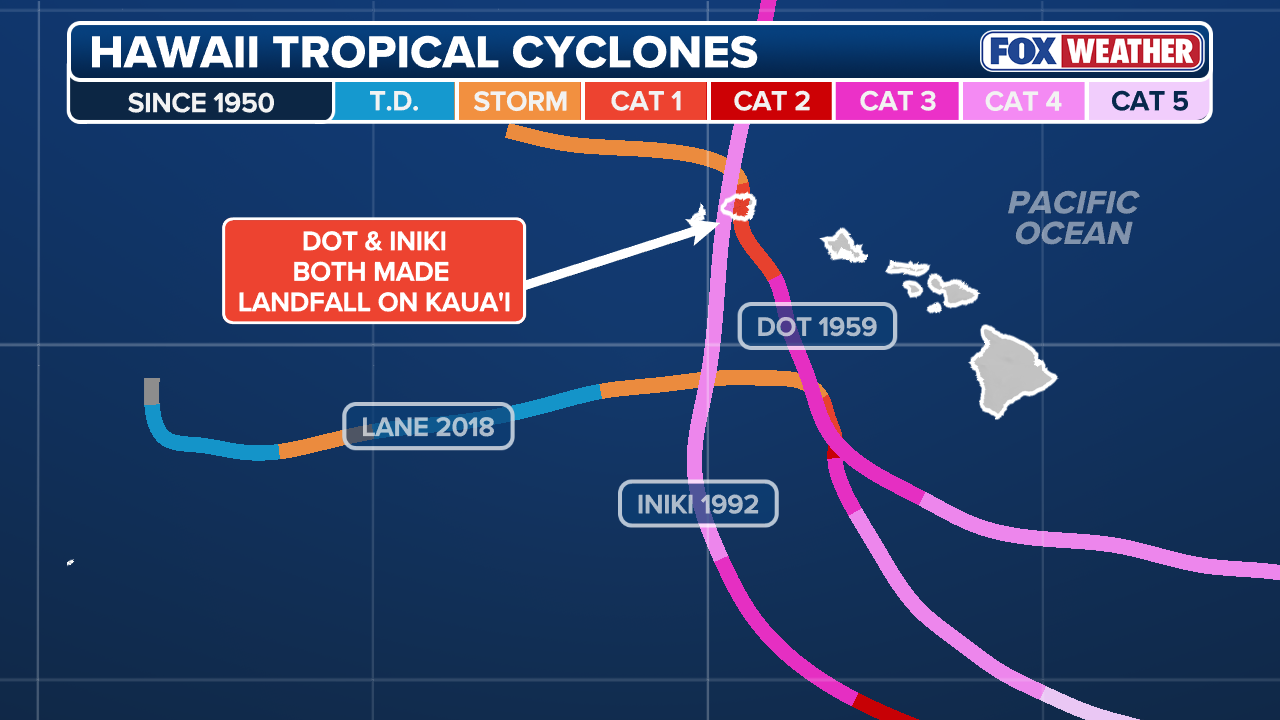
Hurricane Dot in 1959 and Hurricane Iniki in 1992 both made landfall on Kauai. In 2018, Hurricane Lane passed very dangerously close to the islands, but didn’t make landfall, according to the FOX Forecast Center.
(FOX Weather)
However, history doesn’t always repeat itself.
In 2023, a positive PMM and El Niño were present, but the warmer waters associated with the PMM weren’t as pronounced. Overall, that season was less active, producing 17 named storms in the Eastern Pacific.
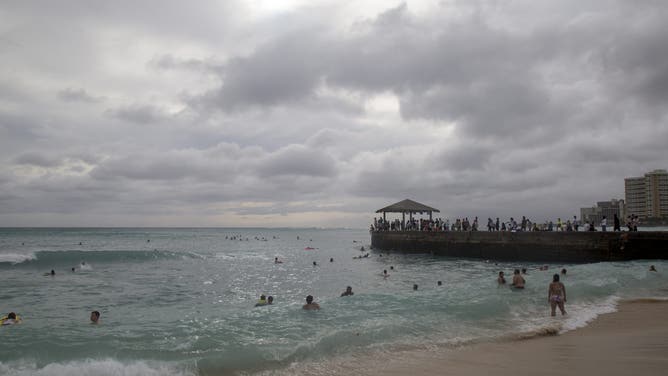
HONOLULU, HI – AUGUST 24: Both locals and visitors alike ignored Mayor Kirk Caldwell’s order to stay out of the ocean due to dangerous conditions caused by hurricane Lane on the East end of Waikiki on August 24, 2018.
( Kat Wade / Getty Images)
Overall, the already unusually warm Eastern Pacific combined with the potential for a positive PMM is likely to mean more activity this hurricane season around Hawaii.
However, many other atmospheric and oceanic factors could still influence how hurricane season unfolds in the Eastern Pacific.