As El Niño warms the Southern California coast, more sharks are expected to migrate to the region. Dr. Chris Lowe, Professor of Marine Biology and Director of the Shark Lab in the Department of Biological Sciences, joins FOX Weather to discuss how this migration pattern may impact the summer.
MARTHA’S VINEYARD, Mass.– With Memorial Day weekend just around the corner, officials are warning beachgoers to watch out for and report any white shark sightings.
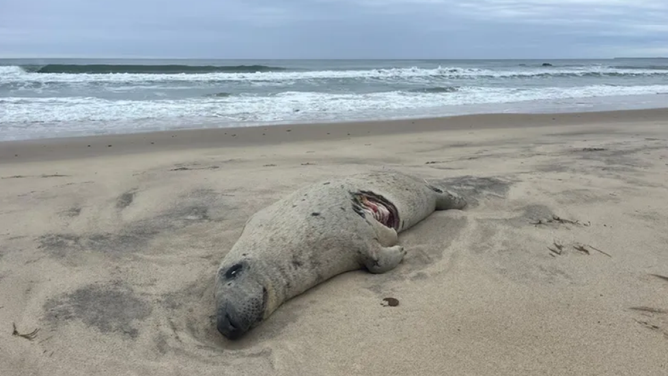
On Sunday, a dead gray seal washed up on a beach in Martha’s Vineyard with a large wound on its side.
Suspecting a bite from a white shark, New England Aquarium in Boston said an investigation began, and the bite was reported to the Massachusetts Division of Marine Fisheries.
Photos of the seal were examined by John Chisholm, an adjunct scientist in the Aquarium’s Anderson Cabot Center for Ocean Life, who confirmed it looked like a white shark bite.
A gray seal found dead on a beach in Martha’s Vineyard with a white shark bite on its side.
(Andrew Jacobs/Natural Resource Department of the Wampanoag Tribe of Gay Head (Aquinnah) / FOX Weather)
“This is just the beginning of white shark season in New England, and it serves as a good reminder to be mindful of the presence of these sharks in inshore waters. Their numbers will continue to increase throughout the summer with peak activity occurring in the fall,” Chisholm said.
Chisholm and the New England Aquarium reminded people to be “shark smart” and keep an eye out for sharks’ presence near beaches, especially in shallow waters.
Beachgoers should also avoid any seals or schools of fish that may be food sources for sharks.
BREWING SUPER EL NIÑO COULD TURN THE CALIFORNIA COAST INTO A SUMMER HOTSPOT FOR GREAT WHITE SHARKS
Shark sightings can be reported via the Atlantic White Shark Conservancy’s Sharktivity app.
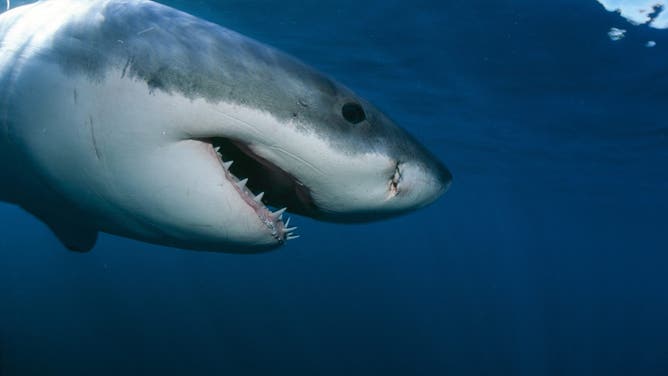
Great White Shark, Carcharodon carcharias, near the water surface, six nautical miles from the coast of Gansbaai, quite close to Dyer Island and Geyser Rock
(Education Images/Universal Images Group / Getty Images)
Sharktivity provides information and push notifications on white shark sightings, detections, and movements to raise awareness and help people and sharks co-exist.
“In addition to alerting others about the presence of sharks in near real time, these sightings contribute to our scientific understanding about sharks in our local waters, helping us to understand the health of their populations and the marine environment that supports them,” Dr. John Durban, a senior scientist in the Aquarium’s Anderson Cabot Center for Ocean Life said.
Public sightings submitted through Sharktivity will be verified by the New England Aquarium.