Amna Nawaz:
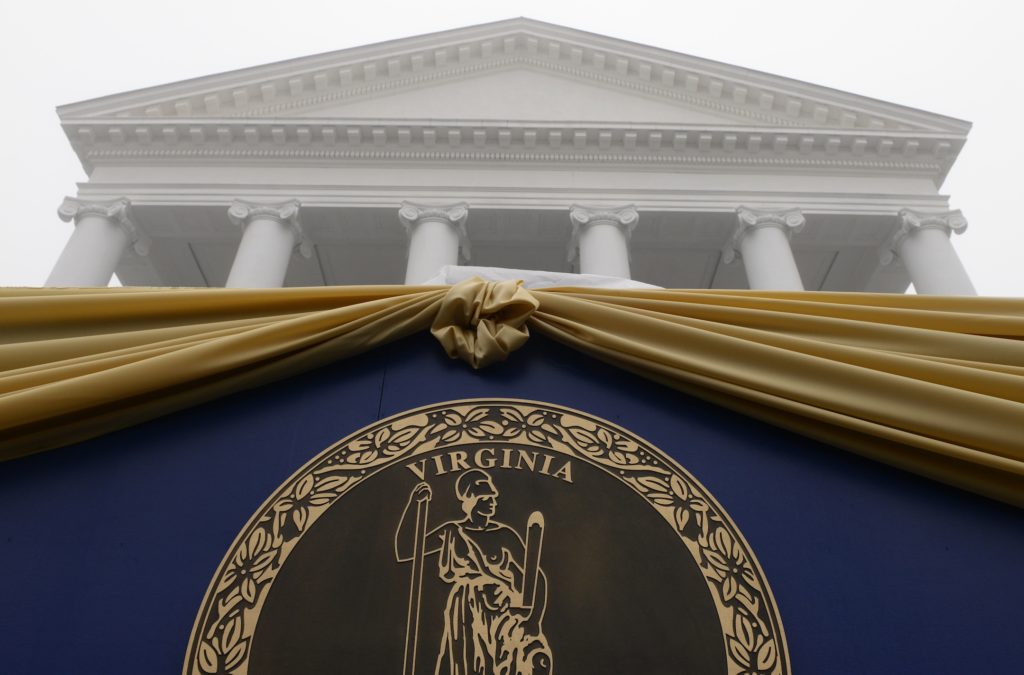
Virginia’s State Supreme Court struck down a plan that would have redrawn the state’s congressional maps to benefit Democrats.
In an opinion released today, a majority of the justices said a referendum passed by voters last month was unconstitutional. It was poised to transform Virginia’s maps, allowing Democrats to gain up to four House seats this fall.
Virginia’s Democratic House speaker, Don Scott, decried the ruling, saying in part: “This was always about more than one election. It was about whether the voices of the people matter and no decision can erase what Virginians made clear at the ballot box.”
It is a major setback for Democrats, as both parties wage a war of mid-decade redistricting.
For more on today’s ruling and the national context, I’m joined by David Wasserman of The Cook Political Report With Amy Walter.
Welcome back to the “News Hour.”
Let’s start with Virginia. Just walk us briefly through the court’s reasoning here. And, also, how big a deal is this when it comes to the battle for control of the House in November?
David Wasserman, The Cook Political Report With Amy Walter:
Amna, this is a major setback for Democrats because they were counting on Virginia to counteract what Republicans have done in Texas and Florida and elsewhere.
And Virginia Democrats embarked on this effort to pass a constitutional amendment to permit the legislature to pass a Democratic gerrymander just a couple days before last fall’s legislative elections. Under Virginia’s Constitution, the General Assembly has to pass a constitutional amendment not just once, but twice, once before a regularly scheduled legislative election and once after, and then send the question to voters.
Democrats went through those steps, but the Virginia Supreme Court, in this case, they found that Democrats had violated the procedure by embarking on this while early voting was already under way, and therefore not before the regularly scheduled election.
So, this is likely to cost Democrats several key seats, because Virginia Democrats would have picked up four under the map that they passed. Now, under the current map, they still have an opportunity to pick up one or two seats, but it does make it harder for them to expand their House gains even in a favorable political environment.
Amna Nawaz:
Dave, I want to remind people how we got here, because after last week’s Supreme Court decision that further gutted the Voting Rights Act, we have seen Republicans rush to change maps in some Southern states.
Louisiana paused their primaries. They’re now drawing new maps that favor Republicans. Tennessee’s new map was signed into law yesterday. That dissolved the state’s only Black-majority district. House Republicans in South Carolina have proposed a new map, and Republicans in Alabama have approved a new map just today.
For context, how dramatically has the legal landscape around all of this shifted?
David Wasserman:
It’s shifting at a dizzying pace, and the guardrails have come off in many respects.
Increasingly, what we have is a patchwork of states playing by different rules that are all electing members of the House and really scrambling the race for a majority from year to year.
And just a few weeks ago, it appeared that the White House’s strategy of pursuing a mid-decade gerrymandering war was going to backfire, because Virginia Democrats were very confident their map would pass, and we still hadn’t seen the Supreme Court ruling. We hadn’t seen the map that Governor DeSantis passed in Florida.
Now, with the combination of the ruling in Louisiana versus Callais and the Virginia Supreme Court decision, Republicans are poised to pick up somewhere around six or seven seats on net from redistricting. And, in particular, these Deep South states where Republican legislatures are dismantling Black-majority districts that had been protected by the Voting Rights Act for decades, it has pushed the nuclear button.
And we are likely to see in 2028, blue states respond by passing maximalist gerrymanders that use the rationale of Republicans targeting those Black districts in the South to eliminate the remaining Republican seats in places like California, Illinois, New York.
We are going to have a litigation-palooza for the next couple years, where both the federal courts and state courts will have to determine whether there are any limits on what parties can draw to press their partisan advantage.
Amna Nawaz:
We should point out too this week we saw very strong protests in Tennessee this week and Alabama this morning from voters who said that they don’t want these new maps to go into place. You just mentioned all the litigation ahead.
Is there a possibility that some of these new maps that are going into place could be struck down in the same way Virginia’s just was?
David Wasserman:
What we have found this cycle is, there’s always another plot twist. Just when we thought that things are settled, they’re not. And so we can’t rule out that federal courts would intervene, particularly in places where Republicans are seeking to delay the election calendar to pursue these maximal gerrymanders.
And so it’s possible that the Purcell principle, which for years Republicans had relied on to preserve favorable maps even when federal courts struck them down close to an election, it could work in Democrats’ favor if federal courts were to say that, hey, it’s too close to the election to change the rules.
So far, that hasn’t happened. And a ruling that invalidates Florida’s map on the basis that it violates the state’s constitutional prohibition on partisan gerrymandering is much less likely than it is in Virginia, because six of the seven members of the Florida Supreme Court are appointees of Governor DeSantis.
So Republicans are still poised to come out ahead by a modest number of seats from redistricting, even though Democrats might still be favored to retake the House majority in 2026.
Amna Nawaz:
All right, that is David Wasserman of The Cook Political Report With Amy Walter.
Dave, thank you so much. Good to speak with you.
David Wasserman:
Thanks, Amna.