President Trump said on Tuesday evening that he planned to impose tariffs on imported generic medicines, his latest threat aimed at bringing pharmaceutical manufacturing back to the United States.
The planned levy will start at 100 percent in August 2028, Mr. Trump said in a social media post. He said it would rise to 200 percent in August 2029, months after the end of his second term. Mr. Trump has repeatedly threatened steep tariffs on imported pharmaceuticals but not has followed through on imposing them.
“This is done in order to RESHORE Generic Pharmaceutical Production into America,” Mr. Trump wrote on in his social media post. He suggested that companies would be penalized if they did not build factories in the United States, but the details were not clear.
Soon after the start of his second term, Mr. Trump began using the threat of pharmaceutical tariffs as a lever to try to bring brand-name drug companies to the table to negotiate deals lowering some of their prices and bringing back some of their overseas manufacturing.
Nearly all of the largest brand-name drugmakers have announced plans to build or expand U.S. factories. In the generics industry, where companies often operate with razor-thin margins, only a few companies have announced such plans.
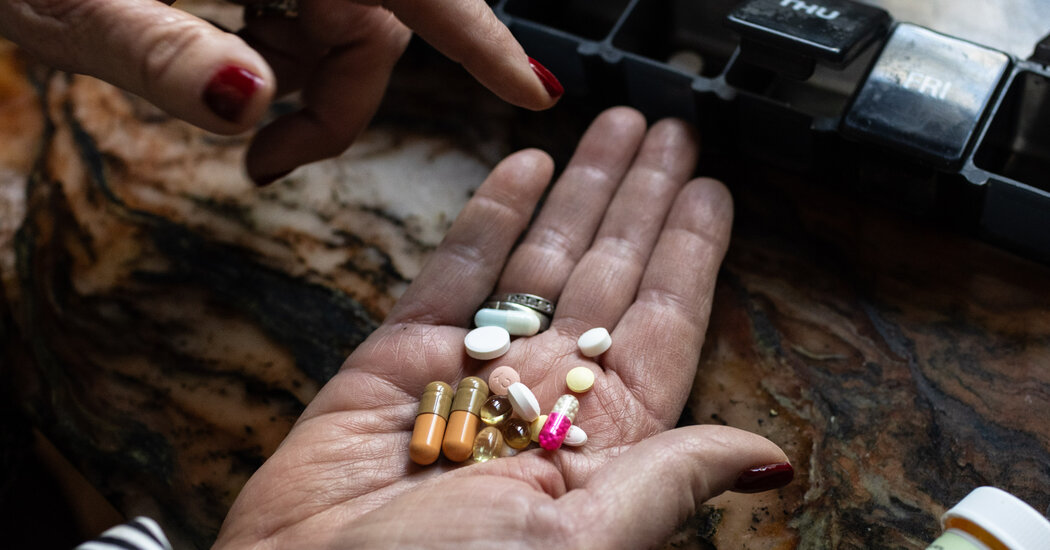
Generic drugs, such as statins and antibiotics, account for about 90 percent of Americans’ prescriptions. They are most often manufactured in India, with heavy reliance on China for ingredients. Republicans and Democrats have identified that as a national security vulnerability.
Doctors and supply chain experts have been sharply critical of the idea of taxing imported generics, saying it threatened to raise costs, spur rationing and lead to shortages of crucial drugs. Until now, the administration had said that generic drugs would be exempted from tariffs.
John Murphy III, chief executive of the Association for Accessible Medicines, a trade group for generic drug makers, said in a statement on Tuesday evening that his industry will work with the administration and lawmakers “to pursue solutions that restore the generics industry to growth and to prioritize its place as a critical national security asset here in the U.S.”