
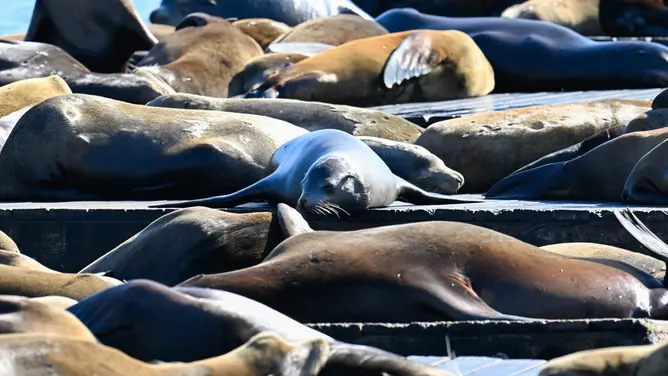
A surge of California sea lions exhibiting neurological distress in Malibu is suspected to be caused by domoic acid poisoning, stemming from toxic algae blooms. The California Wildlife Center said rescue efforts are underway amid urgent public warnings to maintain distance from the animals.
CALIFORNIA – A new threat is lurking along California’s coast — and officials are warning residents to keep their distance.
Sea lions are washing ashore appearing disoriented and erratic, with many showing signs of poisoning.
WATCH: HUNDREDS OF SEA LIONS TAKE OVER CALIFORNIA BEACH
A high number of California sea lions are suffering from domoic acid poisoning.
(Tayfun Coskun/Anadolu / Getty Images)
According to the Marine Mammal Center, an unusually high number of California sea lions are suffering from domoic acid poisoning, also known as toxicosis.
More than 100 sea lions have been rescued since the beginning of the year, with the majority of those rescues occurring since July 1.
In recent days, the Marine Mammal Center said it has received between roughly 300 and 600 calls per day about sick sea lions.
“Over the past week alone, approximately 30 sea lions have been rescued in Monterey County and southern Santa Cruz County, with additional rescues occurring primarily in San Mateo, San Francisco, Marin and Sonoma counties,” the Marine Mammal Center told FOX Weather.
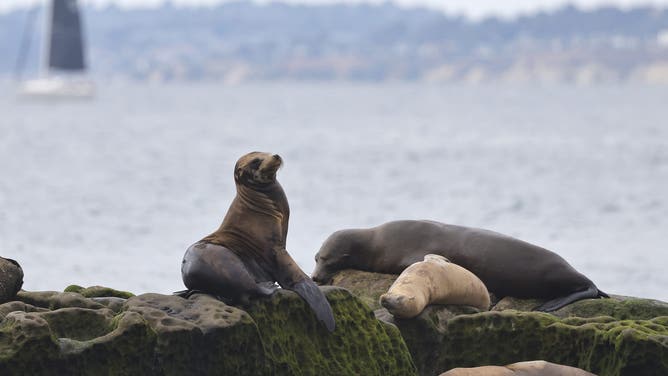
A high number of sea lions are washing ashore appearing disoriented and erratic.
(Mario Tama / Getty Images)
Domoic acid is a naturally occurring algal toxin that can accumulate in fish and shellfish. The toxin can affect marine mammals and humans who consume contaminated fish or shellfish.
When exposed to domoic acid, sea lions can experience a range of neurological symptoms, including lethargy, disorientation, unpredictable behavior, twitching, tremors and seizures.
In some cases, the animals can suffer permanent brain damage in the form of lesions, as well as heart damage.
Veterinarians try to treat affected animals with repeated doses of anti-seizure medication to control neurological activity, along with IV or subcutaneous fluids to support the animals while their bodies clear the toxin.
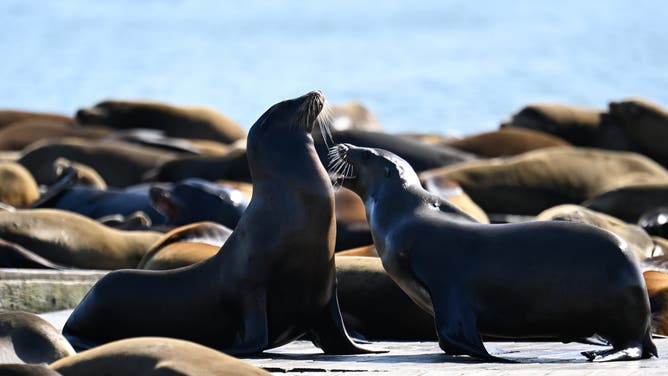
More than 100 sea lions have been rescued since the beginning of the year suffering from domoic acid poisoning.
(Tayfun Coskun/Anadolu / Getty Images)
Domoic acid poisoning typically occurs during certain seasonal conditions, such as cold-water years when coastal upwelling and offshore winds bring nutrient-rich water to the surface, supporting blooms of the algae Pseudo-nitzschia, which produces domoic acid.
But in recent years, animal specialists have observed toxic events during both unusually cold and unusually warm ocean conditions.
BREWING SUPER EL NIÑO COULD TURN THE CALIFORNIA COAST INTO A SUMMER HOTSPOT FOR GREAT WHITE SHARKS
In past years, the Marine Mammal Center has typically rescued roughly 75 to 90 California sea lions suffering from domoic acid poisoning across its California response range. The team said it has already surpassed that average as September begins, and they’ve also noticed northern fur seals are being impacted.
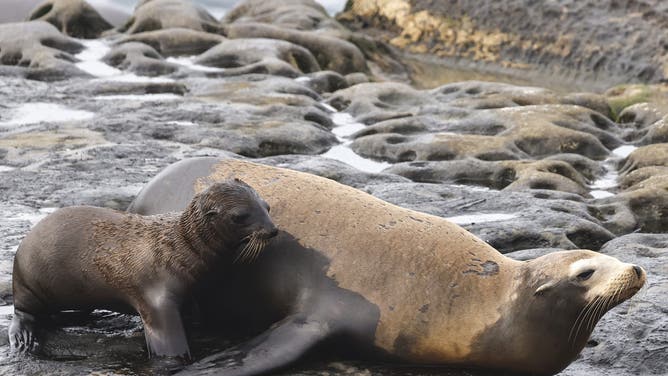
The Marine Mammal Center said it has received between 300 to 600 calls per day about sick sea lions.
(Mario Tama / Getty Images)
The unusually high number of affected animals has placed significant demands on rescue teams.
COLORADO BIOLOGISTS RACE TO SAVE RARE TROUT AS WILDFIRES THREATEN THEIR MOUNTAIN HOME
Responding to a single sea lion experiencing symptoms of domoic acid poisoning can require a team of four to six trained responders, along with a 50- to 100-pound carrier crate.
“These animals can be physically difficult and unpredictable to handle because of the neurological effects of the toxin,” the Marine Mammal Center said. “As a result, our teams are experiencing delayed response times in some areas and may need to prioritize individual animals based on factors such as location, beach access and the density of beachgoers and dogs.”
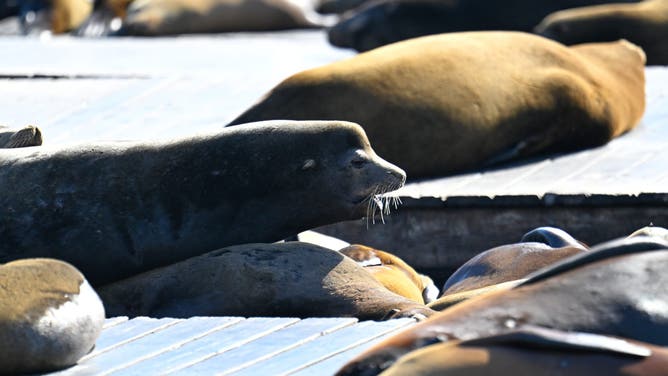
Domoic acid is a naturally occurring algal toxin that can accumulate in fish and shellfish.
(Tayfun Coskun/Anadolu / Getty Images)
Domoic acid poisoning is not a new phenomenon in California. The Marine Mammal Center first diagnosed domoic acid toxicosis in California sea lions in 1998.
What has made recent events particularly concerning is the unpredictability, intensity and changing seasonality of these toxic events.
Now, scientists are working with oceanographers, algal-toxin monitoring experts and climate scientists to better understand how changing ocean conditions and other environmental factors may be influencing these events.
“Because domoic acid is naturally occurring, the challenge is understanding why and when conditions align to produce increasingly significant toxic events,” the Marine Mammal Center said.


