Fake or Fortune? (BBC1)
Rating: Four out of five stars
Defeat thrust into the outstretched hands of victory. Disbelief and disappointment, pain and gall etched on their faces. Fake 1, Fortune 0.
It’s difficult to imagine urbane art dealer Philip Mould bellowing at the sports screen in a pub. And Fiona Bruce is half-Scottish, which perhaps makes England’s World Cup exit more bearable for her.
But the duo looked as heartbroken as any football fans as they stood on the steps of the Society of Antiquaries in Piccadilly, after a seemingly certain win slipped out of reach, in the first of a new series of Fake or Fortune?.
Phil and Fi had spent the episode proving beyond all reasonable doubt that an exquisite lily blossom crafted from gold and enamel was the work of the Russian jewellery genius Peter Carl Faberge.
They carried out all their usual X-rays and chemical analysis. They searched the Faberge archives and cross-examined art historians. Most conclusive of all, they traced the all-important provenance, uncovering a photo of the lily in its rock crystal vase, given pride of place in the cabinet of a celebrated Faberge collector.
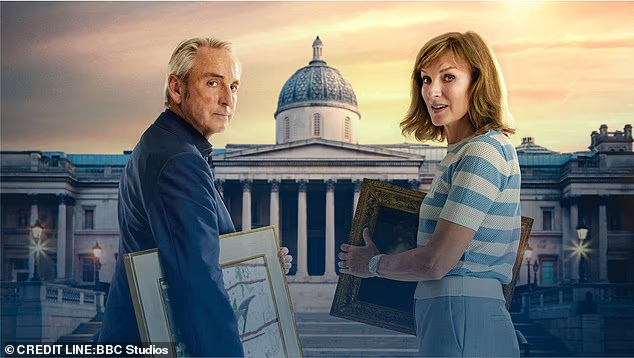
Philip Mould and Fiona Bruce in the new series of Fake or Fortune? The duo spent the episode proving beyond all reasonable doubt that an exquisite lily blossom crafted from gold and enamel was the work of the Russian jewellery genius Peter Carl Faberge

Rachael Randles holds her delicate china flower which she tried to prove was a real Faberge
Everything about the artwork screamed ‘genuine’. Yet the investigation ended in frustration, as Bonhams auction house refused even to look at the fresh evidence of authenticity. Their experts had already rejected the piece, and they had no intention of changing their minds.
‘Sometimes the art world does surprise me,’ grumbled Philip. The blow was worse still for the lily’s owner, Liverpudlian sales associate Rachael, who inherited it from her much-loved step-grandmother, Mary Smith. If certified genuine, the flower could have been worth £300,000 — but if not, perhaps just £4,000.
Mary was the second wife of Rachael’s grandfather, a Southport solicitor named Austin Smith. And how, you might wonder, does a couple like the Smiths, the epitome of middle-class provincial post-war suburbia, come to own a Faberge flower?
The answer was even more intriguing than the art history. Austin was the trusted confidante of several members of the exiled European royal families.
It happened that King Peter II of Yugoslavia was at Cambridge in the 1940s with Austin’s brother-in-law. That’s a tenuous connection, but the solicitor must have been a remarkable man, because he became an invaluable source of legal advice not only to Peter, but to Helen, the deposed Queen Mother of Romania.
Helen was the Faberge connoisseur who left the lily to Mary in her will. But she was also first cousin to Prince Philip, the Duke of Edinburgh. Did Austin provide discreet counsel to our own Royal Family? We may never know.
But as she trawled the archives, Fiona Bruce uncovered a truly remarkable document – a telegram, dated March 1987, to Mary Smith after Austin’s death, offering ‘heartfelt sympathy to you and your family on your grievous loss’.
And the signature on that telegram? Elizabeth R.