WASHINGTON (AP) — An endorsement from President Donald Trump is worth a lot in Republican primaries. But it’s not foolproof, especially when there’s a lot of money involved.
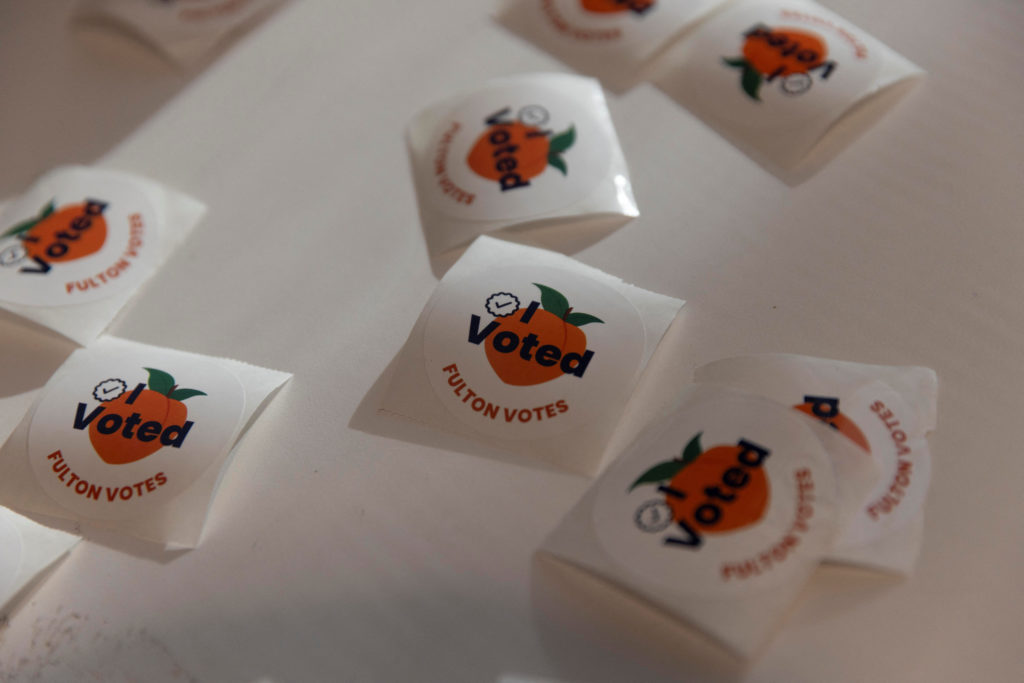
Rick Jackson’s campaign spent more than $100 million, largely out of his own pocket, to defeat Trump-endorsed Burt Jones in the Republican runoff for Georgia governor. It was another rare example of the president’s choice falling short in a primary battle.
Trump’s efforts were more successful elsewhere. His candidate for U.S. Senate won a runoff in Alabama, and his pick for Oklahoma governor advanced to another runoff there.
Four states and the District of Columbia held primaries Tuesday. Among Democrats, the contests hinged on longstanding divides between progressives and moderates as the party tries to chart the best path forward to November.
Here are some takeaways as votes come in from Alabama, California, the District of Columbia, Georgia and Oklahoma.
Follow along with live results from the Associated Press:
Trump’s endorsement can be overcome — for a price
Nothing is certain in politics, but a “complete and total endorsement” from Trump is about the surest path possible to winning a Republican primary.
Jackson found another path to the Republican nomination for Georgia governor, but it was pricy. The billionaire healthcare tycoon personally supplied most of the $100 million-plus that his campaign has spent to persuade Republican primary voters to overlook Trump’s advice.
Trump endorsed Lt. Gov. Burt Jones more than a year ago and reiterated his support last week, praising Jones’ “Courage and Wisdom” in a social media post.
Before Tuesday’s runoff, Jackson came in second behind Jones in the May 19 primary, though nearly a third of voters backed other candidates.
Jackson will face Democrat Keisha Lance Bottoms, the former Atlanta mayor, in November to lead one of the nation’s preeminent battleground states.
Meanwhile, Oklahoma’s Republican primary for governor tested Trump’s endorsement in a different way. There, the president weighed in late, throwing his support two weeks ago to former state Sen. Mike Mazzei among a crowded field without a clear front-runner. Mazzei secured a spot in a runoff on Aug. 25, finishing nearly even with Attorney General Gentner Drummond.
Trump is used to getting his way, but earlier this month his choice for governor of Iowa, U.S. Rep. Randy Feenstra, lost to Zach Lahn in the state’s primary.
MAGA becomes the insider movement and faces an outsider
Trump rose to power as an outsider, the head of a “Make America Great Again” movement keen to bulldoze the old political order.
But now the onetime insurgent sits atop a sprawling establishment. What happens when he endorses an insider candidate?
In Alabama, it worked out for Trump. He successfully backed U.S. Rep. Barry Moore, a three-term congressman who has promised to be “a warrior for President Trump’s ‘America First’ agenda” if elected to the Senate.
READ MORE: What to watch in midterm primaries and runoffs in Alabama, Georgia, D.C. and more
Moore defeated former Navy SEAL Jared Hudson, who presented himself as a Washington outsider and tried to harness the anti-establishment fervor that propelled Trump to power to defeat Trump’s preferred candidate.
Alabama is a Republican stronghold, so the GOP primary victor will be heavily favored to prevail in November.
The seat is being vacated by Sen. Tommy Tuberville, the Republican nominee in the race for Alabama governor.
DC mayor’s race features a democratic socialist and a new voting system
One of the leading Democratic contenders in the District of Columbia mayor’s race, Janeese Lewis George, describes herself as a democratic socialist, a political denomination that became more prominent with Sen. Bernie Sanders’ presidential campaigns.
Lewis George’s bid for the party’s nomination is not so far removed from democratic socialist Zohran Mamdani’s upset victory for New York City mayor last year. The race has drawn national attention, including the president’s.
Trump indicated days before the mayoral primary election that he might take over the city if Lewis George wins, saying “we won’t put up with it.” Lewis George called Trump’s threat “an attack on democracy itself.”
The overwhelmingly Democratic city’s relationship to the president is a focal point of the campaign as Trump has exercised broad power over Washington, D.C. That’s included an open-ended deployment of National Guard troops in the streets and his culling of the federal workforce, a chunk of the city’s jobs.
Some residents were frustrated that the mayor, Muriel Bowser, didn’t push back enough on the administration. Part of Lewis George’s platform on her website, which heavily focuses on affordability, is to “protect Home Rule” with “leaders that stand up and fight back, not shrink in the face of injustice.”
The race was too early to call on Tuesday night, and it could be decided by D.C.’s new ranked choice voting system.
Like a handful of other places, D.C. voters ranked the candidates on a ballot, and if no one crosses 50% of the popular vote, then residents’ second choices come into play. That happened in Maine, where election officials started counting ranked choice votes for governor and a key House race three days after election night.
In D.C., election officials have warned the new system could delay results by days.
Georgia Republicans opt for candidate less skeptical of the 2020 election
State Rep. Tim Fleming won the Republican nomination for Georgia secretary of state Tuesday night, defeating opponent Vernon Jones, who leaned more into conspiracies over Trump’s loss to Joe Biden.
The two were competing in an election to replace Secretary of State Brad Raffensperger, who resisted Trump’s unfounded claims of election fraud and the president’s request to “find 11,780 votes” six years ago.
Those claims hovered over Tuesday’s race.
Jones had said he believes there were “irregularities” and “violations” in 2020 and he stands “with those who believe there was election fraud.” Of four key points on Jones’ campaign platform, three had to do with election management, including stronger voter identification rules.
Fleming tiptoed around the topic, saying there were “irregularities” in 2020 but adding he’s “not running on conspiracy theories.” Of the seven platform points on his campaign website, however, four were focused on election management and one said the state should “make it impossible for the Left to cheat in our elections.”
Fleming will face Democrat Penny Brown Reynolds, who won her party’s nomination Tuesday.
More progressive candidate advances in California race to serve out Swalwell’s term
Democrat Eric Swalwell resigned from the U.S. House and dropped his bid for California governor in April after a woman alleged he had sexually assaulted her twice, saying she was too intoxicated to consent to sex in both cases.
A special primary election was held Tuesday to finish Swalwell’s term, and Democratic state Sen. Aisha Wahab advanced to the special general election on Aug. 18. It remained too early to determine who would fill the second slot.
Whoever wins will serve in the U.S. House through January. Wahab was favored along with Melissa Hernandez, a Bay Area Rapid Transit director.
Wahab, who’s established in California politics, represents a more progressive wing of the party, while Hernandez is a local politician who sits closer to the political center. To lower costs, Wahab takes aim at “corporate profiteering” and argues for an expansion to social safety nets. Hernandez focuses on local job growth and supporting small businesses.
Both candidates also ran in the regular primary election for Swalwell’s seat and will face off in the general election in November. Whoever wins that race will take over next year.
Cooper reported from Phoenix, and Bedayn from Austin, Texas.