Anti-data center activists have been notching big victories across the country. Just this month, data center bans were passed in Holyoke, Mass., Monterey Park, Calif., and Seattle, Wash. And the prospect of upcoming elections may be helping fuel those victories.
Recent polls have strongly reflected many Americans’ dislike of data centers. A Gallup poll from May found that 71% of Americans would oppose a data center in their area. Voters have sent early warning shots that they are willing to choose their local leaders based on the issue. In the small town of Festus, Missouri, residents ousted half their city council after those members approved a $6 billion data center development.
Applying Pressure
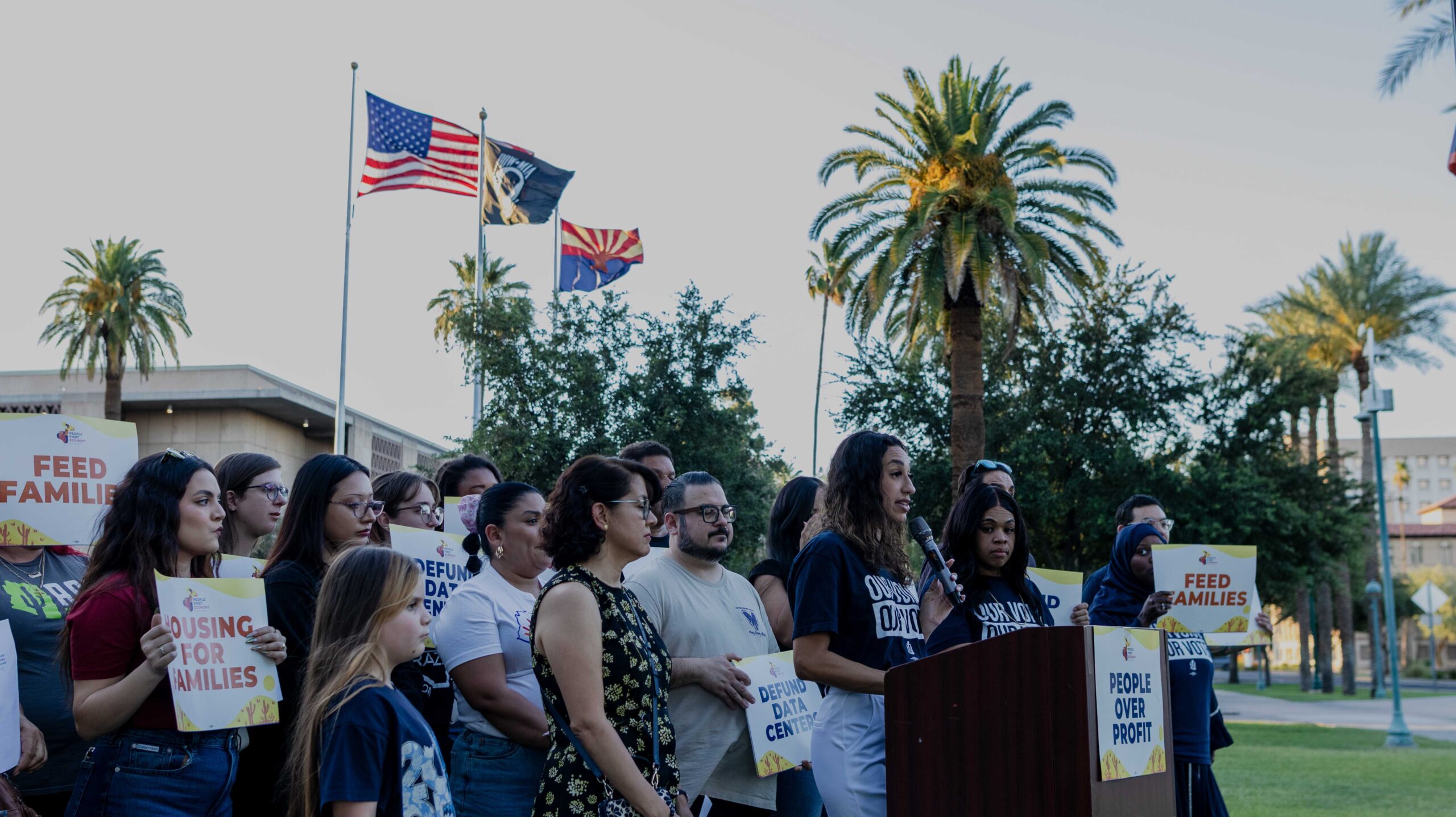
Activists are trying to capitalize on the threat of the election to strong-arm politicians into supporting anti-data center measures. In Arizona, following intense lobbying from both sides, Governor Katie Hobbs just signed a state budget that includes a three-year moratorium on data centers receiving tax breaks. The measure represents a major victory for a raucous anti-data center movement across the state, which had previously included protests in Chandler and Ahwatukee.
Alejandra Gomez, the executive director of the non-profit LUCHA, says that the moratorium emerged from the passionate advocacy of many Arizonans—and in the face of fierce counter-lobbying from the data center industry led by former Arizona Senator Kyrsten Sinema.
“We were able to apply pressure with members, community stakeholders, and organized labor: a surround sound of being in the neighborhoods, canvassing, having dinners, doing press conferences, being in the media,” she says.
Tech industry lobbying and campaign donations have proved effective in recent years. In 2024, I wrote about crypto’s successful efforts to get many candidates to support pro-crypto stances. But while the AI industry is putting an avalanche of money into races, the results so far have been different, partially because so many people from so many different backgrounds and ideologies hate data centers. Gomez says that “all of the efforts of this significant lobby came crumbling down because Arizonans have been dialed into this fight and have not stopped speaking out against the extraction of these data centers.”
Read More: The People vs. AI
The industry, unsurprisingly, has a different view. “There is a foreign influence campaign underway to degrade America’s lead in the AI race, and they just scored another victory in Arizona,” Sinema, a co-chair of the AI Infrastructure Coalition, wrote in an email to TIME. “What this tax-exemption moratorium actually does is tell the companies delivering real economic growth to our communities that Arizona is closed for business, and the jobs, tax revenue, and economic future that come with them should go to neighboring states instead.”
Community Engagement
Even when activists don’t get their way, they are trying to turn their ire following losses into election momentum. Earlier this month, activists in El Paso, Texas tried to claw back tax breaks that the city had agreed to give to Meta for a data center in 2023. At a city council meeting last week, roughly 180 speakers delivered over eight hours of public comments about why they opposed Meta’s presence in the city.
Ultimately, the vote failed 5-3, with city council members and the mayor arguing that breaking a binding deal would put taxpayers at risk. But Josh Acevedo, the city council member who introduced the proposal, says the fight is not over—and expects the energy around the dispute to carry forward into coming elections. “It is unlike anything I’ve ever seen in my community before, to see people that showed up that had no idea where City Hall was,” he says. “Some of them may have not even voted before. But they’re concerned about this issue.”