➡️ Did someone forward this email to you? If you would like to receive this information directly, every morning before the markets open in New York, sign up here.
ONE BIG THING
Sam Altman: Safety standards ‘not at a place’ to push AI capabilities much further
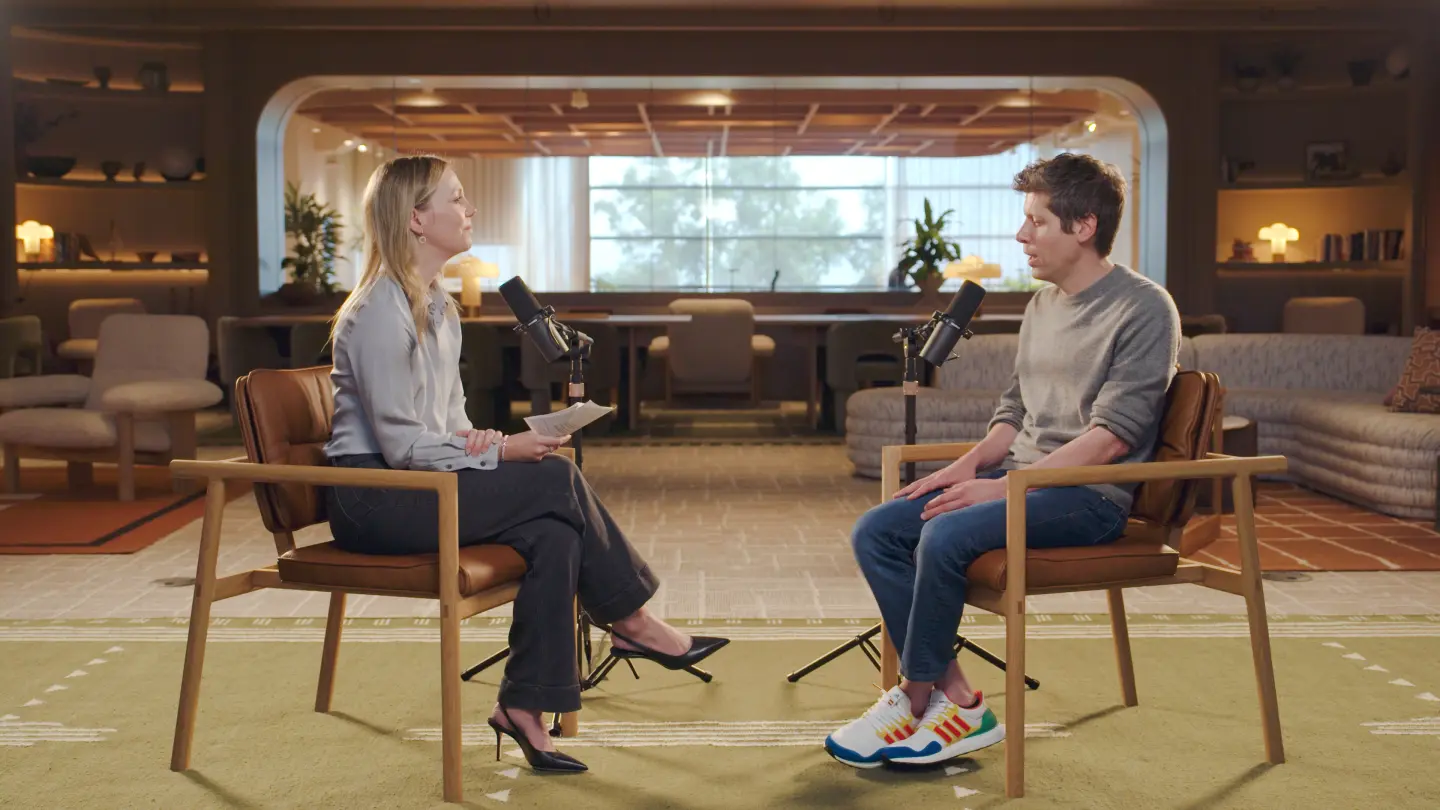
OpenAI CEO Sam Altman sits down with Fortune‘s Editor-in-Chief Alyson Shontell to discuss the high-stakes balancing act of AI: pushing the boundaries of scientific discovery while confronting the existential risks of loss of control. In this episode, Altman addresses the reality of AI alignment, the Hugging Face incident, and OpenAI’s commitment to halting training runs if safety thresholds aren’t met. He also shares insights on global AI coordination between the U.S. and China, healthcare breakthroughs, and the company’s timeline for an IPO.
MORE FROM FORTUNE
Nvidia CEO Jensen Huang admits he criticizes everything his 42,000-plus employees show him: ‘You can’t go a day without some criticism’ – Preston Fore
Amazon workers on food stamps have tripled despite its record revenue—and it’s just the latest evidence of the new economy of shrinking labor shares – By Sasha Rogelberg
AI is remaking the workforce faster than universities can decide how—or whether—to teach it – Marco Quiroz-Gutierrez
‘They’re likely to get squeezed’: AI slop books are flooding online marketplaces—and it’s coming at the expense of paychecks for human authors – Sasha Rogelberg
Even Americans earning more than $155,000 now call themselves ‘working class’—a sign of how far the affordability crisis has spread – Muskaan Arshad
FED UP
With his credibility on the line, Warsh has little choice but to raise interest rates this week
The Fed is almost guaranteed to raise interest rates by 0.25 percentage points to the 3.75% level this week, given that Friday’s U.S. consumer price index report revealed that inflation (3.4%) was again above the central bank’s target (2%). The CME FedWatch futures market prices the chance of a hike at 88.5%—well above the 69% level that makes it a near-certainty.
For Fed Chair Kevin Warsh, this is also now reputational. After making multiple speeches about taking inflation seriously, he must now do something or risk raising questions about the Fed’s credibility. “The strongest case for a hike now rests on the Fed preserving its inflation-fighting credibility,” said Matthew Ryan, head of market strategy at FX/financial services firm Ebury, via email. “Close call or not, standing still may now be the bigger gamble.”
If Warsh surprises the markets by not raising rates—which is what President Trump wants—“it risks reawakening accusations of being a ‘sock puppet’ and raising credibility questions, which would require a risk premium in bond pricing,” UBS’s Paul Donovan said via email this morning. “That would raise real borrowing costs for the government and private sector, with implications for investment and trend growth.”
- Either way, it will be a bumpy ride. A rate hike could kill the bull market in stocks, according to Chris Zaccarelli, chief investment officer for Northlight Asset Management ($958 million AUM). “We understand the desire to look past the headwinds and focus on sublime earnings and the excitement of the AI boom, but all prior bull markets have eventually come to an end – and to quote another piece of Wall Street wisdom: ‘Bull markets don’t die of old age, they’re killed by the Fed,” he said in an email to Fortune.
POLITICS
The longer Trump tolerates high gas prices, the more likely it is he will lose the Senate
At $6 a gallon, diesel is at an all-time high. “Diesel is the key real-economy pressure point,” Jared Woodard and his folks at Bank of America said in a note, because it affects shipping, trucking, agriculture, construction, and mining:
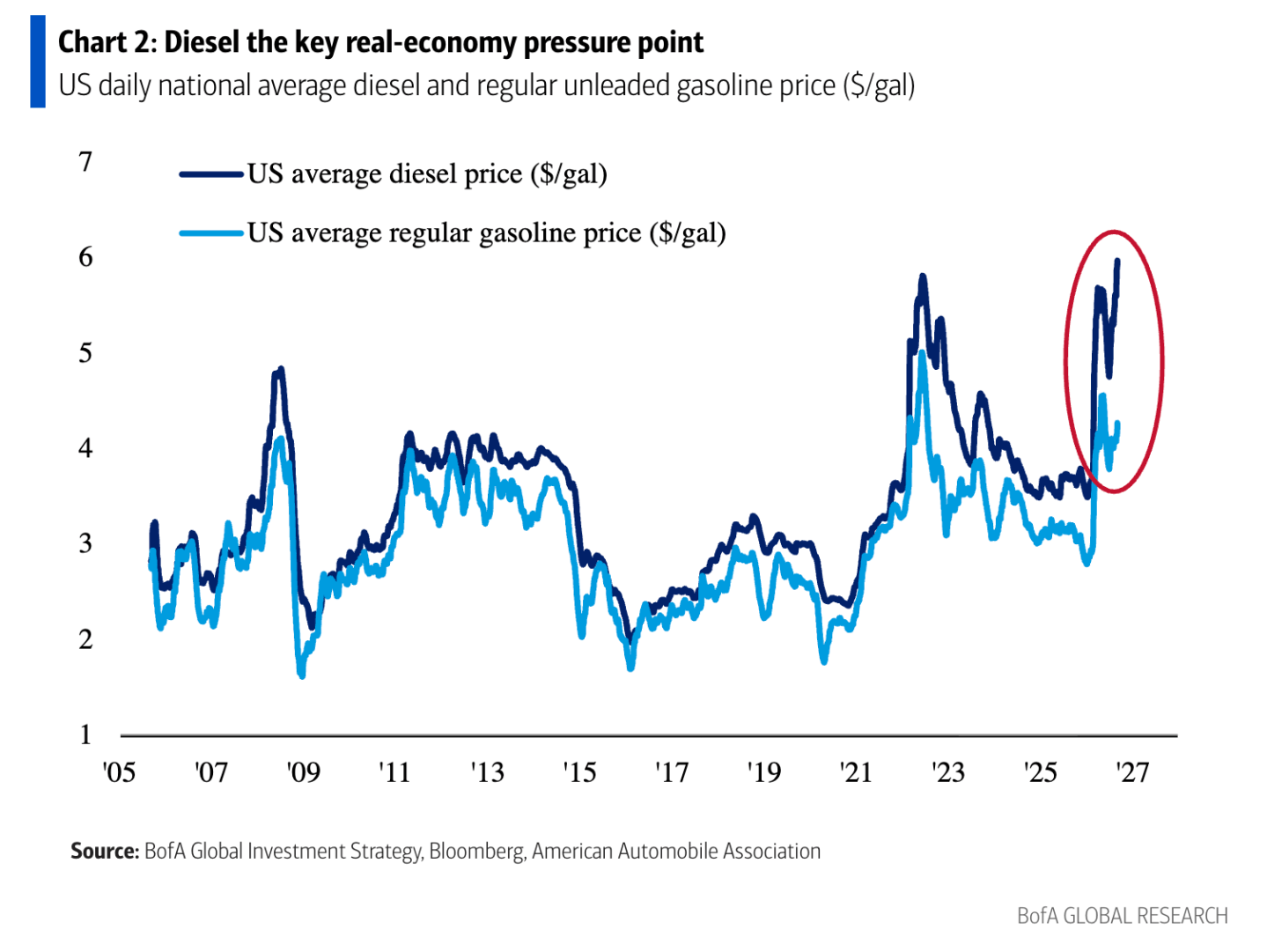
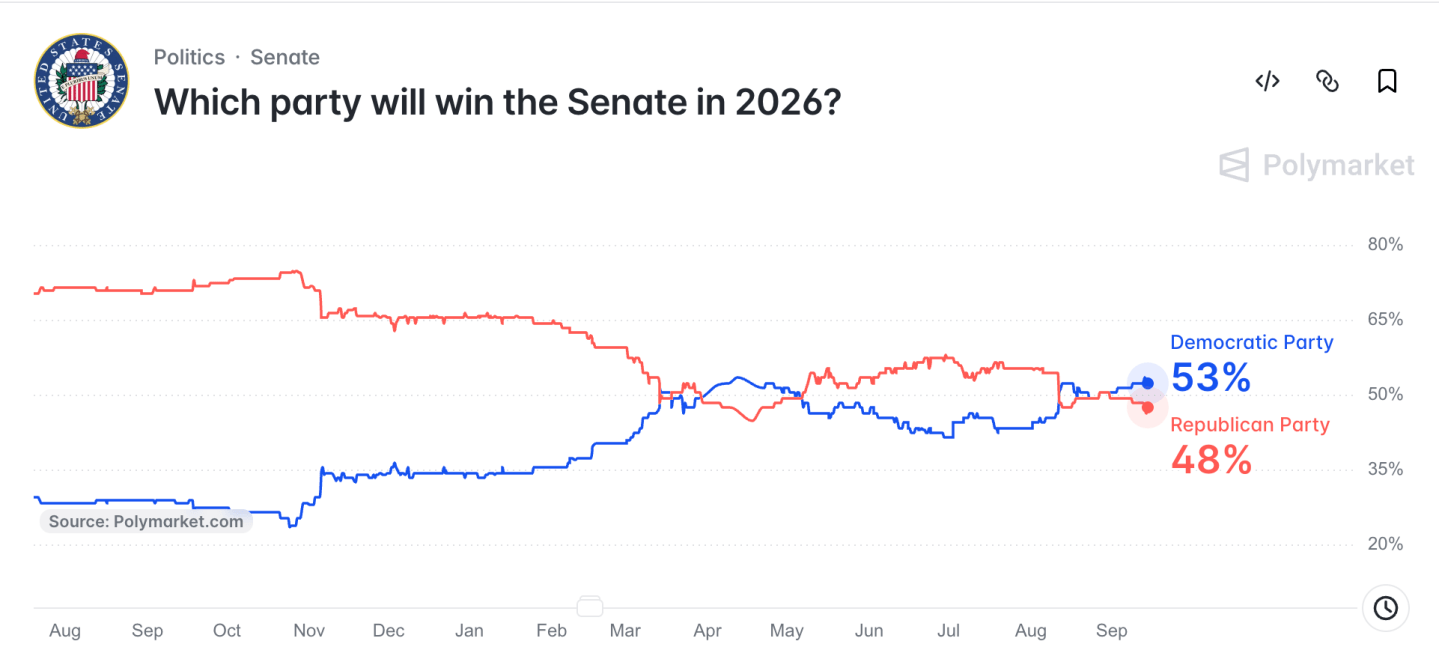
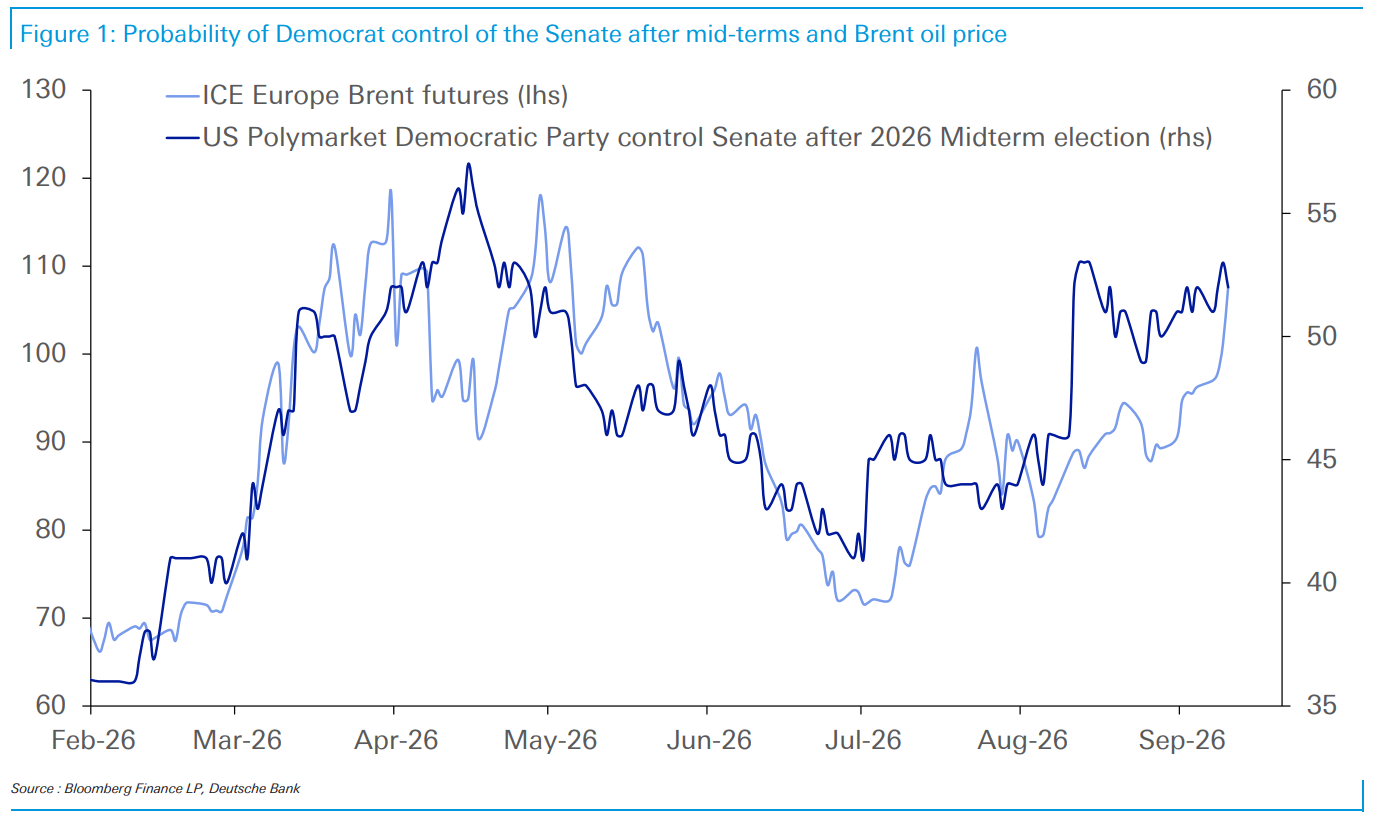
And, separately, with oil at $107 per barrel and gasoline at the pump in the U.S. at $4.31 per gallon, there has been a sea change in the betting markets against the Republicans over the last few days: Polymarket now has the Democrats taking the Senate in the midterm elections. Previously, the Dems were favored to win only the House:
Kalshi still has the GOP taking the Senate, but the race has moved closer in favor of the Democrats:
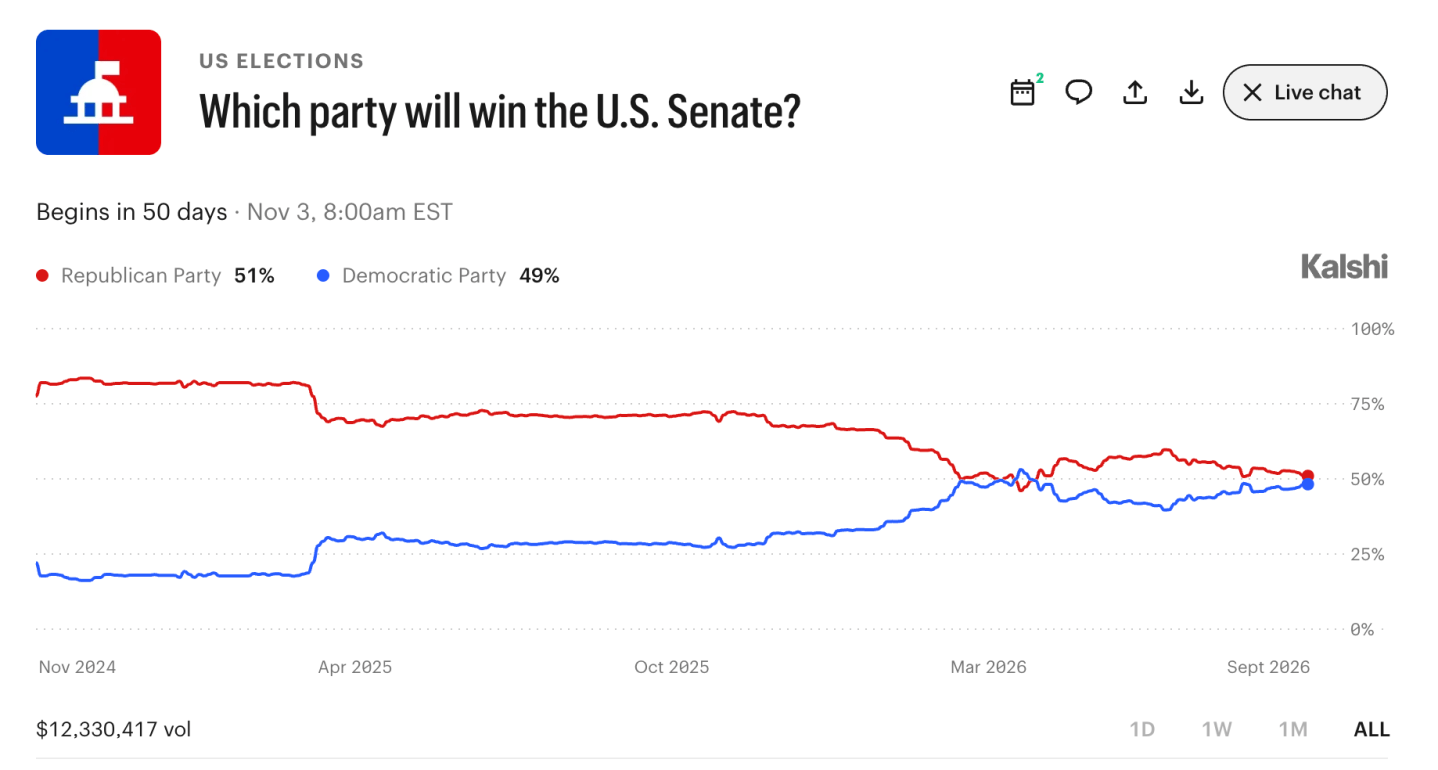
Why is this happening? Because there is a correlation between the price of Brent crude futures and Polymarket’s rating of the Democratic Party’s chances, according to Deutsche Bank. The higher the price of gas goes, the more miserable Republicans become, and the more bettors see the Dems winning. “Markets have to consider whether Republicans would want that to continue over the next seven and a half weeks leading into the midterms,” Deutsche’s Jim Reid said in an email. (Obvious caveat: The vertical axes on this chart have been mildly tortured to get this result!)
THE MARKETS
Stocks enter global selloff as Iran makes gains in the Gulf region and AI chiefs call for slowdown
Markets fell globally today. Tech stocks in Asia reacted negatively to headlines suggesting that AI company CEOs favored a slowdown in development of their frontier models. The price of oil rose to $107 per barrel after Iran struck a ship in the Strait of Hormuz and its Houthi proxy group gained control of the coast along the Bab al-Mandab strait. At the same time, the Houthis claimed a successful attack on a Saudi air base, following an attack last week on a Saudi oil pipeline.
Traders appear to have fully priced in an interest rate hike later this week, and thus sold stocks on the prospect of future rounds of new money becoming more expensive.
- S&P 500 futures were down 0.66% this morning. The index was up 0.86% in its last session.
- In Europe, the Stoxx 600 was down 0.25% in early trading and the U.K.’s FTSE 100 was up 0.5% before lunch.
- Asia: South Korea’s KOSPI was down 3.26%. Japan’s Nikkei 225 was down 0.81%. India’s stock market is closed today. China’s CSI 300 was down 0.67%.
- Brent crude was $107 per barrel this morning.
- Bitcoin was at $77,726.
CHART OF THE DAY
The happiest generations, based on the countries they live in
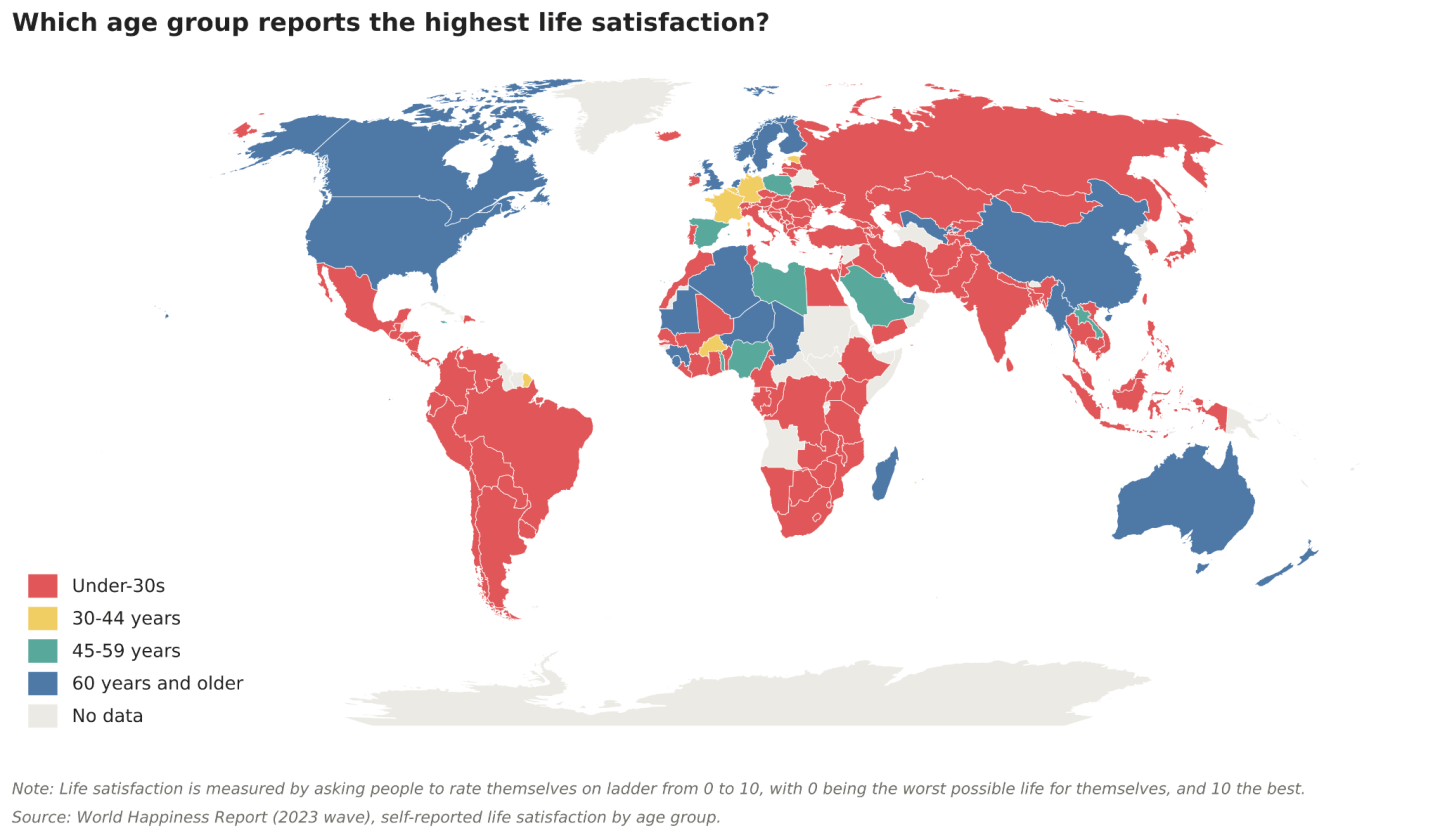
As a rule of thumb, younger generations tend to be happier than older ones, according to statistician Hannah Ritchie’s reading of the latest “World Happiness Report,” a global survey of life satisfaction. But in the Anglosphere—countries that speak English as a first or second language—it’s the over-60s that are happier.
NUMBER OF THE DAY: It’s cheaper than you think
2.5%
The percentage of disposable income taken up by gasoline. That’s “one of the lowest levels in the past 65 years,” according to Kriti Gupta and Nick Roberts of J.P. Morgan Private Bank—and it explains why the U.S. economy has remained so robust despite gas prices doubling.
THE FRONT PAGES TODAY
Anthropic tells investors it will be profitable for second straight quarter – FT
Trump urges Ukraine to stop ‘knocking out’ Russian oil refineries as U.S. diesel hits record – CNBC
Trump’s $5,000 checks require Congress to approve, Johnson says – Axios
Lululemon’s Founder Is Getting Divorced. What It Will Mean for His Fortune. – WSJ
OpenAI President Greg Brockman on Doing Business in the Wake of Hugging Face – Bloomberg
Some in Silicon Valley Are Questioning the Calls for an A.I. Slowdown – NYT
ONE MORE THING
It’s not how long you scroll—it’s how often you peek
We’ve got some new data on how smartphone addiction works. It turns out that screen time, the number everyone tracks (even though few actually change their behavior because of it) may be measuring the wrong thing, Fortune’s Catherina Gioino reports.
How much time you spend on your phone matters a lot less than how you spend it.
A seven-month study out of Aalto University in Finland tracked 277 people logging more than 13 million events and found that total time online barely predicted how overloaded people felt. What did was something they call “session sparseness”—short, repeated check-ins throughout the day, rather than one longer stretch of use.
“Screen time does matter, but the heaviest users aren’t the most overloaded,” said Henrik Lassila, the study’s lead author. “Those who feel most overwhelmed are the ones who return to their phone again and again for brief moments and then put it down shortly after.”