Vladimir Putin’s grip on power has remained resilient despite the economic woes caused by his invasion of Ukraine, but the seeds of an eventual decline may have already been planted, according to a former Russian central bank advisor.
A telltale sign is the Kremlin’s abandonment of any fiscal discipline as the costs of fighting the Ukraine war, which is now in its fifth year, strain existing resources.
Alexandra Prokopenko, who is now a fellow at the Carnegie Russia Eurasia Center, pointed out in a recent Financial Times op-ed that the war has forced Russia to unwind its long-touted fiscal restraint.
In a striking example of the turnaround, Russia’s parliament recently gave the finance ministry a blank check to spend more and borrow past its debt ceiling without a formal budget or explicit legislative approval.
That’s as the budget deficit through May is already double 2025’s full-year level, hitting 2.6% of GDP, or about $83 billion. At the same time, Russia’s sovereign wealth fund, which has been tapped to cover budget shortfalls, is being rapidly depleted and just a fraction of prewar levels.
“A cornered autocracy is rewriting the fiscal rules as it goes, cutting parliament out of the loop, and will not admit to dangers it cannot control,” Prokopenko wrote. “It’s less dramatic than a palace coup, but this is what decline looks like.”
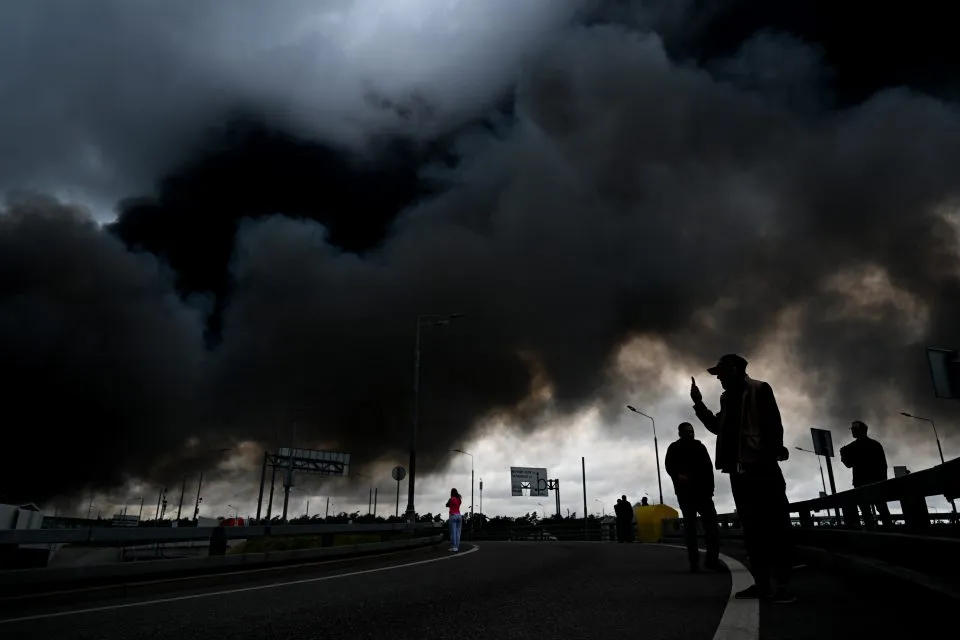
The precipitous deterioration in Russia’s finances coincides with Ukraine’s stunning military successes this year. Advanced drones and new tactics have allowed Kyiv to not hold off the Russian military’s attacks but push them back and regain territory. Long-range drones are also reaching deep into Russia, including St. Petersburg and Moscow, targeting refineries and the defense industrial base.
The result has been devastating battlefield casualties that now outpace the ability to raise fresh recruits as well as soaring death-benefit payouts and widespread fuel shortages across the country.
Meanwhile, the Kremlin has been unable to defend against all of Ukraine’s drone attacks, forcing companies to spend more than $1 billion of their own money on makeshift protection. But Moscow also refuses to reimburse them.
Putin’s “juggling act” has now come to an end as he can no longer fund his war, keep a lid on inflation, and continue growing the economy all at once, Prokopenko said.
“The war is increasingly paid for by quietly invoicing the population and suspending the state’s own rules,” she added. “A regime sustained this way is heading for a poorer, angrier country, a financial system out of control, and war funding it cannot count on. The end, when it comes, will spring from this kind of decline, the sort that begins long before anyone names it.”
For now, Putin’s grip on power is secure, but public discontent is growing as average citizens buckle under the pressure of high inflation and onerous interest rates.
Russia’s fuel shortage has added to the misery, creating long lines at gas stations with motorists waiting for hours to fill up. Frustration is boiling over, and fights are breaking out between people struggling to buy rationed supplies of gasoline.
Sefa Karacan/Anadolu via Getty Images
In addition, the Russian military’s “meat-grinder” tactics in Ukraine, where troops suffer ruinous losses for barely any gain, are creating a backlash.
In fact, the average life expectancy of a new recruit is about 10 days to three weeks, and once on the battlefield, their survival averages just 20-35 minutes, according to Russian military bloggers.
One Russian blogger, who is a veteran the Ukraine war going by the name Aleksandr Lunin, posted a video on Thursday that went viral. In it, he described regular torture of soldiers by their own commanders, according to Radio Free Europe.
Lunin also demanded a live, on-air meeting with Putin and warned that if it did not take place soon, “the army will turn its weapons against the Kremlin.” He added that he was relaying the sentiment of active-duty military and security officials who met with him earlier.
But he walked back the mutiny threat on Friday, explaining that if soldiers wanted to rebel, they would do it quietly and not ask him to issue a warning for them
Still, the original video was so widespread that Putin’s spokesman was asked to comment on it, and said the Kremlin was aware “that such an appeal exists.”
Peter Frankopan, a professor of global history at the University of Oxford, cautioned in a Foreign Policy article that a revolution in Russia is not likely.
Instead, continued economic pain and disenchantment over the war will convince certain factions in the regime “that it is time for a new start,” he said, adding that “today’s cracks can become tomorrow’s fissures.”
But that could also make Putin more dangerous as fights to cling to power, raising the risk of escalation in Ukraine or other parts of Europe.
“Beware the drowning man: The coming months will likely be dangerous outside and inside Russia as Putin tries desperately to stay afloat,” Frankopan warned.