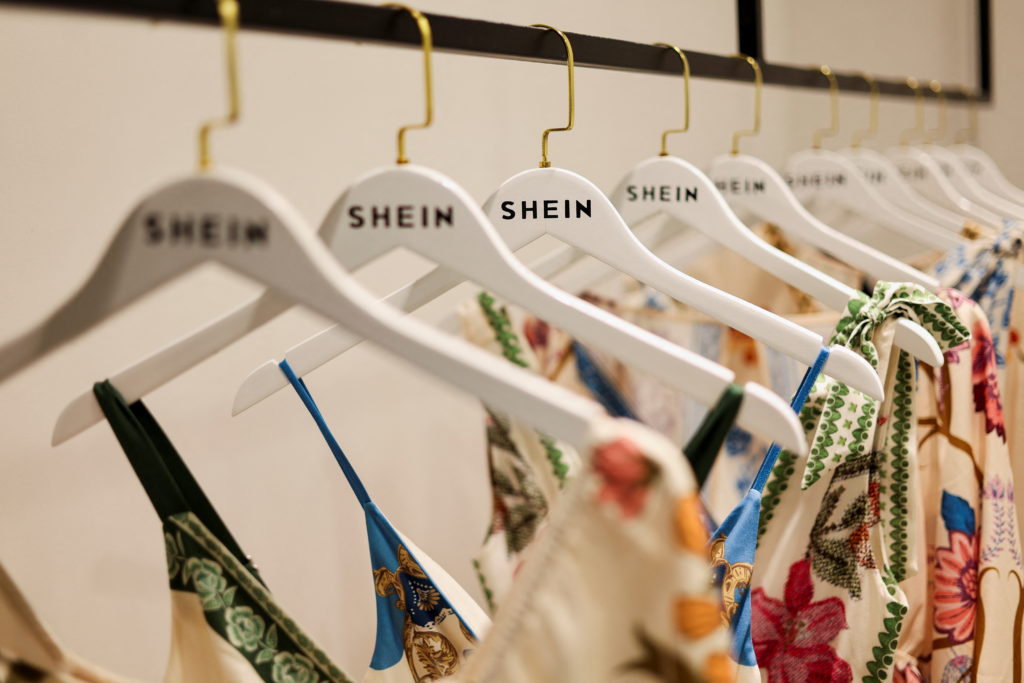
A deal between two seemingly incompatible clothing brands is causing a lot of consternation among customers and raising questions about sustainable fashion. Shein, the Chinese fast-fashion giant, is acquiring Everlane. For many, Everlane has been the face of a sustainable and ethical way to buy clothes online, but that all may change going forward. Liz Landers discussed more with Maxine Bédat.
William Brangham:
A deal between two seemingly incompatible clothing brands has sparked controversy and it raises questions about the whole idea of what’s known as sustainable fashion.
Our Liz Landers is back with more.
Liz Landers:
William, the Chinese fast fashion and low cost giant Shein is often called the largest polluter in the industry. It’s riddled with controversy surrounding labor violations, design theft and more. Shein is now acquiring Everlane, a much-loved clothing brand known for what it called radical transparency.
The company had even gone so far as to tell consumers about the factory where its clothes were made and exactly what it cost to produce them. For many customers, Everlane has been the face of a sustainable and ethical way to buy clothes online. But that all may change with this deal.
For more, I’m joined now by Maxine Bedat, the founder and director of sustainable fashion think tank New Standard Institute.
Maxine, thank you for joining us.
Maxine Bedat:
It’s great to be here.
Liz Landers:
So, earlier today, “Vogue” reported that Everlane CEO Alfred Chang addressed this merger and he said in a message to staff that — quote — “We will continue operating independently with our design standards, brand philosophy and values intact” and that this deal gives them the — quote — “stability and resources to make a larger impact.”
Is that really possible? Do you believe him?
Maxine Bedat:
I’m not sure what those vague terms mean. I think if there was some clarity on what that meant, it would — there would be more of a nail to hang on there.
But without that, it’s really unclear. Shein is a company that is known for its speed. It’s known for air freighting product, which is very high in emissions. So it’s not clear to me how this sustainable company is going to do emerging with what is seen as the biggest and baddest.
Liz Landers:
Why do you think there’s been so much backlash to this deal?
Maxine Bedat:
I think people really wanted to believe in Everlane. I think this was part of that Obama era enthusiasm that we could buy our way into sustainability.
And so to see this company, which people spent more money on their products, thinking that it was leading to a better place, to a less impactful industry, well, it’s proven to be really untrue with this sale to Shein.
Liz Landers:
Shein is known to be the largest polluter in fast fashion, and it’s faced backlash in the past for using the term net zero language in their advertising when they couldn’t substantiate that.
What has Shein done to the industry at large? And how have they impacted the environment?
Maxine Bedat:
It’s had a huge negative impact on the environment in a couple of ways.
Really, the basic core of the problem here is that Shein really represents not just fast fashion, but hyper-fast fashion. It makes what we used to consider fast fashion almost seem slow and quaint. They’re introducing thousands of styles every day to consumers.
So it’s getting customers to expect new things, to buy new things, to be expected to buy new things just regularly. That’s really the impetus of what is then a lot of waste and an enormous environmental impact. I’d mentioned that they air freight their products directly to consumers. That air freighting has an enormous climate impact.
I was just looking up, from 2023 to 2024, they increased their emissions by 23 percent in one year. That increase in emissions, that one year represented, more than all of Gap’s emissions, just as a reference point.
So it’s having a massive climate impact and chemical impact as well. There’s been a lot of testing from various different countries that are finding toxic chemical loads on their products, so just a really significant environmental impact, as well as a labor impact.
Liz Landers:
How do you think that this sale is going to impact Everlane’s image?
Maxine Bedat:
It’s hard to think that the customer is going to follow them.
I imagine that, for Shein, what they’re looking for is access to a higher price point, a marketplace that is more higher end. And so it’s kind of their equivalent of a Quinn sort of brand. So I can see why they are thinking they’re going to get something out of this.
We will see if the shoppers, the consumers actually follow them there. I think there’s a lot of lost trust out of this exchange.
Liz Landers:
Do you think that this benefits Everlane in any way? I think they’re trying to present it as that. But do you think that that will translate to a consumer?
Maxine Bedat:
I think what is clear is this was a bit of a fire sale. Everlane has seen revenues decrease. It has a high debt load, and I think its investors just wanted out, and this was the way to do it.
So it allows them to carry on as a company, but I’m not sure it provides much beyond that.
Liz Landers:
Maxine, what is the viability of sustainable clothing when there are so many other brands that are veering away from that now?
Maxine Bedat:
I think we have to just move away from this idea that there is such a thing as sustainable clothing. In every other industry, when we talk about the environmental standards, we’re trying to create level standards across the industry, rather than assuming that the consumer is the one expected to buy the product that has a lower impact.
I think this is really just — the sale is a demonstration that we’re not going to buy our way into sustainability. If we want a sustainable industry, we have to have legal standards in place, and that’s just not something that we have at the moment. But it’s a real clear indication that that’s what’s needed.
Liz Landers:
Maxine Bedat, thank you so much for your time.
Maxine Bedat:
Thanks for having me.