An Explore.org camera facing a pier in Santa Monica, California, caught the Magnitude 4.7 earthquake that shook the Los Angeles Area.
SAN JOSE, Calif. – After months of powerful earthquakes rattling along the Pacific Ring of Fire, head-turning research is being done in California, where scientists say part of the San Andreas Fault may be slipping faster than previously thought.
Researchers at San José State University found evidence suggesting the San Andreas Fault has been slipping at a faster and more consistent rate than previously thought, the New York Post reported.
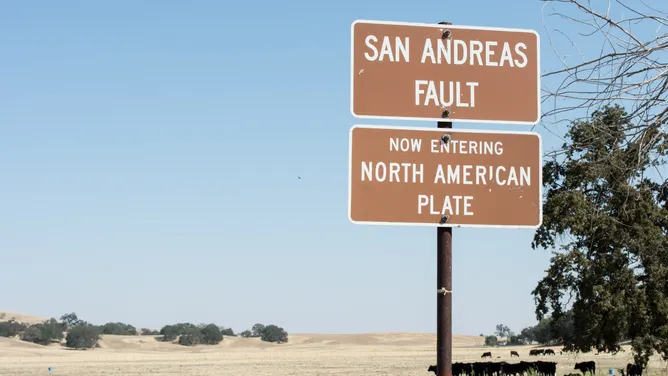
Parkfield, CA, September 9 ,2016: Cattle grazing on the faultline of the San Andreas Fault in Parkfield, California. Parkfield, CA calls itself the earthquake capital of the world where the faultline between the Pacific plate and the North American plate is prominently marked.
(ehughes / Getty Images)
Using clues left behind by thousands of years of earthquake history in California’s Sanborn County Park, the team found that the fault’s rate of movement appears to have remained consistent for roughly 10,000 years rather than slowing over time.
WHAT ARE THE LARGEST EARTHQUAKES TO STRIKE THE US?
The faster a fault slips, the more frequently it can generally produce earthquakes — making the new research a potentially significant revelation about the San Andreas Fault.
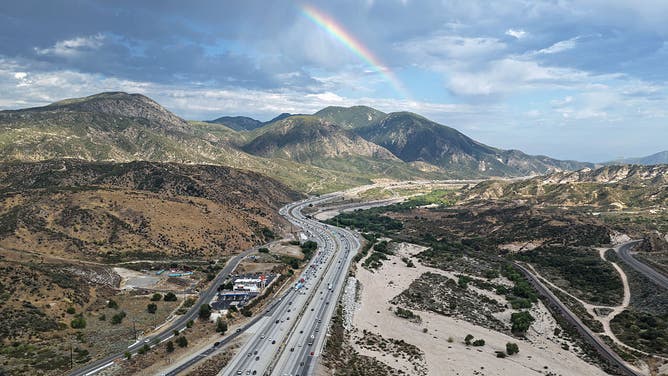
An aerial view of motorists driving on I-15 through the Cajon Pass near the San Andreas fault on June 23, 2026 in Cajon Junction, California.
(Mario Tama/Getty Images / Getty Images)
For Californians — and, thanks to Hollywood films and fabled stories, much of the world — the dangers posed by the San Andreas Fault are well known.
Earlier this year, a study found that a portion of the fault may be at its highest stress level in roughly 1,000 years, while separate researchers have simulated what a magnitude 7.0 earthquake along the fault could look like.
While that’s an outcome no one wants to see, scientists are working to better understand the threat and prepare before disaster strikes.
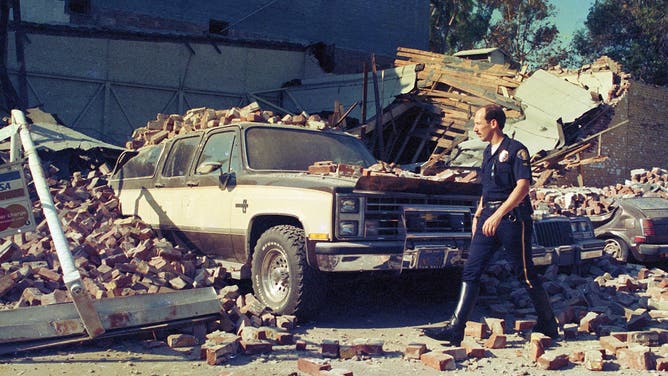
Pasadena police officers inspect damage following an October 1987 earthquake in Southern California. New research suggests stress continues to build along key segments of the San Andreas and San Jacinto fault systems, which have produced at least 36 earthquakes of magnitude 6.4 or greater over the past 1,000 years.
(Bob Riha, Jr./Getty Images / Getty Images)
The new research from San José State University, which suggests the Santa Cruz Mountains section of the San Andreas Fault has a higher long-term slip rate than previously estimated, has yet to be published.
The San Andreas Fault has a long history of destructive earthquakes, and what comes next remains uncertain.
Exactly when or where the next major rupture will occur cannot be predicted, but understanding how quickly different sections of the fault are moving can help researchers gauge one of the U.S. most dangerous faults.