Amna Nawaz:
In Texas, candidates running for office during the primaries have made Muslims and what they call the Islamification of Texas the center of their campaigns.
The state’s top Republicans have also passed legislation and made policies targeting Muslim organizations and housing development.
Stephanie Sy reports on how the rise of anti-Muslim rhetoric and policies in the Lone Star State is affecting its Muslim communities.
Stephanie Sy:
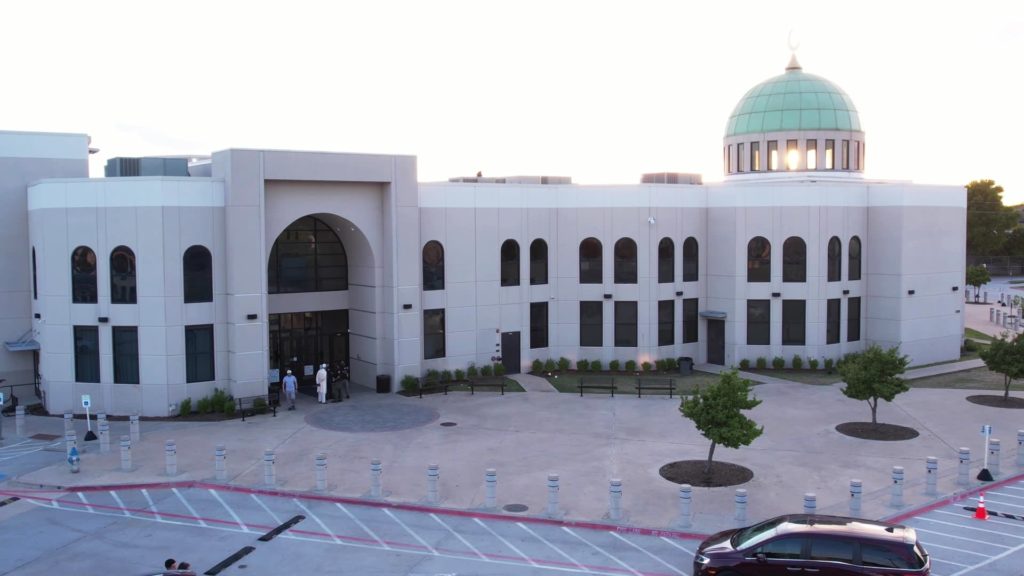
On a typical Friday service, the East Plano Islamic Center is packed wall-to-wall. Known by its acronym EPIC, the center’s prayer halls are so crowded it’s resorted to overflow rooms.
Yasir Qadhi, East Plano Islamic Center:
We are now one of the largest and one of the most active mosques really in the country.
Stephanie Sy:
Yasir Qadhi, EPIC’s resident Islamic scholar, says mosque membership has ballooned, along with the population of the Dallas-Fort Worth metro area.
Yasir Qadhi:
It’s basically saturated out. We have so many people living in this vicinity. The idea came from some of the local congregants here, what if we were to have a planned neighborhood?
Imran Chaudhary, President, Community Capital Partners:
Right here, you have the mosque and the community center.
Stephanie Sy:
That planned neighborhood, known as Epic City, began to take shape in 2024. The proposed development sits 40 minutes northeast of Dallas, with about 1,000 single and multifamily homes planned across 400 acres.
Imran Chaudhary is the lead developer.
When you came up with this plan, did you think it would be controversial?
Imran Chaudhary:
No, absolutely not. We were just developing a community which was just Muslim-friendly. And we never thought that it would go this way or the direction that they have taken.
Stephanie Sy:
Last year, this promotional video went viral.
Narrator:
It’s a way of life, a meticulously designed community that brings Islam to the forefront.
Stephanie Sy:
Sparking backlash online, with commentators calling it an Islamic stronghold and Sharia City.
The online rhetoric reached Governor Greg Abbott, who vowed to stop the project, signing a law — quote — “banning Sharia compounds in Texas.”
Gov. Greg Abbott (R-TX):
The development was structured in a way that requires anybody who bought a lot there to abide by Sharia law.
Stephanie Sy:
The development never had a religious requirement for would-be residents, and Chaudhary says all are welcome.
Imran Chaudhary:
All of this misinformation that’s being spread from these influencers and the social media and the politicians, that is not true.
Yasir Qadhi:
When I say Sharia to the average American Muslim, they would literally think of, OK, I need to be kind to my mother, I need to be a good person.
Stephanie Sy:
Qadhi says Sharia is a personal religious practice, often misrepresented by the community’s critics.
Yasir Qadhi:
Their interpretation of Sharia is not one that the Muslims of this country even understand. It’s a personal set of rituals, ethical conduct. That’s literally the association that we have of Sharia is, like, the law of God.
Stephanie Sy:
Governor Abbott also ordered a blitz of investigations by various state agencies to look into the mosque and the development, while Attorney General Ken Paxton filed two lawsuits aimed at ending the project.
The Department of Justice launched an investigation last May, but soon closed it without finding any wrongdoing.
Imran Chaudhary:
We are going to follow the county laws. We are going to follow the city laws. We are going to follow the state laws. This is just like any other development.
Stephanie Sy:
And yet still the project has not gotten off the ground, right?
Imran Chaudhary:
It’s true. Yes, we feel that we are being targeted just because we are Muslims and it’s a Muslim developer.
Stephanie Sy:
The project faces an uphill battle with public perception, says veteran Republican strategist Vinny Minchillo.
Vinny Minchillo, GOP Strategist:
When people saw first the name, Epic City, hey, wait a minute, are you starting a city? And then they saw the architectural renderings. It looks like a religious compound and not like a mixed-use development.
Stephanie Sy:
The development has since changed its name from Epic City to The Meadow and removed the promotional video from social media. But Minchillo says it may be too little, too late.
Vinny Minchillo:
People perceive they want to be isolationists, they want Sharia law, they want to do their own thing, they don’t want to assimilate. There’s a lot of fear about the community and what the community’s ultimate goals are.
Woman:
Is this what you want between Collin and Hunt counties? I sure don’t.
Stephanie Sy:
The online outrage has led to local opposition and high-profile anti-Islamic incidents.
Yasir Qadhi:
Mr. Lang came here with a dead pig’s head and a copy of the Koran inside the dead pig’s head.
Stephanie Sy:
Far right influencer and indicted January 6 rioter Jake Lang staged a grotesque display outside the EPIC Mosque last year.
Yasir Qadhi:
Now I get it. There’s freedom of speech. What is the purpose of this other than a media circus?
Stephanie Sy:
It’s not just this Muslim community in East Plano facing what it feels is religious discrimination. Islamic-oriented schools are under scrutiny in the state’s school voucher program.
Brighter Horizons Academy is a K-12 private school with 1,200 students in nearby Garland.
Ehsan Sayed, Islamic Services Foundation:
It’s like any other religiously-oriented school, like a Catholic school or a Jewish day school. We have the same secular subjects as part of the curriculum, the same clubs and recreational activities, sports and whatnot.
And then we have three other supplementary religious classes, you can call them. One of them is the Arabic language, and then the other two are religious courses.
Stephanie Sy:
Ehsan Sayed attended Brighter Horizons in the 90s soon after it opened, and now sits on the board of a nonprofit that oversees the school.
When Texas launched its school choice program, offering families more than $10,000 per student enrolled in approved private schools, Sayed says it was a tremendous opportunity.
Ehsan Sayed:
To finally get an infusion of some public funds to the school, to the students, hopefully giving us access to more resources, being able to accept more students.
Stephanie Sy:
Brighter Horizons had long met the accreditation requirements, but when the list of schools approved to participate was released earlier this year, it was excluded, without explanation. So were several other Islamic private schools in Texas.
Ehsan Sayed:
It caused so much confusion, honestly, with our current parents and new parents.
Stephanie Sy:
After the school joined others and sued the state for discrimination, Texas added Brighter Horizons and other plaintiffs to the school choice eligibility list. They’re still suing.
Ehsan Sayed:
It’s about keeping the requirements consistent and fair every year.
Stephanie Sy:
Sayed says he believes the school’s exclusion was part of a broader turn against Muslims in a political game.
Sen. John Cornyn (R-TX):
Radical Islam is a bloodthirsty ideology.
Stephanie Sy:
From the Senate campaign of John Cornyn.
Sen. John Cornyn:
And Sharia law has no place in American courts or communities.
Stephanie Sy:
To a recent speech by Ted Cruz.
Sen. Ted Cruz (R-TX):
Sharia law shall never be allowed in the United States of America.
Stephanie Sy:
GOP strategist Vinny Minchillo says the Muslim community has become a boogeyman in state politics.
Vinny Minchillo:
I think, to many people’s minds, the immigration issue with regard to the Mexican border is either solved or heading toward being solved. So we feel like, OK, that’s going on. This is the next logical step in immigration concern.
Stephanie Sy:
Is there any nuance in any of this, like, or is every conversation about Muslims in Texas fraught and politically wrought?
Vinny Minchillo:
Right now, there’s zero nuance. It is really as close to an on/off switch issue as you can get, which is pretty rare in the world of politics. We see it pop in polls and now naturally politicians and campaigns are reacting to that.
Stephanie Sy:
Political rhetoric that many of Texas’ half-a-million Muslims say doesn’t match their reality, like Ahmed Osman, an 11th grader at Brighter Horizons.
Ahmed Osman, Student, Brighter Horizons Academy:
I don’t think anybody in the school wants to take over Texas or anything like that. I think most people just want to be accepted without getting any weird looks or any whispers, stuff like that like, most people do.
Stephanie Sy:
He considers himself a Muslim, an American and a Texan.
For the “PBS News Hour” I’m Stephanie Sy in Dallas.