
Amna Nawaz:
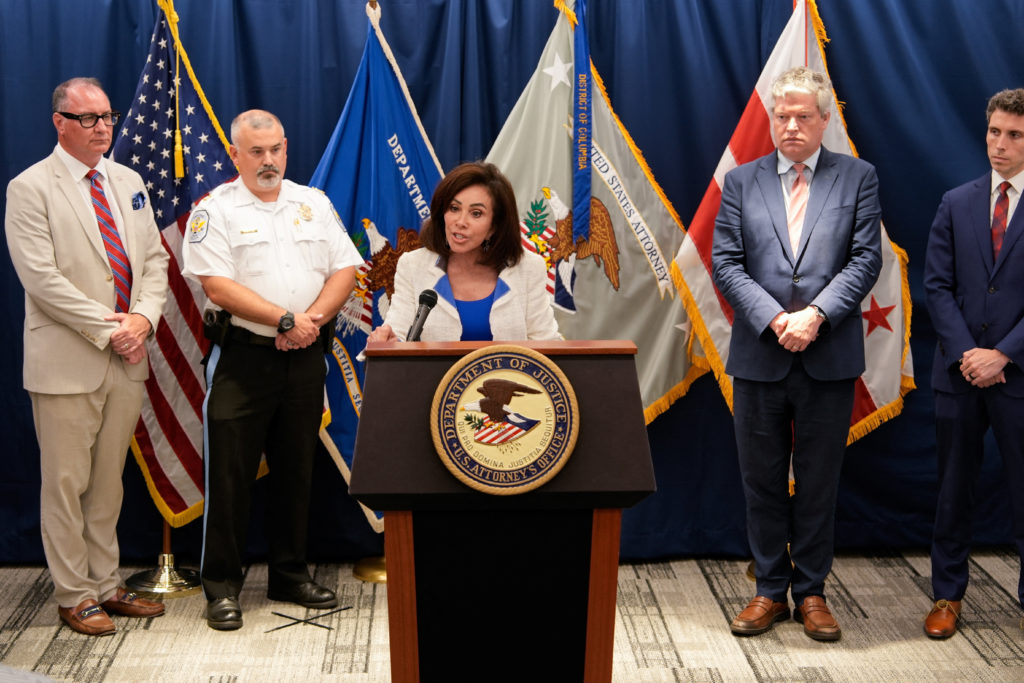
U.S. attorney Jeanine Pirro’s job is reportedly safe for now, following a meeting with President Trump after she dropped charges related to the Lincoln Memorial Reflecting Pool.
Mr. Trump publicly rebuked her over the weekend and again yesterday for determining that damage to the pool was not caused by vandalism. That came in a motion to dismiss criminal charges against former U.S. Olympian David Hearn. He and several others were accused of ripping the lining of the pool.
In the motion, Pirro’s office wrote the damage was actually the result of — quote — “flawed installation by the contractor and the rush to complete the project prior to events associated with the America 250 celebration.”
But that was in stark contrast to what Pirro herself said just a few weeks ago.
Jeanine Pirro, U.S. Attorney for the District of Columbia: The evidence shows, and we will prove beyond a reasonable doubt, that Hearn willfully destroyed property at the Lincoln Memorial Reflecting Pool.
Amna Nawaz:
That follows a pattern of disconnect between what the president and administration officials say in public versus what their lawyers say in court.
To discuss, I’m joined by Ankush Khardori. He’s a former federal prosecutor for the Justice Department.
Welcome to the “News Hour.”
Ankush Khardori, Former Federal Prosecutor:
Thanks for having me.
Amna Nawaz:
So let’s just start with Jeanine Pirro here. From a legal perspective, how do you square what we heard from her in early July, right there, with the decision to drop those charges just under a month later?
Ankush Khardori:
Well, it appears that they learned new facts that dramatically undermine their earlier assessment of the case.
Now, I happen to think that they probably should have gathered those facts before they charged the case. But it appears that the facts that they gathered were so overwhelmingly at odds with the theory that Mr. Hearn had committed a crime that they were forced to withdraw the case.
Amna Nawaz:
And they did, in fact, say in that filing that it was newly discovered information that made it difficult to say the damage was due to vandalism. As you point out, though, is that typically, especially at this level, the kind of information that comes before charges are filed?
Ankush Khardori:
Yes, it does.
Particularly in a high-profile case, you want to make sure that you have all of your sort of T’s crossed and I’s dotted. And there wasn’t a need to rush this case, right? It wasn’t like they were running up against the statute of limitations issue.
And often within the government, the Justice Department, it’s a little tricky getting information out of other agencies because it’s just other folks trying to do their day-to-day jobs. So you really have to be very careful with what you’re getting and make sure you’re asking all the questions you need to ask.
The Justice Department apparently didn’t do that, and they have now sort of tried to shift the blame to the Department of Interior.
Amna Nawaz:
So let me ask you about the larger pattern here that we reference. You have the president and other officials publicly saying one thing, and then you have their lawyers in court having to qualify or walk back or even contradict what was publicly said.
We seen that again and again, whether it was the Pentagon and if they’re banning transgender troops or who was actually in charge at DOGE, or who exactly is being deported in immigration raids.
Do you, from your perspective, see a strategy here, or is it a case of one hand not knowing what the other is doing?
Ankush Khardori:
Look, I think I see incompetence at the Justice Department these days, because this is not the way the Justice Department’s lawyers are supposed to be operating and is not the level of professionalism that we should expect from our prosecutors.
Now, we could diagnose that in a variety of different ways. One issue may be political pressure, buckling to political pressure. Another may be that their clients, so to speak, the agencies are not being fully forthright with them, they’re having a difficult time managing their relationships with some of these clients.
And I think that is true in the case of ICE, for instance. I think ICE is basically running the deportation show. The Justice Department is following their lead. But none of these are excuses. They’re just explanations.
The job of a good lawyer is to correct for all these things, and particularly the job of a prosecutor is to make sure that they have all their facts together before they make such a serious and life-changing accusation as to charge someone with a criminal case.
Amna Nawaz:
Given that this is a president who’s very comfortable applying public pressure to the Justice Department, you mentioned that pressure and the buckling that some lawyers may feel pressured to do, how far can those lawyers go in giving in to that? Do they themselves face potential consequences for doing that in court?
Ankush Khardori:
They do.
So, I mean, let’s — the legal standard for charging a criminal case, federal criminal case is probable cause. It doesn’t mean more likely than not. It’s a relatively low standard. There are then ethical rules that lawyers have to follow. You cannot falsely represent a fact to a judge. You cannot charge a criminal case that doesn’t have probable cause.
On top of that, there are DOJ policies that say the prosecutors are not supposed to charge criminal cases unless they think that it is more likely than not that they will obtain a conviction once the evidence all comes in. Now, the upshot of this is if you file a case that is fundamentally unjust, where there wasn’t probable cause or you’re misrepresenting the facts, yes, you can face professional repercussions from bar association — excuse me — bars and the like, not bar associations, bars and the like.
As a practical matter, that happens quite rarely. The principal deterrent to this sort of misconduct is actually just professional embarrassment and one would hope the moral sense that you should not really go around ruining people’s lives if you know better.
Amna Nawaz:
While I have you, I want to ask you about Todd Blanche.
As we reported earlier, Senate Judiciary Committee did vote to advance his nomination to be attorney general. He’s currently in an acting role. We have seen Senator Susan Collins come out first and already say she will not vote yes on that. But, of course, he’s moving forward after he struck a deal with Senators Cornyn and Tillis, and he wrote down this plan that he would kill that anti-weaponization fund.
From your view — and I know we have seen the president say he still likes that fund, I also want to play through what we heard from Senator Cornyn earlier today on that. Take a listen.
Sen. John Cornyn (R-TX):
Well, there’s nothing we could do to rein in the president when he said he likes the fund and he wishes it still exists, but the fact of the matter, it’s dead.
Amna Nawaz:
Is that fund still dead, from what you have seen?
Ankush Khardori:
Look, the fund may be dead, but that’s not really the main issue here.
The government and the Justice Department still retain the ability to pay make payouts to, for instance, the January 6 defendants by settling claims that they have brought under the Federal — excuse me — the Federal Tort Claims Act.
Hundreds of January 6 defendants have already done this or are planning to do this, and the government can settle those sorts of claims outside of public view and without judicial oversight. They have settled, for instance, litigation with Michael Flynn, right?
And we don’t have to speculate really about whether this Justice Department might settle frivolous litigation. We’re actually here because the Justice Department settled frivolous litigation, Trump’s lawsuit against the IRS.
So this is a very, very — remains a very live issue. I think the fund is one part of it, but really — and I just have to respectfully disagree with Senator Cornyn — it is not the case that they had no other way to block this from happening. The Senate used to pass laws.
My very crude understanding of how the federal government works is that the Senate used to pass laws. They could pass a law, if they wanted to, preventing the disbursement of federal funds, for instance, to anyone charged in connection with the January 6 investigation.
They may not want to do that. I mean, they may feel not feel that the leader — Republican leaders won’t want to get sideways with Trump, but it’s not the case that they just had to take Todd Blanche’s signature and sort of call it a day.
Amna Nawaz:
We have less than a minute left, but I have to ask you.
You see a confirmed Todd Blanche leading the department differently than the one who was in the acting role?
Ankush Khardori:
I do.
I mean, as a confirmed attorney general, he will have better standing within the department. I think he will be bolder and have more confidence. And I think he will continue to do what he’s largely done, which, as he’s testified to the Judiciary Committee, he feels constitutionally obligated to take the president’s instructions.
It’s not just that he was his former lawyer. His testimony under oath is that the executive branch and the head of the executive branch is entitled to dictate what the Justice Department does. I strongly disagree with that view of the department, but he has told us what he thinks his job is.
Amna Nawaz:
Former federal prosecutor Ankush Khardori, thank you so much for being here.
Ankush Khardori:
Thank you.


