With Easter just days away now, many Brits will be stocking up on items for their Sunday roast.
But if you’ve got lamb on the menu, a new analysis suggests it might cost you.
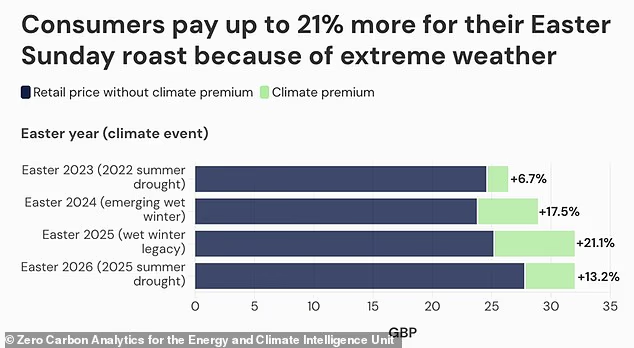
Experts from Zero Carbon Analytics for the Energy and Climate Intelligence Unit (ECIU) have warned that extreme weather has pushed lamb prices up by between seven and 21 per cent.
For the UK’s 2.6 million households who eat lamb regularly, this has added up to £168 in extra costs over the past three years, according to the experts.
‘As families and communities sit down to celebrate this Easter, the cost of climate change is hitting home,’ said Chris Jaccarini, land, food and farming analyst at the ECIU.
‘Lamb prices are through the roof after droughts, extreme heat and heavy rainfall have hit farmers’ costs of production, weakening grass growth and not allowing the depleted hay stores they depend on time to recover.
‘With beef and dairy prices up after similar extreme weather impacts on production, it is clear that climate change now poses a major and worsening challenge for livestock farmers.
‘As the current oil price shock threatens to bring yet another round of food price inflation, without faster progress towards net zero to bring balance back to our climate, as well as more investment in the resilience of our farmers, the affordability of food is worryingly exposed to these worsening shocks.’
Experts from Zero Carbon Analytics for the Energy and Climate Intelligence Unit (ECIU) have warned that extreme weather has pushed lamb prices up by between seven and 21 per cent
For their analysis, the team turned to Met Office data collected over the past four years.
This included the extreme heat of 2022, the record–breaking rainfall in 2023 and 2024, and the hottest spring and summer ever in the UK in 2025.
They then combined this information with market data from the Agriculture and Horticulture Development Board to model the impact of extreme weather on farmgate prices.
The results revealed how the drought and extreme heat in 2022 pushed prices up by 11 per cent, while the wet weather in 2023 and 2024 sent prices soaring by 25 per cent.
Meanwhile, the recent drought in 2025 led to a 13 per cent spike.
‘This was mainly as a function of the impact on grass growth as a result of these weather extremes,’ the team explained.
As for what this means for consumers, the researchers estimate that the wet winter of 2023/2024 added an extra £5 (17.5 per cent) to the price of lamb at Easter 2024, and £7 (21 per cent) to the price at Easter last year.
Sofie Jenkinson, Co–Director of Round Our Way, an organisation that supports people impacted by climate change in the UK, said: ‘We regularly speak to people who are noticing and struggling with the rising costs of food and scarcity of produce.

With Easter just days away now, many Brits will be stocking up on items for their Sunday roast. But if you’ve got lamb on the menu, a new analysis suggests it might cost you (stock image)
‘From small businesses and pubs through to families and farmers themselves, the extreme weather we are seeing in the UK is impacting dinner plates across the country.
‘This is happening day–to–day, week–to–week for families as essentials are hit but also affecting moments of celebration too, where families get together, like Easter and Christmas before it.’
If you don’t eat lamb, you may still feel the pinch this Easter.
The researchers point out that the price of Easter Eggs has risen by two thirds in just three years, following heavy rain, droughts, and heatwaves in West Africa, where cocoa is produced.