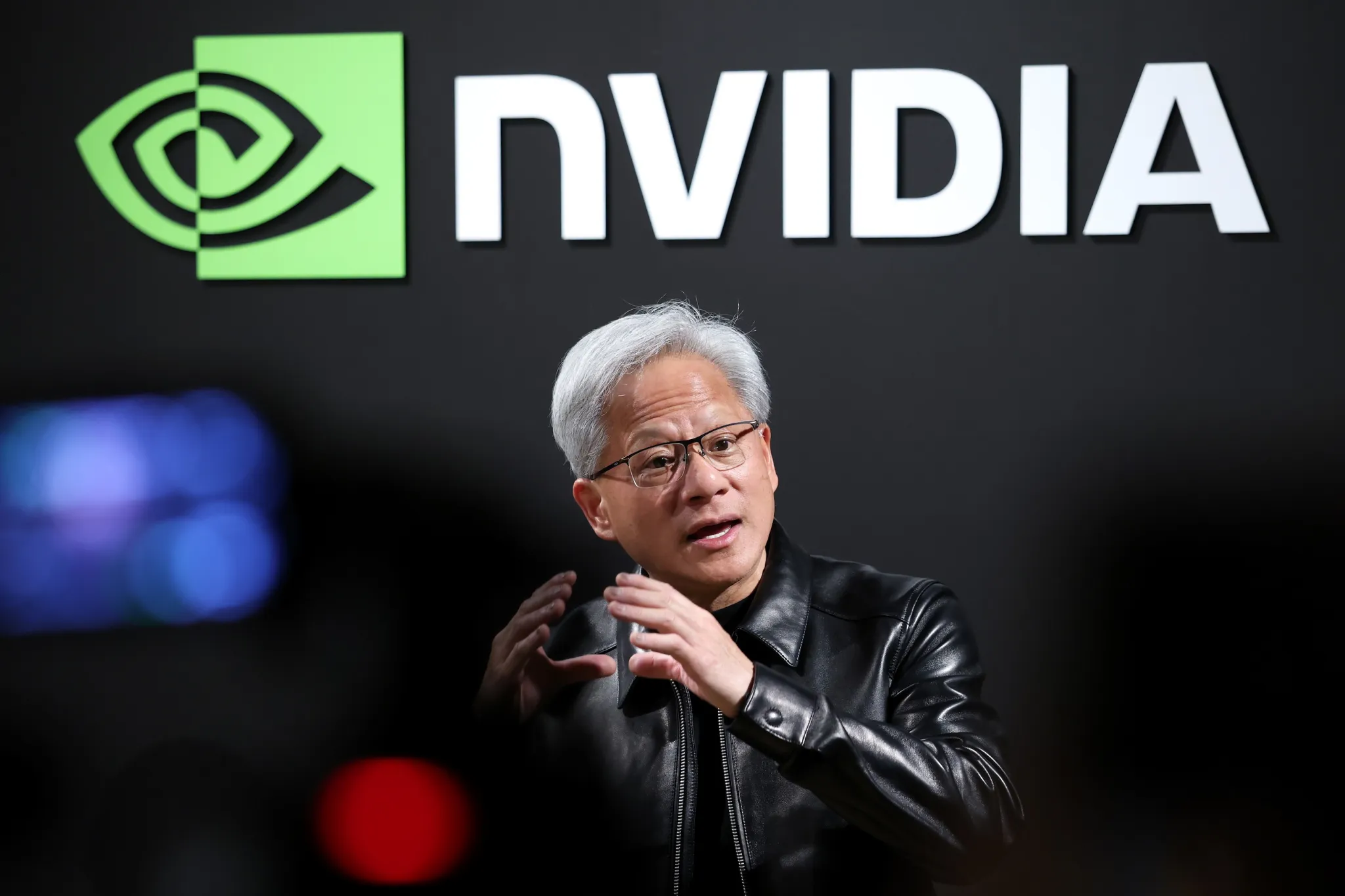
Good morning. Nvidia will pay $12.93 billion for Hugging Face, which is generating roughly $150 million in annualized revenue. At about 86 times revenue, the price makes clear that Nvidia values Hugging Face less for the business it is today than for the strategic position it occupies at the center of open-source AI.
The chipmaker announced Thursday that it has agreed to acquire Hugging Face, a major platform for open-source AI models, datasets and applications. More than 18 million developers, researchers and creators use Hugging Face, which hosts more than 3 million models, 500,000 datasets and 1 million applications, according to Nvidia.
The acquisition gives Nvidia a major foothold in open-source AI at a moment when open models are increasingly challenging closed systems from companies such as Anthropic and OpenAI, as Fortune previously reported. Hugging Face, founded 10 years ago, has said it is nearing profitability.
Nvidia CEO Jensen Huang said Thursday that Hugging Face will remain open to the broader AI industry. “Nvidia compute will not be required to build on or deploy through the platform,” Huang wrote in a blog post.
More than 200,000 companies use Hugging Face, according to Nvidia. That broad developer and corporate reach is a key part of the strategic position Nvidia is paying nearly $13 billion to acquire.
Dan Ives, partner and senior managing director at Yorkville Ives, said the price reflects the scarcity of an asset like Hugging Face.
“Nvidia and Jensen see the bigger AI picture,” Ives told me, adding that “valuation is important, but there is a scarcity in the Hugging Face asset.”
The acquisition also shows how Nvidia is using the enormous financial resources generated by its dominance of AI chips to secure strategic positions beyond its core business.
The Hugging Face deal is Nvidia’s second-largest ever, behind its roughly $20 billion licensing and talent deal for AI chip startup Groq’s assets in December. It also fits with a broader investment strategy CFO Colette Kress has been outlining.
On Nvidia’s Aug. 26 earnings call, Kress said the company has invested nearly $50 billion in AI labs developing advanced models, calling it “a meaningful commitment” but “a small fraction” of Nvidia’s expected free cash flow.
The transaction is expected to close in the first half of 2027, according to an SEC filing.
Quick note: The next CFO Daily will be in your inbox on Tuesday. Enjoy the Labor Day holiday.
Sheryl Estrada
[email protected]
Leaderboard
Fortune 500 Power Moves
Jessica Fischer, CFO of Charter Communications (No. 85) will step down from her role, effective Oct. 15, to relocate for another professional opportunity. Fischer, CFO since 2021, first joined the company in 2017 as deputy treasurer. Kevin Howard, currently EVP and chief accounting officer and controller, was appointed interim CFO. The company will begin a search for a permanent CFO.
Dave Hulays was promoted to CFO at The Hershey Company (No.377), effective Sept. 2, succeeding Steve Voskuil, who has led Hershey’s finance organization for the past seven years. Voskuil announced his intent to retire in early 2027. He will move into the role of SVP of strategic projects, focused on initiatives for the CEO and board during a transition period. Hulays most recently served as SVP of finance. Since joining Hershey in 2012 as VP finance, Canada, he has taken on progressively broader financial leadership responsibilities across the company.
The weekly Fortune 500 Power Moves column tracks Fortune 500 company C-suite shifts—see the most recent edition.
More notable moves this week:
Jessica Uhl was appointed CFO of T‑Mobile U.S., Inc. (Nasdaq: TMUS). Uhl will succeed Peter Osvaldik as CFO in February. Osvaldik will then serve as strategic advisor until his planned retirement on July 1, to support an extended transition. Uhl will join T‑Mobile as CFO designate in mid-September. Most recently, Uhl served as president of GE Vernova, overseeing corporate development, strategy, and the company’s generative AI program. She also previously served as the CFO of Shell.
Lusine Yeghiazaryan was appointed CFO of Picsart, an AI media production and distribution platform. As former CFO of SADA Systems, Yeghiazaryan scaled the business into new services and AI revenue segments, oversaw a global partnership with Google Cloud, and led SADA’s sale to Insight Enterprises. Yeghiazaryan’s career spans advisory consulting, financial services, content, hardware and SAAS industries including management roles at Diebold Nixdorf, Deloitte and GoPro.
Takaaki “Tad” Tanaka was appointed SVP of finance and accounting and CFO of Canon U.S.A., Inc., a digital imaging provider. A 31-year Canon veteran, Tanaka brings extensive financial expertise gained across key global offices, including past leadership roles at Canon Virginia, Canon U.S.A., and Canon Europe. Since 2023, he has served as general manager of Canon Inc.’s finance division.
Aric Chang was appointed CFO of American Healthcare REIT, Inc. (NYSE: AHR), effective Oct. 1. Chang succeeds Brian Peay, who is retiring after 10 years as CFO. Peay will continue to serve in the role through Sept. 30. Chang joins AHR from Public Storage, where he serves as CFO of real estate. His career includes senior roles across New York Stock Exchange-listed REITs, real estate private equity, and REIT research, underscoring the breadth of expertise he brings to AHR.
Akash Raj was appointed CFO of Mission Critical Group, a provider of integrated electrical infrastructure solutions. Raj brings more than 20 years of finance and operational leadership experience across high-growth and Fortune 500 companies. Raj most recently served as CFO of RealPage, where he led the company’s financial strategy and operations. He previously served as CFO of WellSky and held senior leadership roles at Motorola Solutions and General Motors.
Big Deal
“Ghost jobs,” listings for positions companies never intend to fill, have become common enough that U.S. lawmakers are starting to push back, according to a Korn Ferry analysis. New York, New Jersey, and Pennsylvania have introduced or passed legislation penalizing the practice and requiring employers to disclose hiring timelines or remove filled postings, while Texas has opened its own investigation into a major job board.
Korn Ferry experts trace the trend partly to leaner HR teams with less bandwidth to keep listings current, alongside some companies deliberately using ghost posts to scout talent or track competitors’ hiring. Beyond legal exposure, the practice carries a reputational cost, as jobseekers increasingly view recurring, unfilled openings as a warning sign about a company’s culture.
Going deeper
Here are four Fortune weekend reads:
“Uber is cutting 3,300 jobs despite double-digit growth as it makes room for its robotaxi future” —Mia Osmonbekov
“One of MacKenzie Scott’s latest donations takes her HBCU giving to well over $1 billion” —Sydney Lake
“AI visionary Ray Kurzweil is joining a Silicon Valley startup developing a brain computer system that involves snorting nanoparticles” —Alexei Oreskovic
Overheard
“It’s funny, the business I originally started just to make ends meet has ended up funding and giving me the opportunity to live the dream that I had as a child.”
—Jonathan Spano, co-founder and CEO of Traffic Management, Inc., told Fortune in an interview. Built as a startup in a Long Beach garage, the company now operates across more than 50 locations in the U.S. and makes over $1 million a day in revenue. Spano is also an accomplished film and aviation stunt professional. His credits include Top Gun: Maverick (2022).”