NOAA maintained its forecast for a below-average Atlantic hurricane season, the agency announced in its final 2026 hurricane season outlook Thursday.
NOAA maintained its forecast for a below-average Atlantic hurricane season, the agency announced in its final 2026 hurricane season outlook Thursday. Government forecasters said they expect a very strong El Niño climate pattern to last through this fall, creating atmospheric conditions that will suppress tropical development in the Atlantic Ocean.
LATEST FROM FOX WEATHER HURRICANE SPECIALIST BRYAN NORCROSS
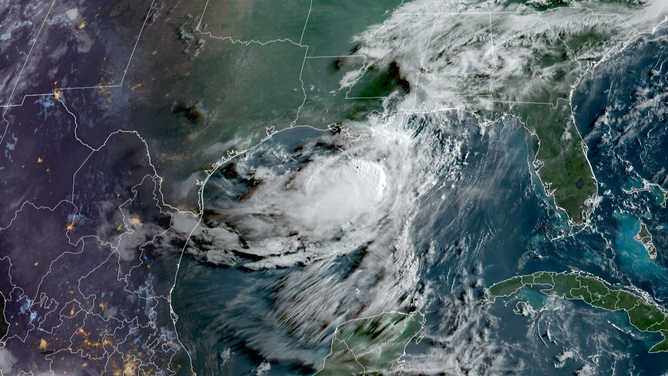
Satellite imagery of Tropical Storm Bertha Wednesday, July 22, 2026.
(CIRA / FOX Weather)
The agency expects 7 to 13 named storms, 2 to 6 hurricanes, including 0 to 2 major (Category 3 or stronger) hurricanes. Those ranges include Tropical Storms Arthur and Bertha, which formed in the Gulf earlier this summer.
This is a slight reduction from NOAA’s initial forecast that was issued in late May, which called for a below-average season with 8 to 14 named storms, 3 to 6 hurricanes, including 1 to 3 major hurricanes.
In comparison, an average Atlantic hurricane season produces 14 named storms, including 7 hurricanes and 3 major hurricanes.
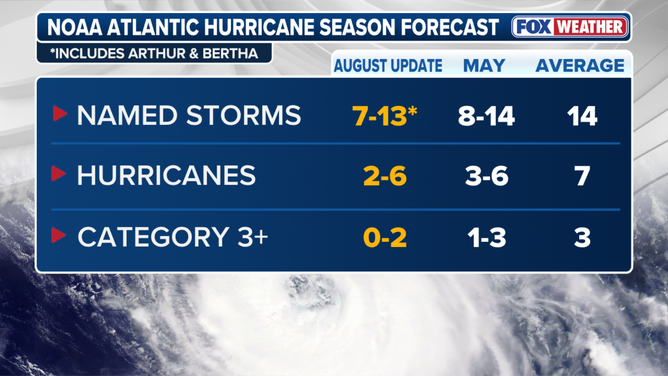
NOAA’s Atlantic Hurricane Season Forecast August Update
(FOX Weather)
NOAA also raised the probability of a below-average season from 55% to 75%.
“If the 2026 Atlantic hurricane season ends up being below-normal, it would mark only the second season in the last decade without above-normal activity,” NOAA said.
El Niño generally suppresses Atlantic hurricane activity.
El Niño is one of three phases of a climate cycle called the El Niño-Southern Oscillation (ENSO). It describes natural temperature changes in the central Pacific Ocean that alter atmospheric circulation and can greatly influence global weather.
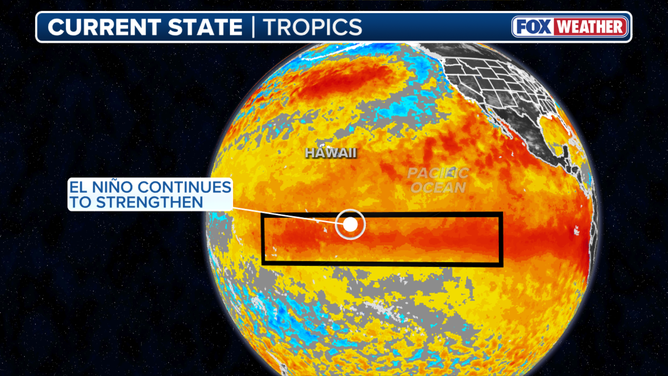
This graphic shows the El Niño zone.
(FOX Weather)
El Niño describes warmer than average water across the equatorial Pacific, while La Niña describes colder than average water conditions, and ENSO neutral refers to a state where temperatures are close to average.
During El Niño, above-average water temperatures in the central and eastern Pacific Ocean alter the position and strength of the subtropical jet stream. It’s typically more robust and extends well into the Caribbean and Atlantic Ocean. The jet stream is a belt of very fast winds high in the atmosphere.
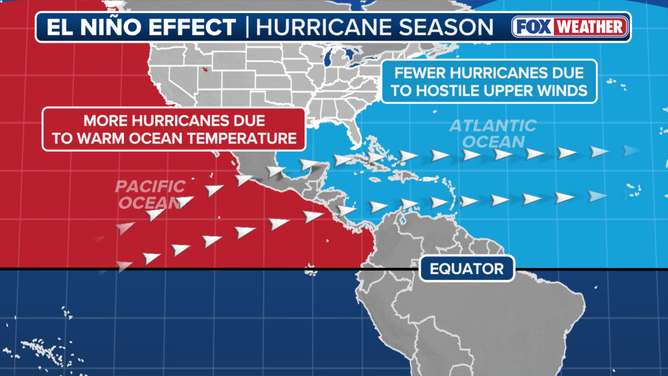
El Niño impact on hurricane season.
(FOX Weather / FOX Weather)
It’s these strong winds that hinder tropical development in the Atlantic during an El Niño. Calm conditions are generally more conducive to hurricane formation.
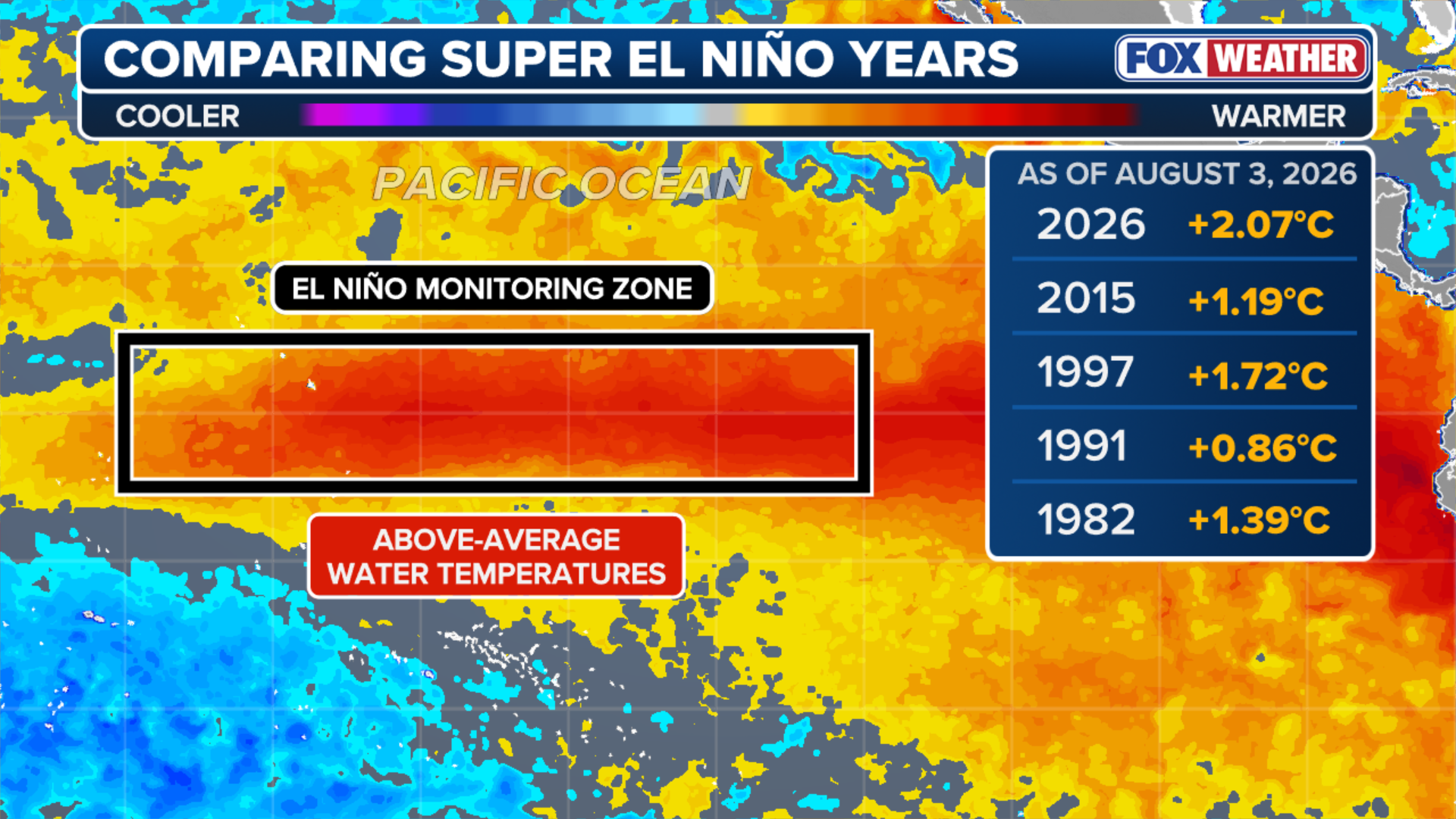
When water temperatures in the El Niño zone reach at least 2 degrees Celsius above average for at least three consecutive months, it is considered a Super El Niño. These events are not as common as a typical El Niño and have a massive influence not only on the Atlantic hurricane season, but also other weather patterns around the globe.
Taken in a vacuum, the stronger the El Niño event, the more wind will be present to limit storm development in the Atlantic.
(FOX Weather)
A strong El Niño has already taken hold, with water temperatures in the El Niño zone now 2.07 degrees above average, higher than the same point for other recent Super El Niño events of 2015, 1997, 1991, and 1982.
According to NOAA, some computer forecast models suggest this El Niño could be the strongest event since record keeping began in 1950. In its July update, NOAA said El Niño could reach historically strong conditions between October and December, with a 97% chance of lasting through next spring.
However, the agency cautioned that a record-breaking El Niño event could produce atmospheric impacts never before seen.
“A strong event could have different impacts than those traditionally observed as opposed to similar impacts with greater intensity,” NOAA said.
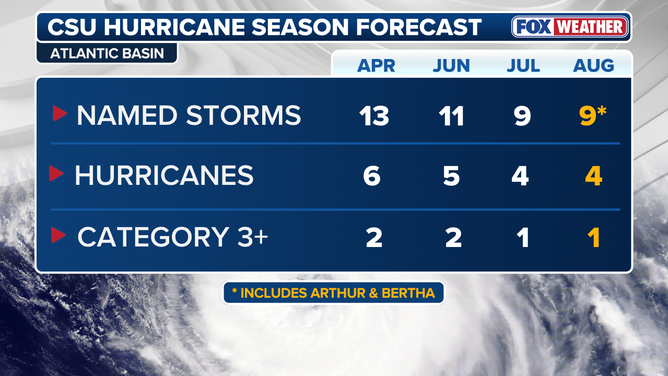
August Colorado State University Atlantic hurricane season forecast
(FOX Weather / FOX Weather)
The development of El Niño this year was well forecast by NOAA and other agencies, with the main questions being how quickly it would strengthen and what intensity it would reach.
NOAA’s forecast parallels Colorado State University’s (CSU) August outlook, released Wednesday, which called for 9 named storms, 4 hurricanes, including 1 major (Category 3 or stronger) hurricane this year. CSU pioneered early-year hurricane season forecasts beginning in 1984.
HURRICANE HQ 🌀: FOX Weather Hurricane Specialist Bryan Norcross shares an update on the progress of hurricane season, as experts monitor a strengthening El Niño this week. There have been two named storms so far this season. #Hurricane #Severewx #FOXWeather
While such a strong El Niño is expected to virtually shut down hurricane formation in the open waters of the Atlantic, it would still allow for so-called “homegrown” tropical systems in the northern Gulf and along the Southeast coast.
Although these systems tend to be weaker and shorter-lived compared to storms that develop farther out in the Atlantic, they also generally have shorter lead times before impacts occur, the FOX Forecast Center said.
Beyond the forecast, both NOAA and FOX Weather Hurricane Specialist Bryan Norcross urged people to ensure they have a hurricane plan in place, cautioning that even in seasons with fewer storms, it only takes one to create major impacts.