
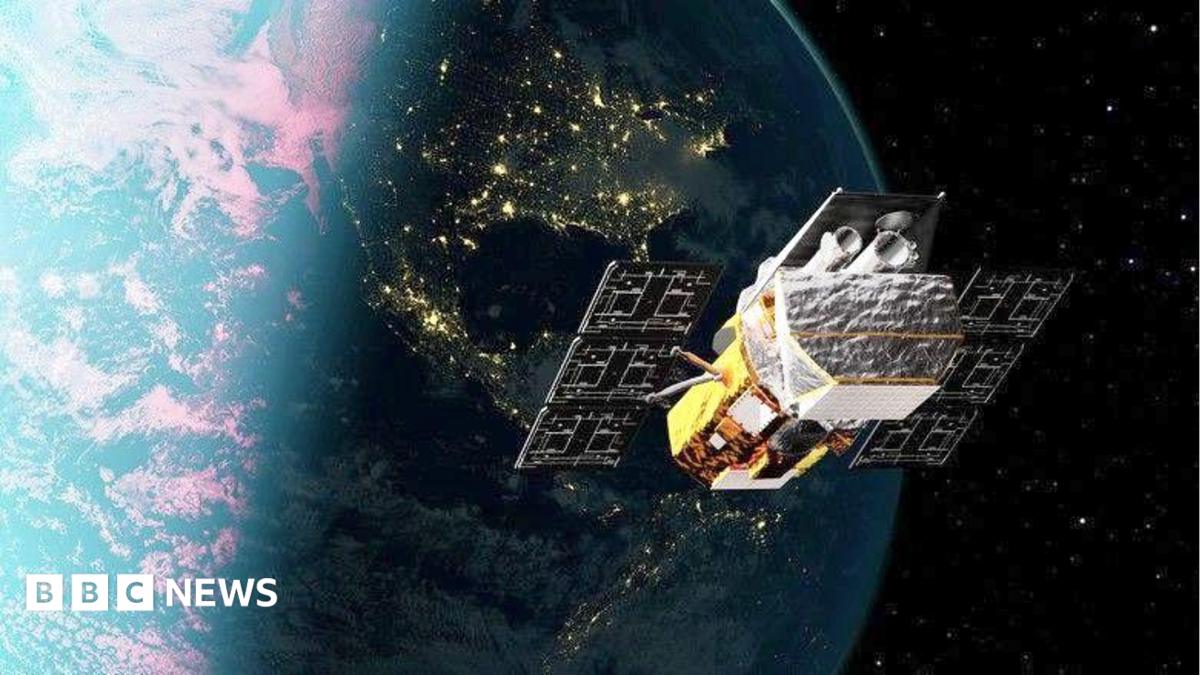
The LINK spacecraft, which Lee’s team came up with, is a three-armed robot, about the size of a fridge, bristling with cameras and guidance systems and driven by small thrusters.
Launched on Friday, the spacecraft will spend the next few weeks waking up its systems one-by-one: power, navigation, the cameras and sensors it will rely on, and check that each one survived the ride.
Although the Pegasus XL rocket on which it rode has flung LINK close to Swift’s orbit, there is still much work for the three-armed robot to do to get close to Swift – the observatory’s altitude is shifting week-by-week.
The rescue spacecraft, itself moving, has to home in on a moving target. But about three to four weeks after launch it should finally draw alongside.
Using its cameras and sensors, LINK will slide in close and circle the telescope, photographing it from every angle. Engineers have guessed at where to grab hold, but Swift must have been altered by twenty years in orbit, according to Barber.
“The Swift telescope was never designed to be caught in space and have its orbit changed. So, the rescue craft is going to approach it very slowly and attach itself to the telescope.”
Then comes the nail-biting moment: the catch, when LINK’s three arms reach out.
If all goes to plan, LINK will take hold of Swift and take it back to where it can continue its vital work.
“LINK will fire its engines to slowly raise the orbit of the telescope again to an altitude where it becomes stable for a long period of time,” said Barber.
“It will be a very slow, graceful lift, not a sudden boost to a higher orbit.”
Over the following two to three months, LINK will fire its small thrusters and gently haul the pair back uphill, from around 220 miles (360 km) towards Swift’s old home 373 miles (600 km) above the Earth.
The mission is ambitious and has never been carried out before. A lot will have to go right if it is to succeed. If it does, attention will turn to whether the next rescue mission could be to save the even more famous Hubble Space Telescope.
Stay tuned.


