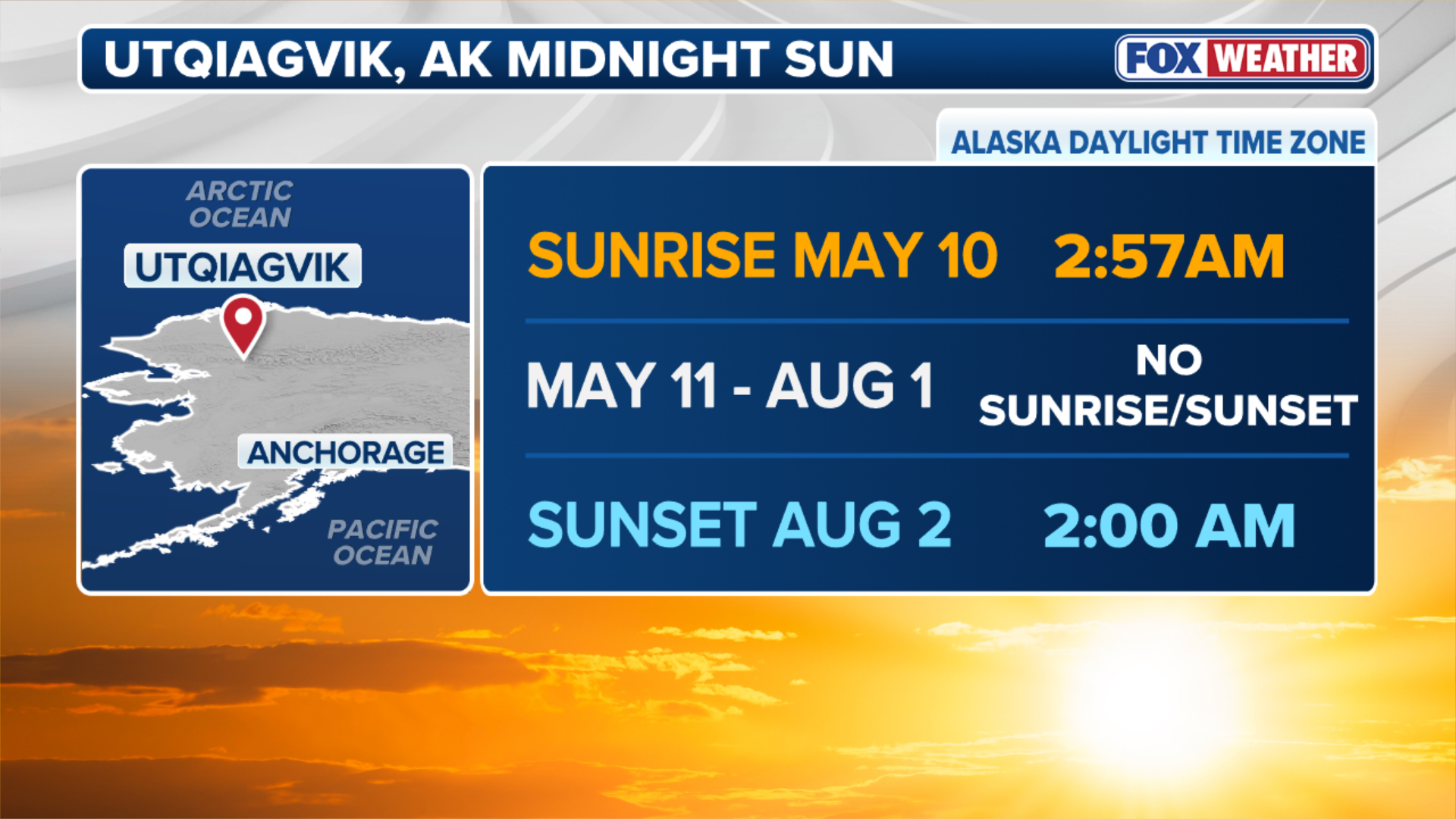
As northern Alaska takes on Polar night, with 64 days of darkness, Antarctica will enter Polar day, with 24 hours of sunlight through February, all due to this Earth’s tilt. Fox Weather Meteorologist Craig Herrera walks us through both hemispheres:
UTQIAGVIK, Alaska – The town at the northern tip of Alaska has seen its last moment of darkness for nearly three months as residents experience the phenomenon known to locals as “midnight sun.”
In Utqiaġvik, Alaska (formerly Barrow), the northernmost village above the Arctic Circle, the sun has risen for the last time and will not set again for 84 days until August 2.
This event brings constant sunlight to other areas, like Fairbanks, which will also experience 24 hours of daylight for the next 70 days.
(FOX Weather)
In places like Anchorage, the sun sets as late as 10:42 pm during the summer, an astonishing contrast to what other Americans experience on the East Coast.
The “midnight sun” occurs because of our planet’s tilt in relation to its orbit around the sun every year in the weeks surrounding the summer solstice.
The Earth’s axis between the north and south poles is angled 23.5 degrees away from the plane of the planet’s orbit around the sun, according to Alaska.gov.
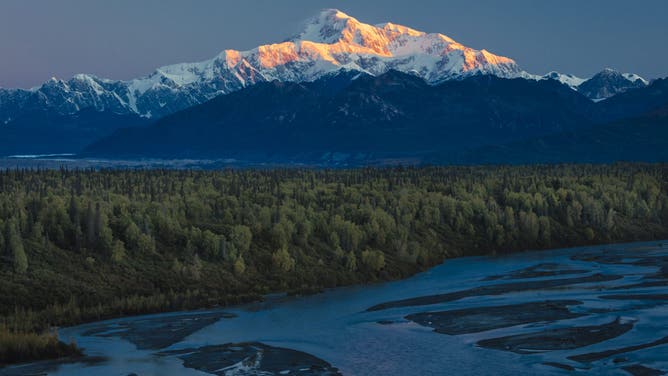
Sunrise on Mount Denali, Trapper Creek pullout view, Alaska near Mount Denali Lodge.
(Joe Sohm/Visions of America/Universal Images Group / Getty Images)
EXPERTS CONFIRM THIS HAILSTONE BROKE THE RECORD AS THE BIGGEST IN TEXAS HISTORY
The farther north or south you travel from the equator, the more dramatic the changes in daylight are.
“Around June 21, the North Pole is pointed toward the sun, so as the Earth rotates on its axis, the sun appears to move in a circle in the sky without falling below the horizon,” explained officials. “The lowest latitude at which this happens is the Arctic Circle.”
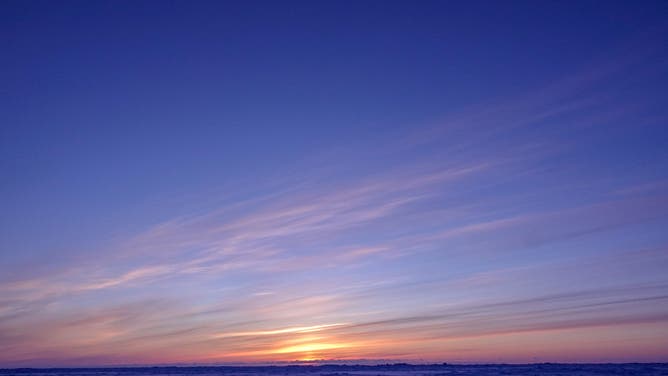
UTQIAVIK, AK – APRIL 9: The sun sets beyond the frozen, snow-covered Arctic Ocean in Utqiavik, AK on April 9, 2019.
(Bonnie Jo Mount/The Washington Post / Getty Images)
The result is unimaginable to some: nonstop sunlight.
All areas north of the Arctic Circle at 66.3 degrees north latitude will have some days of 24-hour daylight.
An example of the opposite would be during winter, when Utqiaġvik experiences 64 days without daylight in the heart of the frigid season.
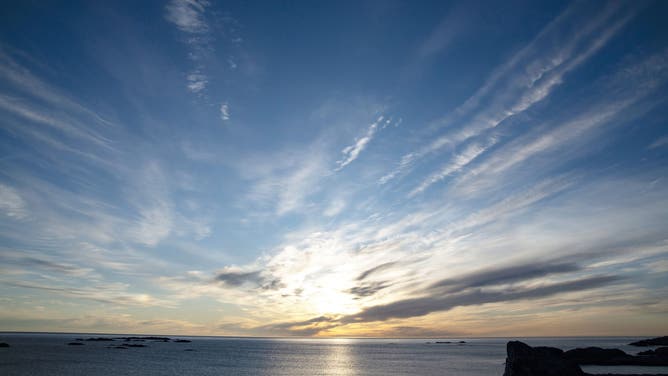
Midnight Sun In Sto. Sto Is A Fishing Village In Oksnes Municipality In Nordland County with Beautiful Sandy Beach. Norway.
(Paolo Picciotto/REDA/Universal Images Group / Getty Images)
Starting today, locations such as Anchorage will experience 16 to 19 hours of daylight each day, forcing locals to push outdoor activities such as gardening, hiking, and fishing into the later part of the day, a common practice.
The last sunrise for the next 84 days in Utqiaġvik took place at 2:58 am on Sunday, as residents hunker down for a bright spring.