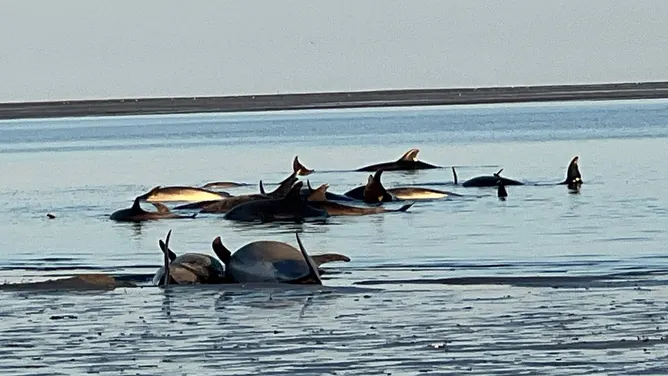
About 22 dolphins are now being tracked in deeper waters after a massive rescue effort following the largest known bottlenose dolphin stranding in Massachusetts history.
CAPE COD, Mass. — Following a massive rescue effort to save a large group of bottlenose dolphins that stranded along Cape Cod, marine mammal experts are now tracking survivors in deeper waters.
Rescuers noted the initial incident involved the “largest known stranding of bottlenose dolphins off Massachusetts.”
Mass stranding of bottlenose dolphins off Cape Cod
(International Fund for Animal Welfare)
According to NOAA Fisheries, a marine mammal stranding refers to an animal that is found dead or is alive, but unable to return to its natural habitat without assistance.
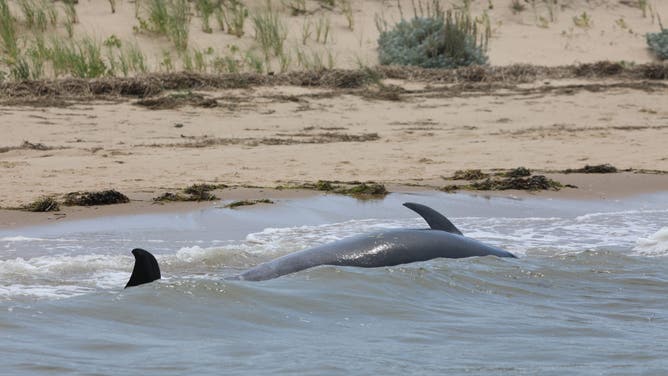
The incident unfolded on Monday, July 13, when the International Fund for Animal Welfare (IFAW) was alerted to nearly 30 bottlenose dolphins mass stranded along the Brewster coastline.
GREAT WHITE SHARK RIPPLE TRACKED OFF CANADA COAST AFTER TRAVELING 350 MILES IN A WEEK
The animals were spread out across the beaches between First Light and Ellis Landing.
Mass stranding of bottlenose dolphins off Cape Cod
(International Fund for Animal Welfare)
While most refloated with the incoming tide, several dolphins died before rescuers arrived.
By Tuesday morning, the situation intensified. Rescue teams initially located four bottlenose dolphins in Wellfleet’s Herring River Gut, but the crisis rapidly expanded to 19 live dolphins stranded across three separate locations, spanning a 9-mile stretch from Brewster to Wellfleet.
ATLANTIC’S LARGEST MALE GREAT WHITE CONTENDER LIKELY HEADING TOWARD THIS POPULAR SUMMER GETAWAY
The rapid expansion underscores the unique risks of the local coastline.
According to the IFAW, “The area within the ‘crook’ of Wellfleet and Eastham is a globally recognized hotspot for mass stranding events due to the extreme tidal fluctuations and the shallow flats of Cape Cod’s unique geography.”
About 22 dolphins are now being tracked in deeper waters after a massive rescue effort following the largest known bottlenose dolphin stranding in Massachusetts history.
(International Fund for Animal Welfare)
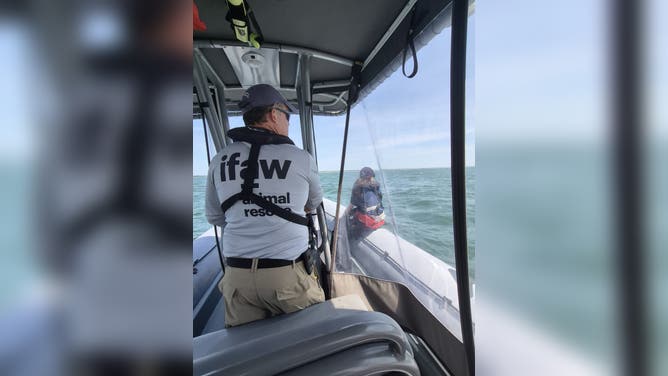
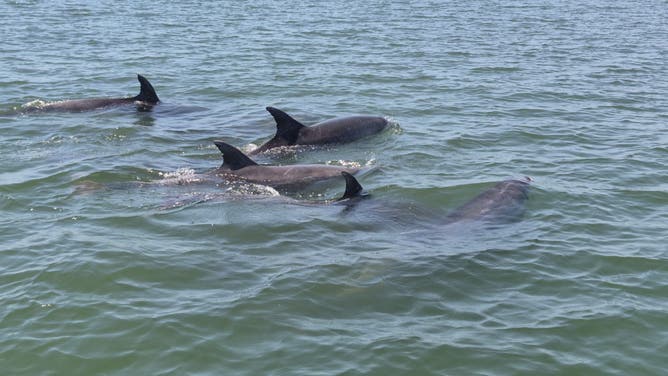
Within that 9-mile stretch, crews fitted two of the dolphins with satellite tags, later tracking the separated groups as they successfully reunited to form a single pod of about 22 dolphins on the water.
By Wednesday, satellite data showed the tagged dolphins traveling about two miles northwest of Sandy Neck Beach in Barnstable — a promising sign that the animals had moved into safer, deeper water.
Following the incidents, IFAW officials emphasized that stranded marine mammals require highly specialized care and cautioned beachgoers against taking matters into their own hands.
About 22 dolphins are now being tracked in deeper waters after a massive rescue effort following the largest known bottlenose dolphin stranding in Massachusetts history.
(International Fund for Animal Welfare)
“Similar to a person involved in a car accident, dolphins can become injured and exhausted during a stranding event and should never be pushed or dragged back into the water. Members of the public who encounter a stranded or distressed marine mammal should keep a safe distance and contact trained rescue experts through our IFAW Stranding Hotline,” officials said.
IFAW said they conduct activities under a federal stranding agreement between IFAW and National Marine Fisheries Service (NMFS) under the Marine Mammal Protection Act.