PROVO, Utah (AP) — Lawyers for the man accused of killing conservative activist Charlie Kirk redoubled their efforts Friday to raise doubts about DNA evidence that authorities said links Tyler Robinson to the suspected murder weapon.
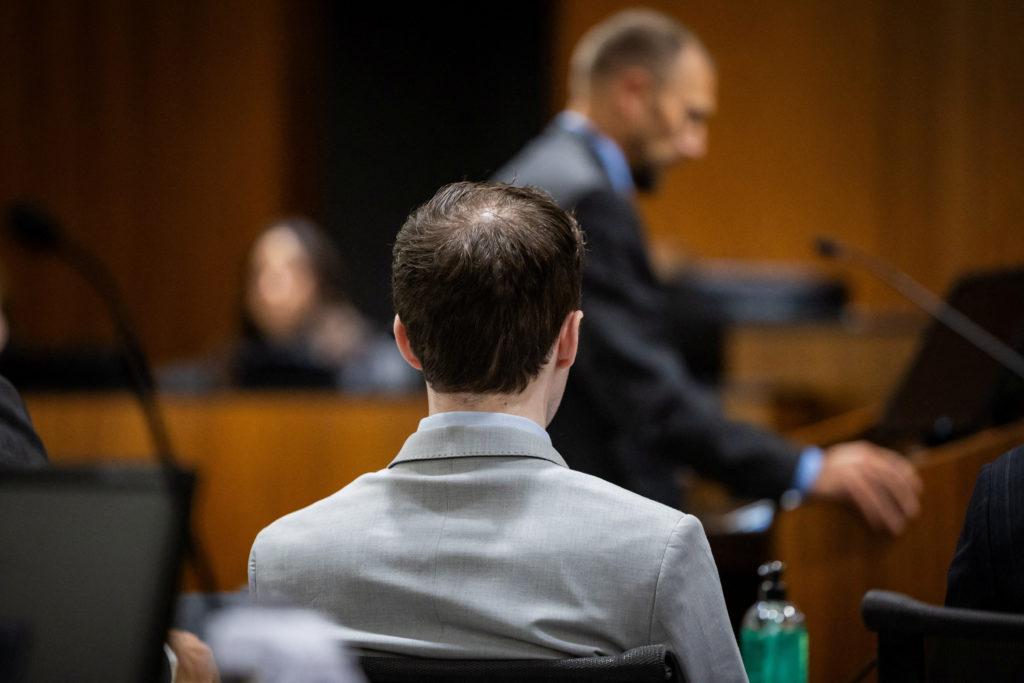
A Utah judge is deciding whether prosecutors have enough evidence to put Robinson on trial on a charge of aggravated murder. Kirk, 31, was killed as he spoke to a crowd of thousands at Utah Valley University on Sept. 10.
One of Robinson’s attorneys, Michael Burt, has repeatedly questioned the reliability of DNA tests cited by prosecutors during this week’s preliminary hearing. Investigators said the tests linked Robinson to evidence including a rifle found near where Kirk was shot, ammunition and a tool that he allegedly used to etch messages onto bullet cartridges.
Burt used testimony Friday from a government DNA analyst to highlight the limitations of such tests. He noted that government policies don’t allow analysts to say that DNA evidence is “infallible” or that it has a “zero error rate.” He also indicated it’s possible for DNA to be transported by a third party.
“If you had a lot of DNA on your hand, we shook hands and I went to pick up an exhibit, a gun, and I touched the trigger of it, your DNA could be on that trigger, right?” Burt asked Caitlin Oliver, a forensic biologist with the Bureau of Alcohol, Tobacco, Firearms and Explosives.
“It is possible. Yes,” Oliver replied.
Experts say the science behind DNA testing is sound.
Before Oliver testified, Deputy Utah County Attorney Chad Grunander questioned the relevance of bringing her on as a witness. He suggested prosecutors already had met the burden of proof needed to advance the case to trial.
“Your honor’s heard four days of testimony now. The evidence is overwhelming. It’s devastating,” Grunander said.
READ MORE: DNA evidence from Charlie Kirk assassination disputed by defendant’s lawyers
On Thursday, Robinson’s team questioned ballistics tests on a bullet fragment recovered from Kirk’s body. Authorities sought to tie the fragment to the suspected murder weapon, but the results were inconclusive.
“Saying anything but inconclusive was inappropriate,” said Samantha Karner with the ATF.
Robinson has not entered a plea. He turned himself in a day after the fatal shooting of Kirk, a close ally of President Donald Trump credited with helping galvanize young voters for the Republican in the 2024 election.
At the request of Kirk’s family, State District Judge Tony Graf said he would allow an altered version of campus surveillance video that prosecutors said shows Robinson crawling out to a rooftop “sniper’s perch” before shooting Kirk to be shown inside the courtroom.
The unaltered video was previously shown. The altered version includes recorded material that zooms in on a figure that prosecutors said was Robinson and red marks that were added to the video.
The weeklong preliminary hearing ends Friday, but a decision won’t come until after Sept. 1, when Graf scheduled oral arguments in the matter.
Prosecutors on Thursday aired portions of a recorded interview with Robinson’s roommate, Lance Twiggs. The day after Kirk was shot in the neck, Robinson allegedly told Twiggs “he wishes he hadn’t done it,” a recording played in court revealed.
Later that same day — and only about an hour before turning himself in — Robinson posted “it was me at UVU yesterday,” in a chat room on the Discord social media platform, according to investigators and messages shown by prosecutors.
Defense attorneys unsuccessfully fought the public release of the statements from Twiggs and the chat room messages. They argued prosecutors would characterize the material as a confession, undermining Robinson’s right to a fair trial.
Prosecutors contend the shooting endangered others at Kirk’s campus event — an aggravating circumstance that could make the crime punishable by death under Utah law. Robinson faces possible sentence enhancements based on claims by prosecutors that he targeted Kirk because of his political views.
Twiggs said in the April interview with prosecutors and investigators that Robinson sometimes talked about politics, including Trump. But Twiggs said he never heard Robinson talk about Kirk before the shooting. The defendant also did not talk much about gender issues or LGBTQ rights, Twiggs said.
The weeklong preliminary hearing has attracted intense media coverage and spectators who have angled for one of the 14 seats in the courtroom that are reserved for the public.
People have lined up early — sometimes sleeping there overnight — in hopes of getting in.
Brown reported from Billings, Montana.