

NEWYou can now listen to Fox News articles!
The State Department condemned Iran’s intensified repression of Christians, including a Catholic woman on hunger strike in a prison known as one of the most brutal in the theocratic state.
The Trump administration statement on widespread human rights violations carried out by the Iranian regime coincides with new military strikes against it in response to Tehran’s attacks on commercial tankers in the Strait of Hormuz.
The Christian woman on hunger strike is 42-year-old Ghazal Marzban, who sits in Iran’s infamous Evin prison in Tehran, according to Human Rights Activists News Agency (HRANA). Iran sentenced Marzban, a Catholic, to nearly 10 years in prison for practicing her Christian faith, Iranian experts told Fox News Digital. Marzban’s physical health, as of late May, had deteriorated. Her current condition is not known.
Ghazal Marzban sits in Iran’s infamous Evin prison in Tehran, according to Human Rights Activists News Agency (HRANA). Iran sentenced Marzban, a Catholic, to nearly 10 years in prison for practicing her Christian faith, according to Iranian experts. (Article 18)
It is unclear if the administration plans to ramp up pressure on Iran’s leaders for their widepsread persecution of religious minorities and opponents of the regime.
A State Department spokesperson told Fox News Digital, “We are aware of these reports. It is reprehensible that the Iranian regime continues to persecute religious minorities, including Iranian Christians.”
Article 18, an organization that promotes religious freedom in Iran, noted that following Marzban’s conversion, the Islamic law graduate was banned from taking her bar entry examination. Her husband, who also converted to Christianity, has been denied medicine for his Parkinson’s disease, according to Article 18.
Fox News Digital sent a press query to Iran’s U.N. Mission about Marzban and the plight of practicing Christians in Iran.
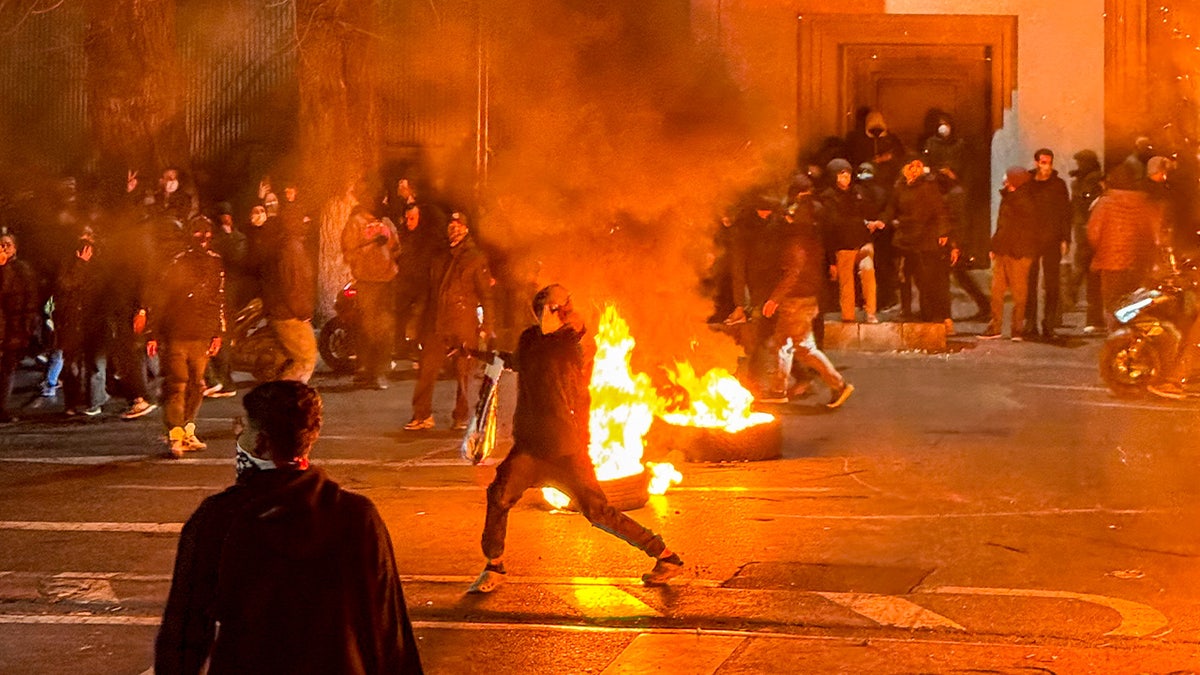
Iranians gather while blocking a street during a protest in Tehran on Jan. 9, 2026. (MAHSA/Middle East Images/AFP via Getty Images)
The State Department spokesperson said, “In Iran, human rights and fundamental freedoms, including the freedoms of expression, peaceful assembly, association, and religion or belief, are completely ignored. The regime targets members of religious and ethnic minority groups and uses tactics like arbitrary arrest and torture to intimidate opponents and silence dissent.”
After the regime reportedly murdered as many as 45,000 Iranian demonstrators within a 48-hour period in January, including as many as 22 Iranian Christians, the security forces of the regime arrested vast numbers of protesters.
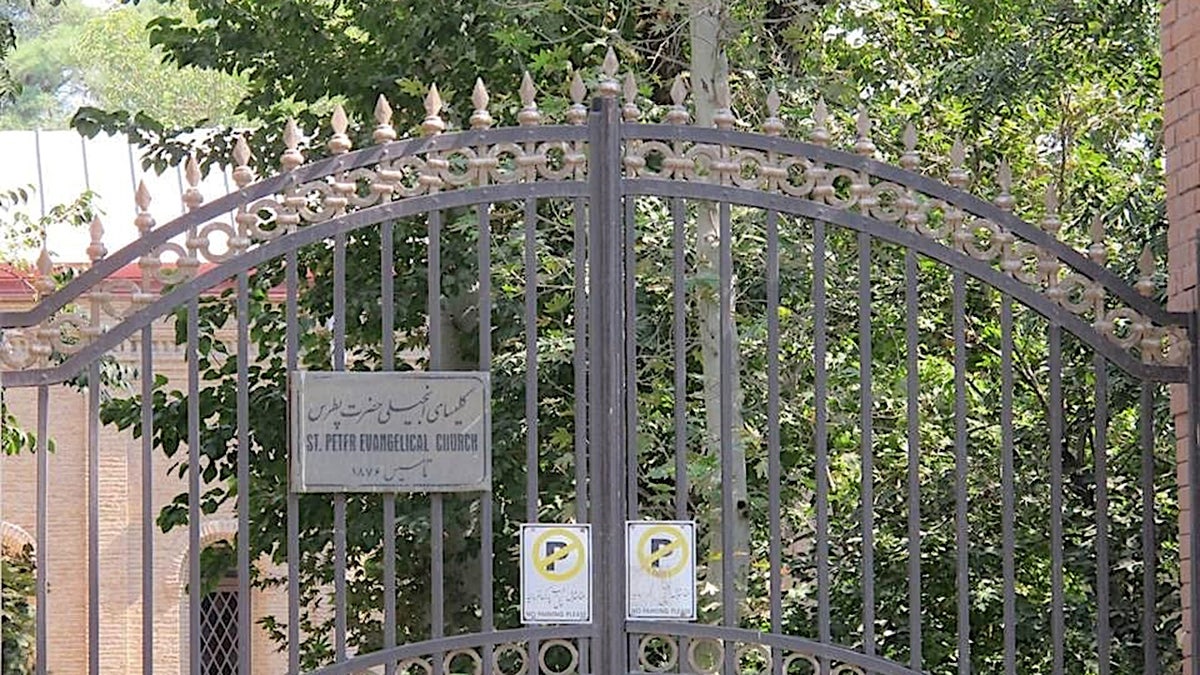
Reports say the Iranian regime is seeking the eviction of families from the St. Peter’s Church compound. Critics say it sends a clear message of intimidation to the wider Christian community. (Article 18)
President Donald Trump has cited the number of 45,000 Iranians killed by the regime. The State Department told Fox News Digital that Iran’s leaders should free those protesters still in detention.
“We reaffirm our unwavering solidarity with the people of Iran and call for the immediate and unconditional release of all political and wrongfully detained prisoners, including those facing persecution for peacefully exercising their fundamental freedoms,” said the State Department spokesperson.
Lisa Daftari, an expert on Iran who is the editor-in-chief of The Foreign Desk, told Fox News Digital that the joint U.S.-Israel elimination of the former supreme leader of Iran, Ali Khamenei, in February, “Hasn’t eased pressure. On the contrary, we are seeing more escalation and the implementation of even more hardline influences.”
Daftari said the “Arrests of Christians jumped from 139 in 2024 to 254 in 2025, alongside longer and more frequent sentences. At least 11 people received over a decade. After the recent war, authorities claimed they had ‘neutralized’ 53 elements, which is how they refer to evangelical Christians. That is because the Islamic Republic views conversion as a security threat.”
Hengaw, an organization that monitors human rights violations in Iran, reported on its website on July 3 that the regime plans to seize the St. Peter Church in Tehran. Daftari said, “This is a large Christian compound with schools and family homes, and roughly 20 Armenian and Assyrian families are being expelled under a Revolutionary Court order that’s been sitting unused since 1998.”
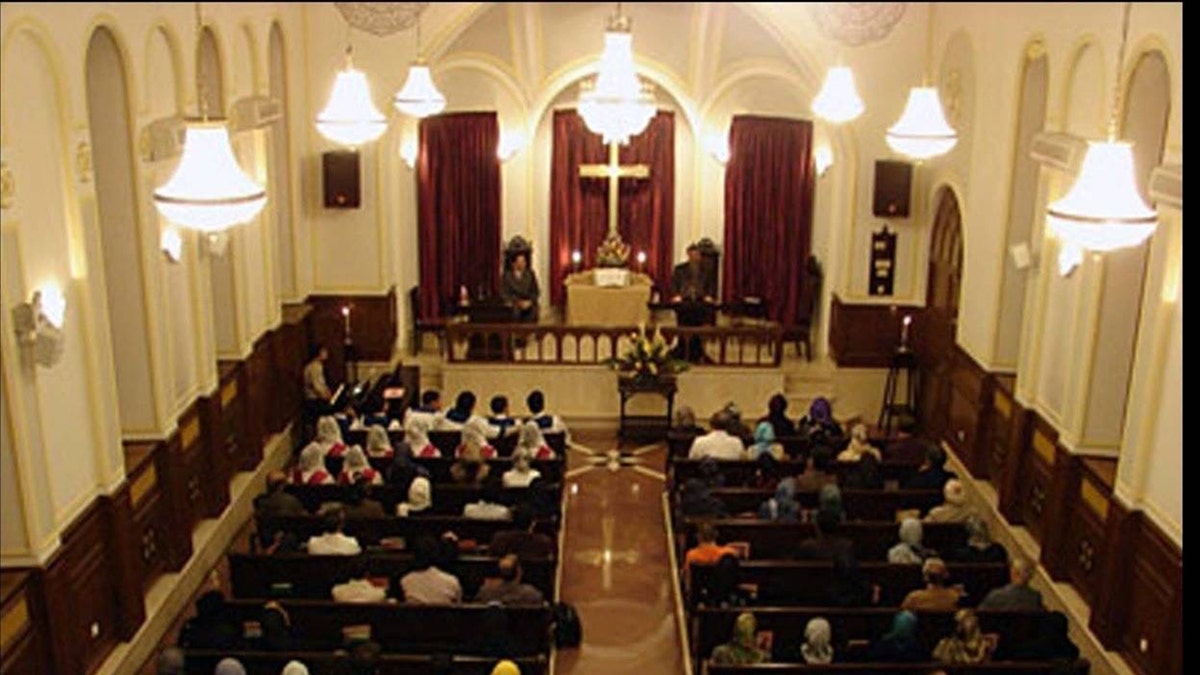
Iranian authorities are reportedly evicting all those living in the compound of the church. (Article 18)
When asked about a policy response from the U.S., Daftari said, “If there’s going to be a response, it has to be targeted. That means sanctions on the specific judges, intelligence officials and IRGC [Islamic Revolutionary Guard Corps] actors involved in cases like St. Peter Church and Marzban. And the transfer of church property to entities like EIKO [a business empire controlled by the late Khamenei] should be treated as state seizure, not an internal legal matter, and raised accordingly in international forums.”
Ramin, whose real name cannot be disclosed due to “security reasons,” an expert for Open Doors, a global Christian organization that aids persecuted Christians, told Fox News Digital, “The threatened confiscation of St Peter’s Evangelical Church in Tehran is deeply concerning and should not be viewed merely as a property dispute. It reflects a wider and long-standing pattern of pressure on Iran’s Christian communities, including recognized historic churches, Protestant communities, converts and reported cases involving Catholic converts.”
Ramin added, “St Peter’s is one of Iran’s historic Protestant churches, and the reported eviction of families from the compound sends a clear message of intimidation to the wider Christian community. Together with the arrest, detention and sentencing of Christian converts, including those from Catholic backgrounds, this shows that the Iranian authorities continue to treat the peaceful Christian faith as a security concern rather than as a basic right to freedom of religion or belief.”
Mansour Borji, the executive director of Article 18, told Fox News Digital that “The targeting of Christians whom the founders of the Islamic Republic viewed as an ideological threat began from the earliest days of the revolution. This included both Catholic and Protestant communities. Within days of the 1979 revolution, the Rev. Arastoo Sayyah, an Anglican priest, was murdered in his office. Foreign missionaries were expelled within the first year and Christian schools, hospitals and churches soon came under increasing pressure.”
He added that, “Since 2008, Article18 has documented numerous confidential cases involving the arbitrary arrest of Catholic converts, harassment of church leaders, visa denials for clergy, the revocation of citizenship from a long-serving bishop and the confiscation and demolition of church property.”
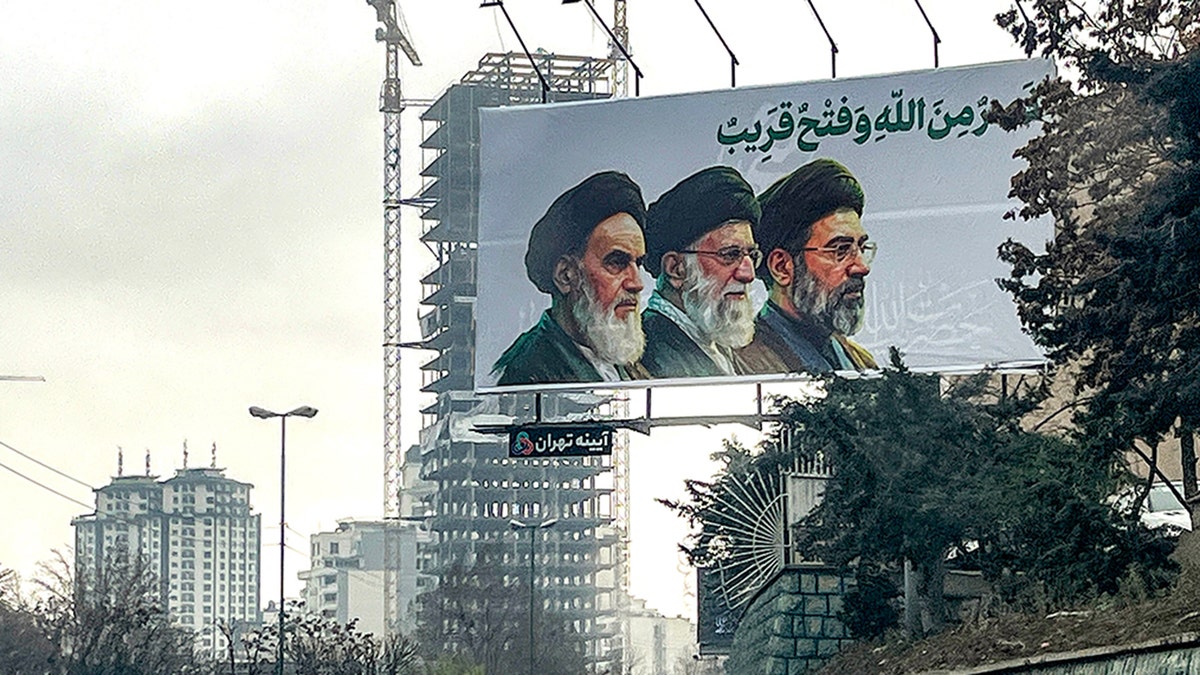
A billboard depicting Iran’s supreme leaders since 1979, from left, Ayatollahs Ruhollah Khomeini (until 1989), Ali Khamenei (until 2026), and Mojtaba Khamenei (incumbent) is displayed above a highway in Tehran on March 10, 2026. (AFP/Via Getty Images)
Borji continued, “The recent move against St. Peter’s Church is therefore not an isolated incident or a new development. It is part of a long-standing pattern of systematic pressure on independent Christian communities. The Islamic Republic is a totalitarian regime that has consistently sought to suppress any institution or community that operates outside its ideological control.”
In the wake of the intensified persecution of Iranian Christians, he warned that “If the Islamic Republic regains the capacity to project its ideology with renewed confidence, the consequences are likely to extend across the region and beyond.”
CLICK HERE TO DOWNLOAD THE FOX NEWS APP
He urged that perpetrators “face targeted sanctions, visa restrictions and asset freezes under existing human rights mechanisms.”
Borji said, “Governments, especially in the EU, U.K. and other trade partners, should also make religious freedom a consistent part of their engagement with Iran, rather than treating it as a secondary issue. Appeasing a regime that persecutes its own people has rarely produced moderation.”


