Saturday, July 25, 2026
No Result
View All Result
LJ News Opinions
  • Home
  • U.S.
  • Politics
  • World News
  • Business
  • Entertainment
  • Sports
  • Technology
  • Health
  • Opinions
  • Home
  • U.S.
  • Politics
  • World News
  • Business
  • Entertainment
  • Sports
  • Technology
  • Health
  • Opinions
No Result
View All Result
LJ News Opinions
No Result
View All Result
Home Opinions

Italy was once a model of healthy eating – now it has a child obesity problem

by LJ News Opinions
July 25, 2026
in Opinions
0
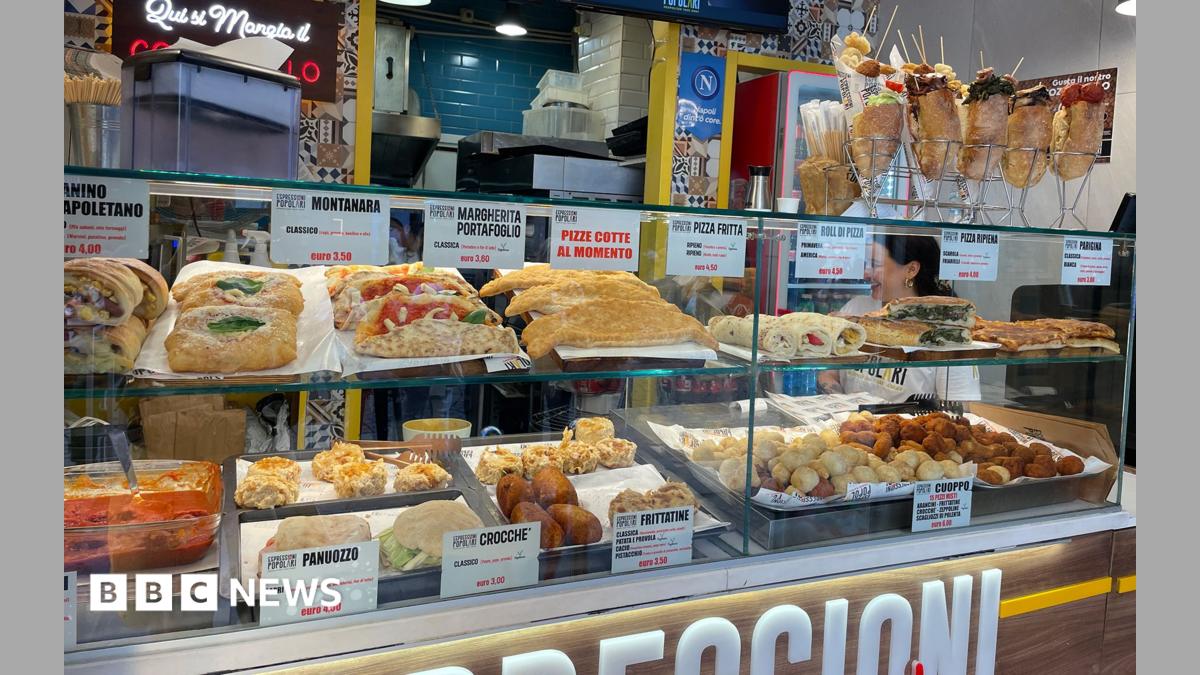
Food stall in Napoli with shelves stocked with sandwiches, pasta, bread, and fried foods
Share on FacebookShare on Twitter


Obesity is an “escalating global epidemic”, says the WHO. More than one billion people worldwide are now obese, and childhood obesity has quadrupled since 1990.

In 2025, Italy became the first country to pass a national law recognising obesity as a chronic, progressive and relapsing disease.

Rather than treating obesity simply as the result of poor choices, the country’s new law recognises it as a chronic disease influenced by biology, environment and social circumstances.

The Campania region has become a testing ground for putting that philosophy into practice, implementing a series of ambitious interventions – including a controversial trial of a “fast-mimicking diet”.

Researchers are recruiting 300 overweight adolescents who will spend five days every three months on a controlled diet of 1,100 calories on day one and 770 calories on following four days – so restrictive it resembles a fast.

The goal is to trigger a “metabolic reset”.

“Fasting, or controlled deprivation of food, is linked to a longer and healthier lifespan,” says Dr Longo, who has spent three decades studying the effects of fasting.

But not all obesity specialists are persuaded that fasting is the right approach for children.

Paediatrician Berni Canani believes the evidence for fasting-mimicking diets in children is still too limited to be recommended in Italy’s clinical guidelines.

He also worries restrictive diets could carry psychological risks for adolescents, whose relationship with food is still developing.

“I fear that imposing food restrictions on teenagers could increase the risk of eating disorders, anorexia and body dysmorphia,” he says.

Meanwhile, Salvatore hopes to have surgery in the summer, so that, for the first time in years, he can wear a swimming costume without feeling self-conscious.

But he is not alone. Across Italy, a generation of children is growing up increasingly removed from the Mediterranean diet that once made the country famous.

Additional reporting by Bob Howard.


Source link

LJ News Opinions

LJ News Opinions

Next Post
Filipina tennis player Alexandra Eala raises his arms after a Wimbledon match, net in front of her and a blurred image of the crowd in the background.

Smash hit: How Alex Eala's Wimbledon run made everyday Filipinos fall in love with tennis

Recommended

Acting CDC director on hantavirus: ‘This is not COVID’

3 months ago

LA28 to be first Olympic Games to sell naming rights for venues | Olympics News

12 months ago

Popular News

    Connect with us

    LJ News Opinions

    Welcome to LJ News Opinions, where breaking news stories have captivated us for over 20 years.
    Join us in this journey of sharing points of view about the news – read, react, engage, and unleash your opinion!

    Category

    • Business
    • Entertainment
    • Health
    • Opinions
    • Politics
    • Sports
    • Technology
    • U.S.
    • World News

    Site links

    • Home
    • About us
    • Contact

    Legal Pages

    • Privacy Policy
    • Cookie Privacy Policy
    • Terms of Use
    • Disclaimer
    • California Consumer Privacy Act (CCPA)
    • DMCA
    • About us
    • Advertise
    • Contact

    © 2024, All rights reserved.

    No Result
    View All Result
    • Home
    • U.S.
    • Politics
    • World News
    • Business
    • Entertainment
    • Sports
    • Technology
    • Health
    • Opinions

    © 2024, All rights reserved.