Iran says a meeting between Iraq and the Gulf countries will be held in Oman on Monday to discuss the Strait of Hormuz, which remains under Tehran’s blockade amid the diplomatic deadlock with the United States.
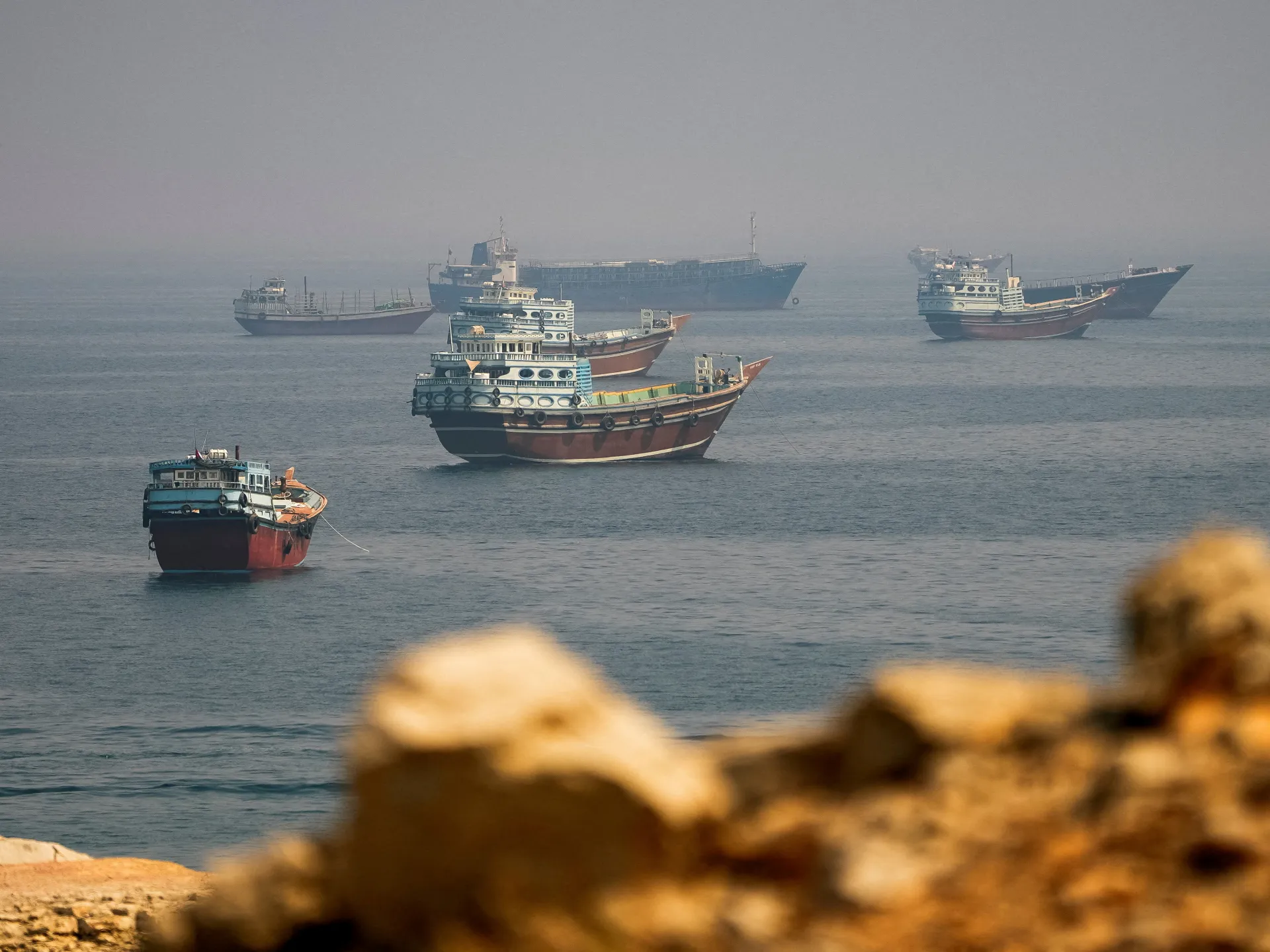
Global energy supplies have been disrupted due to the blockade of the Strait of Hormuz, impacting countries around the world. The blockade has particularly affected Gulf countries, which depend on oil and gas for vast majority of their budgets.
Recommended Stories
list of 3 itemsend of list
In a statement on Friday, Iran’s Ministry of Foreign Affairs said the meeting is intended to “promote better understanding among the countries of the region and help strengthen shared regional security”.
But Bahrain, a member of the Gulf Cooperation Council (GCC), has said it will not participate in the planned meeting. Bahrain has borne the brunt of Iranian attacks since the US and Israel launched the war on Iran in February.
So what’s behind the meeting and why won’t Bahrain participate?
Here’s what we know:
What has Iran said about the meeting?
On Saturday, Iran’s Foreign Ministry spokesman, Esmaeil Baghaei, told Al Jazeera that the meeting is “a sign of Iran’s good intention because we have said all along that the security of the region must be guaranteed by the countries of the region, without intervention by the foreigners, without intervention by the outside powers”.
“This is a sign we will talk to our neighbours, despite the fact that their territories, their military bases or the military bases of the United States, were used to attack Iran,” he said.
Gulf nations have accused Tehran of attacking civilian targets, including airports and desalination plants.
Baghaei added that Tehran would “brief the delegations about the results of the Iran and Oman consultations regarding the safe passage of ships through the Strait of Hormuz”.
Moreover, on Sunday, Iranian Foreign Minister Abbas Araghchi warned that Tehran’s expected agreement with Muscat to govern the Strait of Hormuz will not trigger a reopening of the waterway.
In comments to Al-Araby Al-Jadeed, Araghchi said Iran will “provide the participating countries with the details of the agreement with Oman and the maps related to the new route” during the meeting.
But the agreement does not “in any way” signal that the strait will reopen, with Tehran still expecting the US to honour the commitments of the June 60-day memorandum of understanding signed in June, he said. The MoU collapsed in July after the US tried to push for an alternative route closer to Omani territory, drawing Iranian attacks.
On Sunday, at least one person was killed and four others wounded after an Iranian commercial vessel was attacked near Qeshm Island in the strait, with attacks on ships escalating in recent weeks.
“Iran believes that the responsibility for ensuring security and stability in the region lies solely with the countries of the region,” Araghchi added.
Who is planning to attend the meeting?
Iraq and most of the Gulf nations have not yet responded whether they will attend the planned meeting.
However, Bahrain has said it will not be participating in the proposed meeting.
“In light of what has been circulated … the Kingdom of Bahrain will not participate in it,” Bahrain’s Ministry of Foreign Affairs said in a statement on Saturday.
Pointing to attacks on infrastructure across the Gulf, Bahrain said that security and stability in the region “cannot be preserved through a policy of appeasement” and called for Hormuz to be open without “discrimination, fees or permits”.
Bahrain’s Foreign Ministry said it maintains its commitment to dialogue, but “will not be a party to any collective meeting that includes Iran before the resumption of diplomatic relations between the two countries”.
Bahrain cut diplomatic ties with Iran in 2016 alongside Saudi Arabia during an earlier crisis between the regional rivals. While Riyadh restored ties in 2023, Manama is yet to do so.
What is behind the meeting between the GCC and Iran?
Indirect talks mediated by Oman are continuing between regional actors regarding safe passage and temporary shipping lanes, even as recent attacks on commercial vessels highlight the ongoing danger in the waterway through which a fifth of global oil and gas passes.
Top officials from Iran and the Gulf countries have held calls in an effort to resolve the conflict. Qatari Prime Minister Sheikh Mohammed bin Abdulrahman bin Jassim Al Thani visited Tehran late last month, aimed at de-escalating tensions and helping break the diplomatic deadlock between Iran and the United States.
A source familiar with Monday’s meeting told Iran’s Tasnim news agency that an agreement on routes through the strait between Iran and Oman will be presented at the meeting, but the strait will not reopen unless the US meets Iran’s conditions on the waterway.
Iran wants its control of the Strait of Hormuz to be recognised, allowing it to collect fees from ships that use it, which Washington rejects. Oman, which controls the opposite bank of the strait, says it is negotiating with the agreement of other regional states.
What is the current situation at the Strait of Hormuz?
The status of the Strait of Hormuz is contested and restricted more than six months into the US and Israel’s war on Iran.
Iran maintains restrictions and considers the strait largely closed or tightly controlled amid ongoing conflict.
Tehran has also been pushing to formalise its control over the waterway, including potentially charging fees for passage, and has been in negotiations with Muscat, as Oman’s territorial waters also cover Hormuz.
Tehran has also insisted that normal transit will not resume until the US lifts the naval blockades on its ports and removes sanctions.
The strait was free to use by shipping from all nations before the US and Israel attacked Iran late in February, killing Supreme Leader Ayatollah Ali Khamenei.
Daily shipping traffic through the strait has plummeted by about 95 percent since the start of the war on Iran, dropping from a pre-war average of roughly 130–140 ships per day down to an average of about five to seven vessels a day.
US President Donald Trump has, however, said it is in total control of the waterway.
Meanwhile, on Sunday, the United Kingdom Maritime Trade Operations (UKMTO) said a vessel has been struck by an unknown projectile while transiting the Strait of Hormuz.
In another incident on Sunday, at least one person was killed and four others were wounded in an attack on an Iranian commercial vessel near Hengam Island and the Shib Deraz coast of Qeshm Island, Qeshm Governor Hossein Amir Teymouri said, according to Iranian state broadcaster IRIB.
Teymouri described the incident as an attack by the “US terrorist enemy”.
A senior Iranian Revolutionary Guard Navy official has also warned US naval vessels against approaching the Strait of Hormuz, challenging Trump’s claims that Washington controls the waterway.
“If the Strait of Hormuz is under American control, then go ahead – bring one of your warships within 100km [62 miles],” the deputy political commander of the IRGC Navy said, according to Iran’s Fars news agency.
He said US forces know that any vessels approaching the area would face a response from Iranian forces, adding that similar incidents had occurred in recent days.
The US has not yet commented on this incident.