
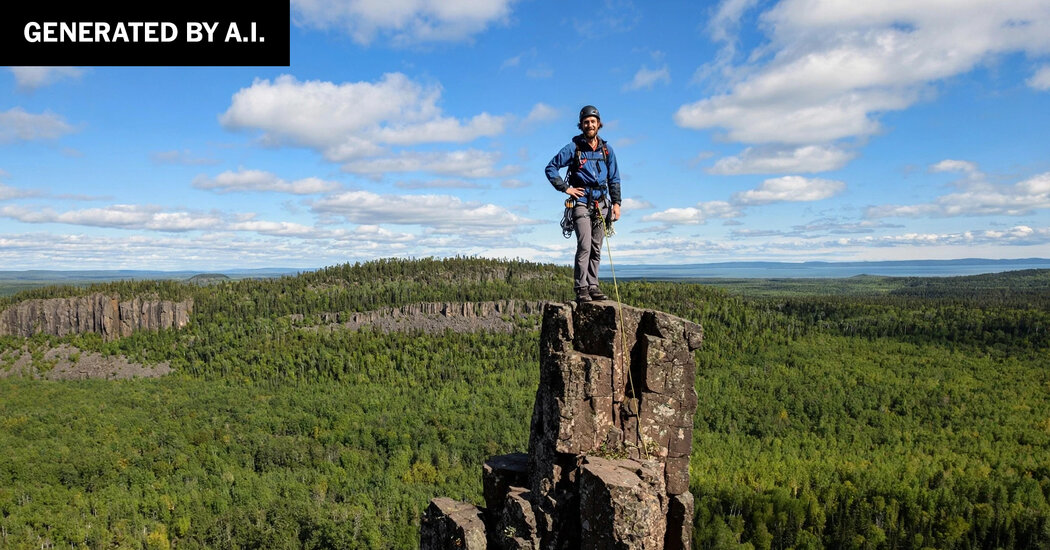
When Meta unveiled an artificial intelligence image generator called Muse Image on Tuesday, it came with a feature that let users create A.I. images based on people’s Instagram photos.
Any adult with a public Instagram account was automatically opted in. Using the Meta AI app, the company’s stand-alone chatbot, other users could pull from “part or all of your published photos” to create new A.I. images, the company wrote in a blog post.
“In addition, people may be able to create content with your Instagram content using A.I. features at Meta,” the company added.
Here’s how it works: On the Meta AI app, a user can tag a public Instagram account and direct the chatbot to create new A.I. photos based on photos from that person’s account.
The privacy backlash was immediate. Along with automatically enrolling users in the feature, Meta didn’t notify people when their accounts were used to generate A.I. images.
Hundreds of users took to social media to decry the new feature, asking how they could opt out while criticizing the company for a lack of consent. One user said on social media that the feature was “a privacy landmine waiting to detonate,” while others on Instagram shared templates for how to disable it.
A Meta spokesman said in a statement that private accounts and users under 18 were excluded from the new feature, which can be disabled “with just a couple clicks.”
“We will take action against any content that violates our Community Standards,” the company added.
What can I do about this?
The easiest way to opt out and protect your account is to set your account to private.
But if you’d like to keep your account public, go into Instagram’s settings and scroll down to the “share and reuse” tab. In the sections titled “Allow people to reuse your content on Instagram and with AI features,” toggle the setting to “off.”
You can also change the A.I. settings for individual pictures and videos. Users cannot stop their audio, text and comments from being “reused” by Meta’s A.I., the company said.
What are the implications for young users?
Underage users cannot have their accounts used to generate A.I. images, even if they have a public account, the company said. Teen users are also barred from using the feature on other people’s accounts.
Have other companies done this?
OpenAI, the A.I. start-up behind ChatGPT, ran into similar privacy concerns with the release of Sora, its A.I. video generator. There was one big difference: In order to use a person’s likeness for a video, that user needed to opt in. OpenAI shut down Sora in March, in part because it was very expensive to operate.
(The New York Times has sued OpenAI, claiming copyright infringement of news content related to A.I. systems. The company has denied those claims.)
Meta’s new A.I. image generator is part of its broader effort to integrate A.I. across its social media apps, including Instagram, Facebook, WhatsApp and Threads. Along with A.I. images, the company has introduced “A.I. characters” that people can chat with and that take on different personalities. It is preparing to release an A.I. video generator, Muse Video, in the coming months.


