
Athletes who compete in the Olympics have usually spent most of their lives preparing for the event.
But nearly four in 10 British men believe they could qualify for the next Games if they started training now, according to a poll.
A survey of 2,000 UK adults found that 26 per cent of Britons overall reckon they could make it to Los Angeles 2028 in a sport of their choice.
That figure rises to 38 per cent among men, with the same proportion saying they would feel confident trying out for the Games if they had professional coaching and followed a strict training regime.
A staggering 12 per cent of men also claimed they could run 100 metres in less than 15 seconds – despite one in five admitting they had never actually attempted to sprint the distance.
For comparison, Usain Bolt‘s world record stands at 9.58 seconds.
‘With more than a quarter of Brits believing they could qualify for the LA2028 Olympic Games given enough time, it’s clear that we’re a nation with considerable sporting ambition,’ Eurig Druce, managing director at Vauxhall, which commissioned the research to mark its partnership with Team GB, said.
‘It’s inspiring to see the confidence people have in their own potential – even if it may be blind faith.’
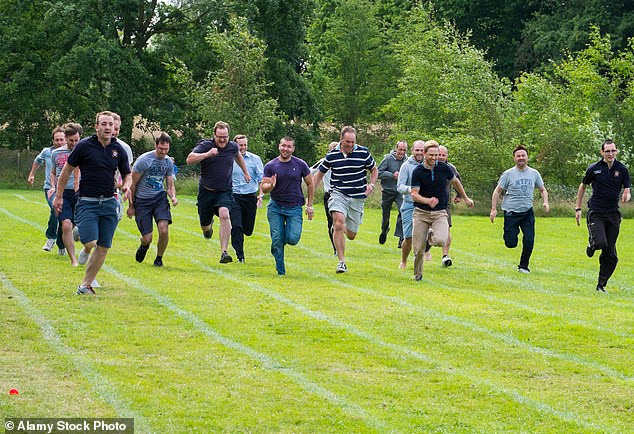
A staggering 12 per cent of men also claimed they could run 100 metres in less than 15 seconds – despite one in five admitting they had never actually attempted to sprint the distance. Pictured: Dads competing in a parents race at a nursery school sports day in Shropshire (stock image)
Analysis revealed football was the sport people felt most confident about taking up competitively, followed by tennis and swimming.
Britons were also feeling positive about their cycling prowess, with six per cent believing they could compete seriously in the sport.
However, there was considerably less confidence when it came to gymnastics, with 45 per cent admitting it would be the toughest Olympic sport to master.
Diving came next at 33 per cent, followed by judo at 23 per cent.
Overall, a third of those questioned said confidence was more important than natural talent when it comes to achieving sporting success.
And two-thirds said they perform better when there is some friendly competition, rising to 74 per cent among men.
Psychologists have named the tendency to overestimate our own abilities as the Dunning-Kruger effect.
A novice tennis player, for example, might watch a handful of tutorials and convince themselves they can serve like a professional.
This misplaced confidence can affect performance and even lead coaches to make poor decisions about players’ roles and training.
Research has suggested that almost 70 per cent of people with lower levels of skill rate their performance as better than average.
In team sports, this could mean valuable training time and resources are directed towards players who overestimate their abilities.
A separate study, published earlier this year, found male runners are twice as likely to hit the wall during a marathon.
An international team of researchers examined 873,334 Berlin Marathon race times to see exactly when runners ‘hit the wall’ – defined as slowing down by 20 per cent or more.
While men tended to finish the race faster than their female counterparts, they were also much more likely to experience a sudden and dramatic deceleration.
However, the experts say that this remarkable divide doesn’t come down to any biological difference between the sexes.
Instead, researchers say the most likely explanation is that men typically ‘overestimate their competitive ability’ and tire themselves out too early.


