NEWYou can now listen to Fox News articles!
This is part six of a series examining the challenges confronting the NATO alliance.
Germany is pledging to become a more powerful military force inside NATO, with Berlin’s ambassador to Washington telling Fox News Digital that the country is ready to assume greater responsibility for European security after decades in which the United States carried much of the alliance’s military burden.
“Germany is stepping up — we heard the call!” German Ambassador to the United States Jens Hanefeld told Fox News Digital in an exclusive interview.
Chancellor Friedrich Merz has said Germany’s armed forces should become the strongest conventional army in Europe, a goal Hanefeld said is now backed by Berlin’s new military strategy.
UK, GERMAN DEFENSE OFFICIALS DEFEND MILITARY BUILDUP UNDER RUSSIAN THREATS
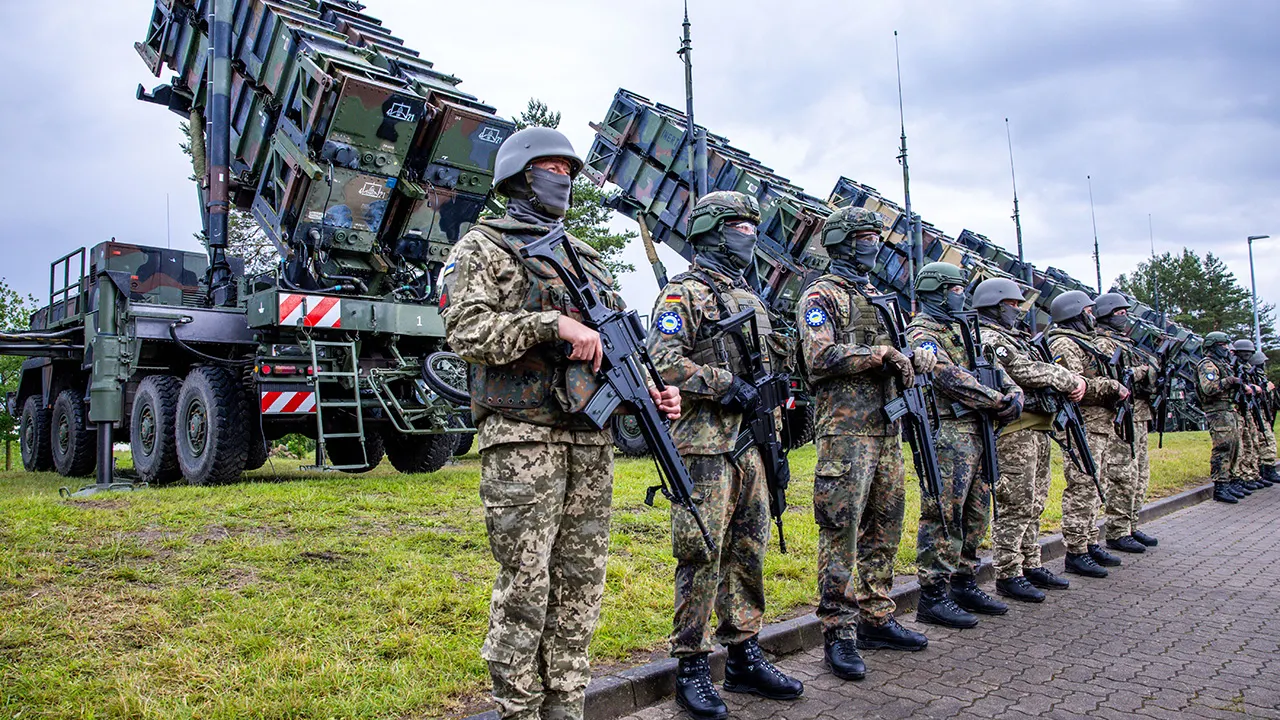
Germany is pledging to become a more powerful military force inside NATO, with Berlin’s ambassador to Washington telling Fox News Digital that the country is ready to assume greater responsibility for European security. (Kira Hofmann/Photothek via Getty Images)
“Russia’s illegal war of aggression has shaken old certainties in Europe and Germany as the international rules we have relied on are being challenged,” Hanefeld said. “This changes the strategic environment we operate in.”
“Today, Germany is Ukraine’s largest supporter,” Hanefeld said in written answers. “Germany’s decision to become Europe’s strongest conventional army, well anchored in the NATO alliance, is an ongoing commitment.”
Germany’s historic military shift
The shift marks a historic turn for a country whose postwar military identity was built around restraint.
After World War II, West Germany was allowed to rearm only within a Western alliance framework, joining NATO in 1955 and building the Bundeswehr as a force embedded in collective defense rather than independent German power. For decades after reunification, Germany relied heavily on the U.S. security umbrella and often lagged behind NATO spending targets, feeding repeated American complaints that Europe’s largest economy was not pulling its weight.
Russia’s full-scale invasion of Ukraine in 2022 forced Berlin to begin rethinking that posture. Then-Chancellor Olaf Scholz called the shift a “Zeitenwende,” or turning point. Merz is now seeking to turn that phrase into a long-term military buildup.
In Germany, Hanefeld said, the changes underway are often described as a “Zeitenwende,” but he acknowledged that the transformation does not come easily given the country’s history.
GERMAN DEFENSE MINISTER SAYS MILITARY DRAFT COULD RETURN IF VOLUNTEER NUMBERS FALL SHORT
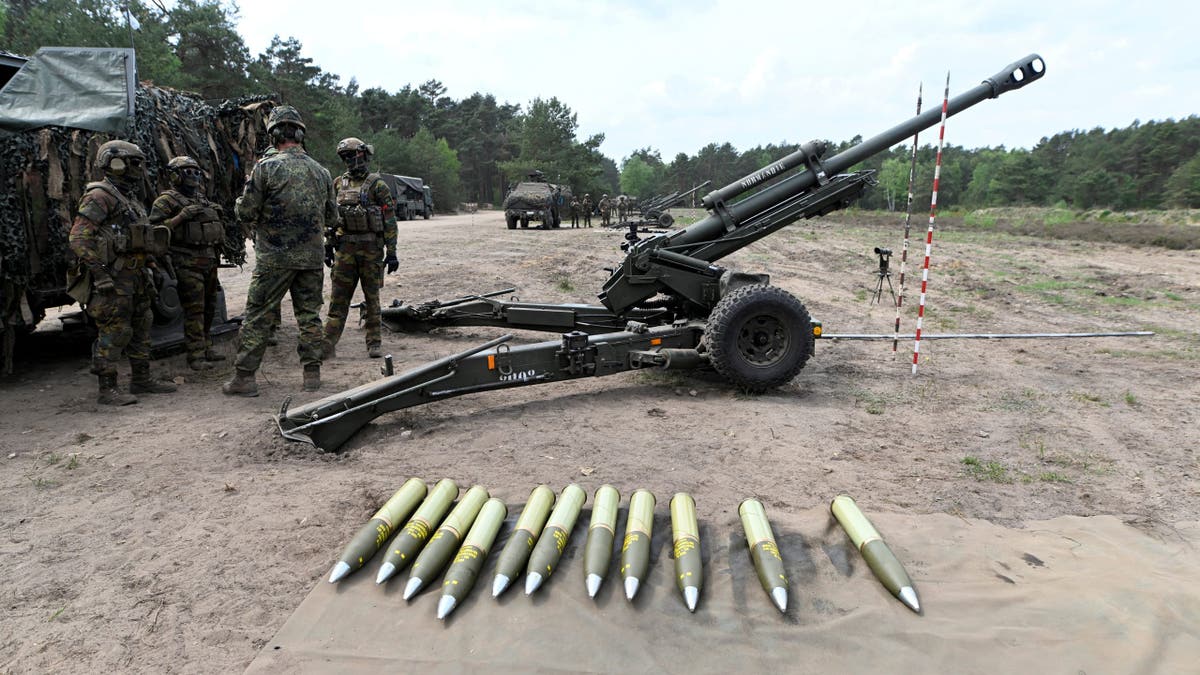
Ammunition for a howitzer is displayed during NATO training at a German army base in Munster, Germany, on May 10, 2022, involving up to 7,500 soldiers from nine nations. (Fabian Bimmer/Reuters)
Trump–Merz tensions complicate NATO politics
The effort is unfolding against a backdrop of public friction between President Donald Trump and Merz, a dispute that a U.S. defense expert warned could complicate critical decisions on deterring Russia.
The tension escalated after Merz criticized Washington’s handling of the Iran war, saying the United States was being “humiliated” by Iran’s leadership in negotiations and questioning the Trump administration’s exit strategy. Trump fired back by accusing Merz of being soft on Iran’s nuclear program, even though Merz has said Iran must not obtain a nuclear weapon.
The dispute quickly spilled into NATO politics. Trump later threatened to review possible U.S. troop reductions in Germany and said Merz should spend more time ending the war in Ukraine and “fixing his broken country” than commenting on Iran.
Then Merz added another irritant. Speaking to a young audience in Germany, he said he would not advise his children to live, study or work in the United States “today,” citing America’s changing social climate, while also saying he remained “a great admirer of America,” but “My admiration isn’t growing at the moment.”
GERMANY’S MERZ TO ‘ADAPT’ TO TRUMP DURING HIGH-STAKES MEETING ON TARIFFS, DEFENSE
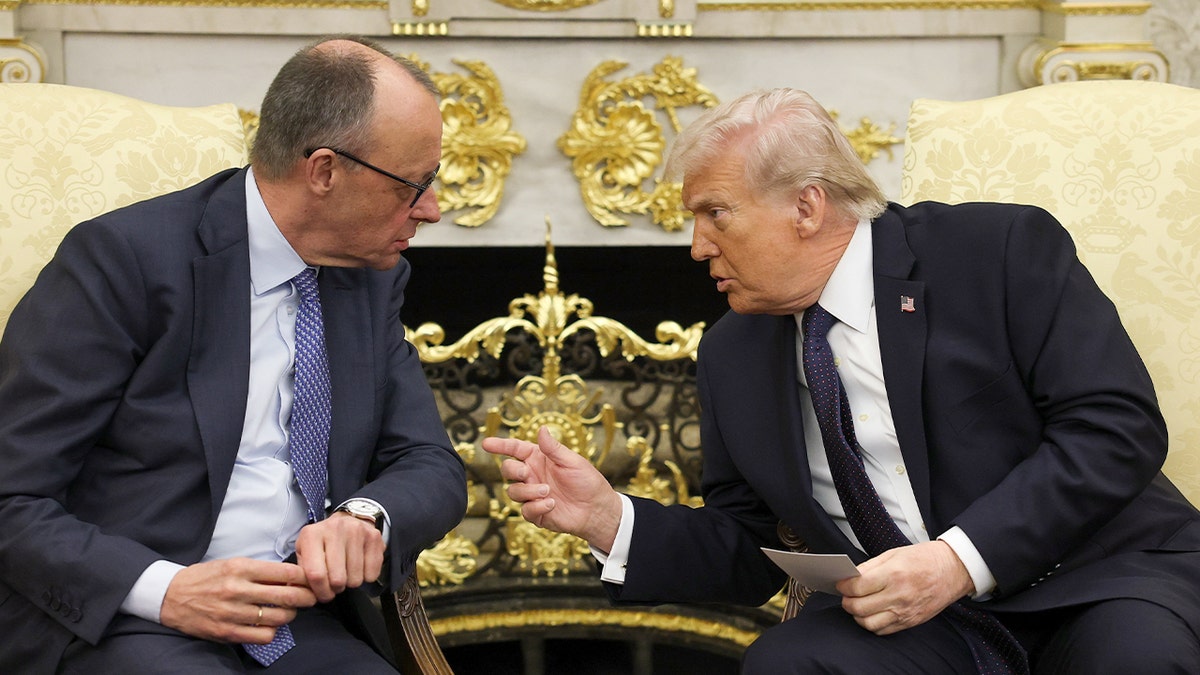
President Donald Trump and German Chancellor Friedrich Merz met in the Oval Office at the White House in Washington, D.C., on March 3, 2026, to discuss issues including recent U.S. and Israeli strikes on Iran. (Win McNamee/Getty Images)
Retired Rear Adm. Mark Montgomery, a senior fellow at the Foundation for Defense of Democracies and former U.S. European Command official, told Fox News Digital that Merz was wrong to speak that way about Trump at a moment when Germany needs Washington’s support.
“Talking trash about the president at a meeting with school kids in Germany is not professional diplomacy, and especially a president who is well-known to be prickly as President Trump,” Montgomery said. “Germany is not the big country in this relationship, the United States is, and Merz needed to show more discipline as a national leader.”
Montgomery said those tensions risk affecting hard security decisions, including long-range strike capabilities in Germany.
He criticized recent U.S. moves to delay or potentially cancel a rotational deployment of long-range strike systems to Germany, which he said would have included Tomahawk, SM-6 or Precision Strike Missile capabilities. Reuters reported in May that Germany’s defense ministry said there had been no “definitive cancellation” of the deployment.
“Both of these are bad decisions being made by our Department of Defense,” Montgomery said. “These are weapons systems that are incredibly important to deterring Russia.”
He said the goal is not to fight Russia in Poland, the Baltics or the Suwałki Gap, but to prevent Moscow from attacking in the first place.
“And those long-range strike weapons are a big part of that. And I’m very disappointed in our Department of Defense,” Montgomery said.
A source with knowledge of the matter said that despite briefings about possible decreases in U.S. involvement, the U.S.–Germany defense relationship remains strong and cooperation remains close.
‘PUTIN IS PUSHING THE LIMITS’: EASTERN ALLIES WARN TRUMP NOT TO PULL US TROOPS
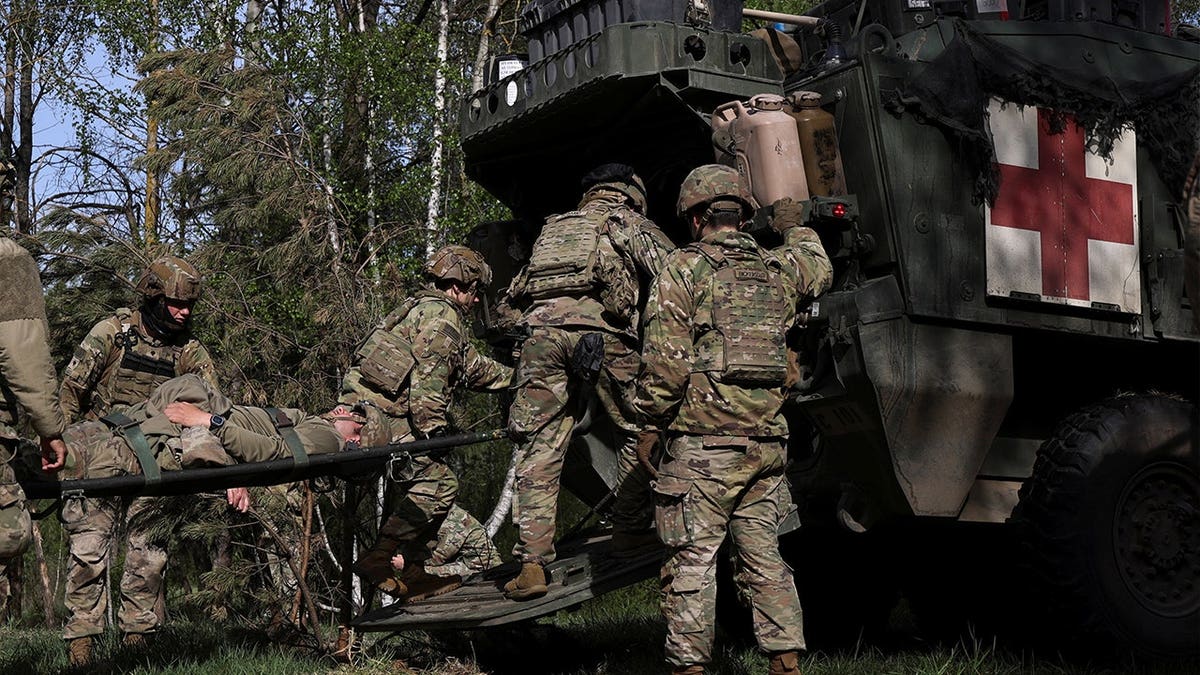
U.S. Army soldiers carry a simulated casualty into a MEDEVAC vehicle during NATO’s Sword 26 exercise, which tests new battlefield evacuation methods using drones and AI-assisted medical technology in Bemowo Piskie, Poland, May 11, 2026. (Kuba Stezycki/Reuters)
Europe’s future defense industrial base
“Germany developing a large, impressive defense industrial base is good for NATO, it’s good for Western security, and it’s even good for our primes,” Montgomery said, arguing that Germany, not Poland, France or the United Kingdom, is most likely to become the “beating heart” of Europe’s future defense industrial base.
Germany has long been central to the U.S. military presence in Europe. Hanefeld pointed to Ramstein Air Base, Landstuhl Regional Medical Center and the training area in Grafenwöhr as examples of Germany’s continuing importance to American power projection and NATO deterrence.
“These facilities serve U.S. national security interests and U.S. military personnel and further NATO’s ability to deter and defend,” he said. “I am confident: NATO will remain transatlantic at its core, but will become more European over the next decade.”
At the 2025 NATO summit in The Hague, allies agreed to invest 5% of GDP annually in defense and defense-related spending by 2035, including core military spending and broader security investments. Merz said at the time that the decision was meant to safeguard “freedom, security and prosperity,” according to the German government.
Hanefeld said Germany is already moving to meet that standard, saying Berlin will increase defense spending to 5% of GDP “well before” 2035 and recruit almost 100,000 new active-duty soldiers into the Bundeswehr.
He also pushed back against U.S. critics who argue that Germany and other European allies are still not carrying their fair share of the defense burden. Hanefeld said Germany has signed more than 380 contracts worth more than $33 billion with U.S. defense companies to procure and manufacture fighter jets, transport helicopters, air defense systems and ammunition.
“It’s a down payment on the transatlantic future and on our political commitment to shift the burden for deterrence and defense to Europe,” Hanefeld said.
TRUMP PUSHED NATO TO SPEND BIG — NOW COMES THE HARDER QUESTION: CAN EUROPE ACTUALLY FIGHT?
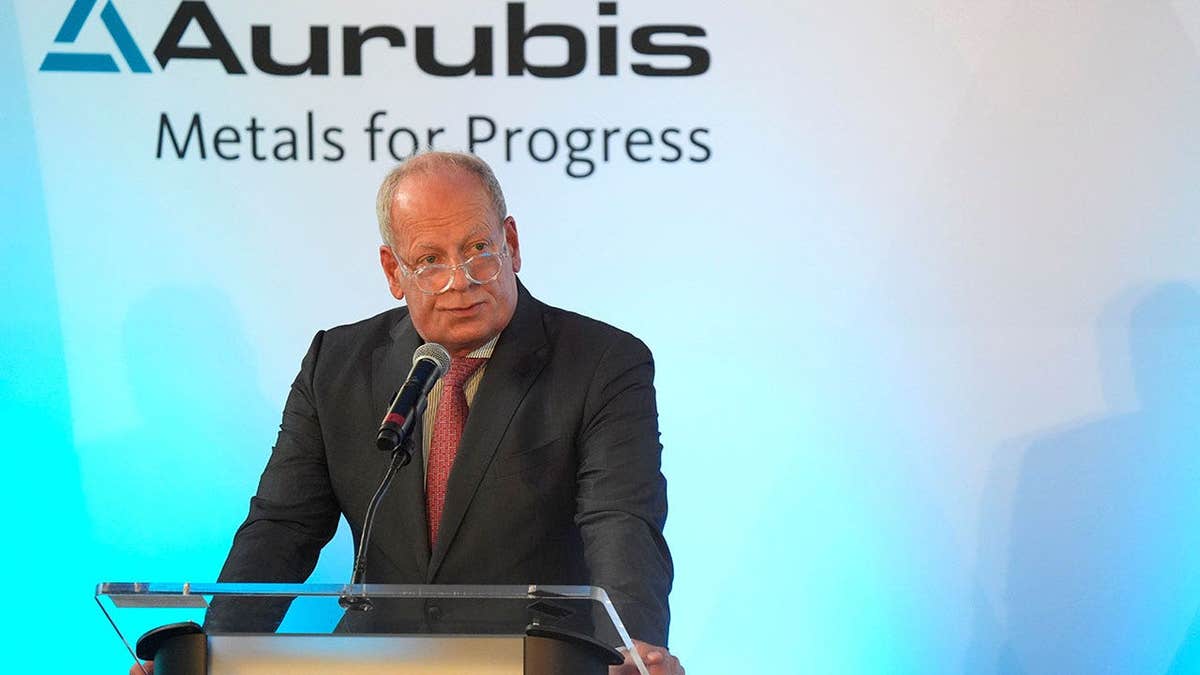
Sept 24, 2025; Augusta, Georgia, USA; H.E. Jens Hanefeld, Ambassador of the Federal Republic of Germany to the U.S., speaks during the Aurubis first melt ceremony at Aurubis Richmond. Aurubis is a metal recycling plant. (Katie Goodale – Augusta Chronicle/USA TODAY NETWORK)
Defending NATO’s eastern flank
One of Germany’s most visible commitments is its permanent brigade in Lithuania, expected to include around 5,000 German military and civilian personnel. The Bundeswehr says the force is intended to become fully operational for the defense of NATO’s eastern flank in the Baltic region within three years.
Hanefeld called the brigade one of Germany’s “signature efforts” to reassure Baltic allies that NATO “will defend every inch of allied territory.”
For Germany, the change is not only about money. It is a political and cultural break with decades of caution about military power. For the United States, it is also a test of whether the ally long criticized by Trump and other U.S. leaders for underspending can now become the European backbone Washington has demanded.
CLICK HERE TO DOWNLOAD THE FOX NEWS APP
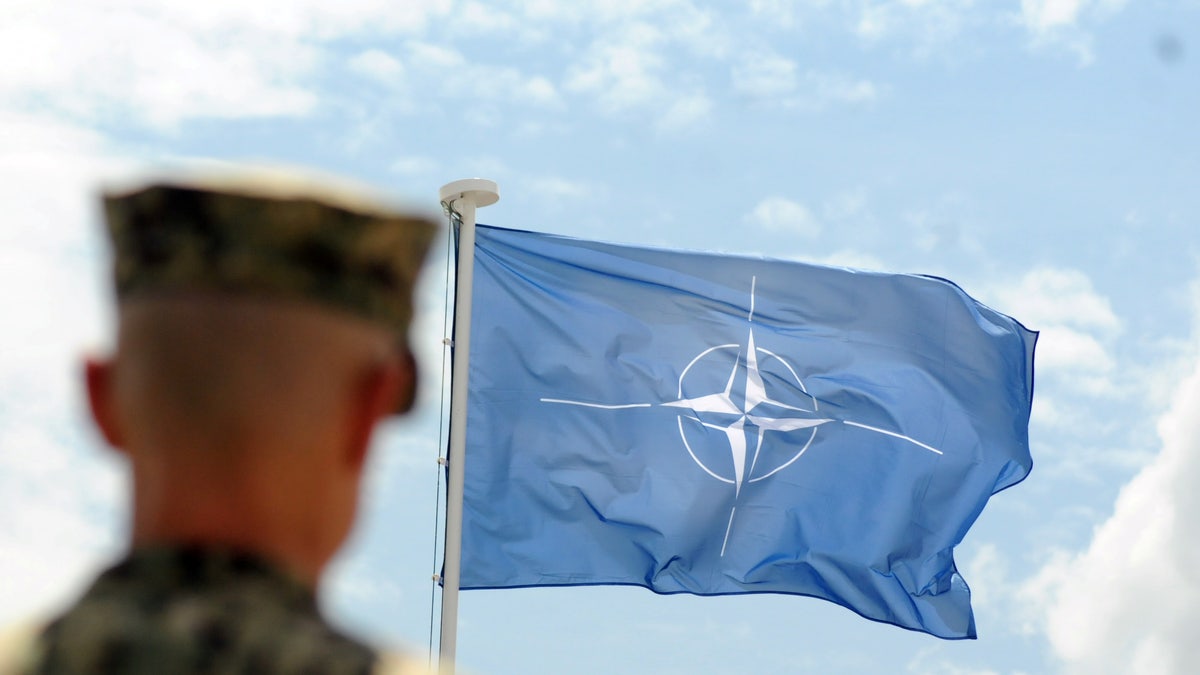
NATO peacekeeping mission KFOR marks its 20th anniversary during a ceremony in Pristina. (Laura Hasani/Reuters)
Hanefeld said that is exactly where Berlin intends to go.
“NATO will remain transatlantic at its core,” he said, “but will become more European over the next decade.”