We call them shooting stars, but it’s actually meteors that create dazzling streaks of light across our night sky.
What is often considered the world’s most famous comet is leaving its mark on the night sky this week. Peak activity for the Eta Aquariid meteor shower arrives May 5 to 6, giving skywatchers a chance to watch fragments of Halley’s Comet flare into life as they streak through Earth’s atmosphere.
The meteors typically appear as fast streaks with lingering glowing trails rather than large fireballs.
MAY SKYWATCHING GUIDE: FROM METEOR SHOWERS TO MICROMOONS, HERE IS WHAT TO LOOK UP FOR
According to the American Meteor Society, stargazers in the Southern Hemisphere may see up to 50 meteors per hour. While fewer are typically visible in the Northern Hemisphere, onlookers can still expect between 10 and 30 meteors per hour.
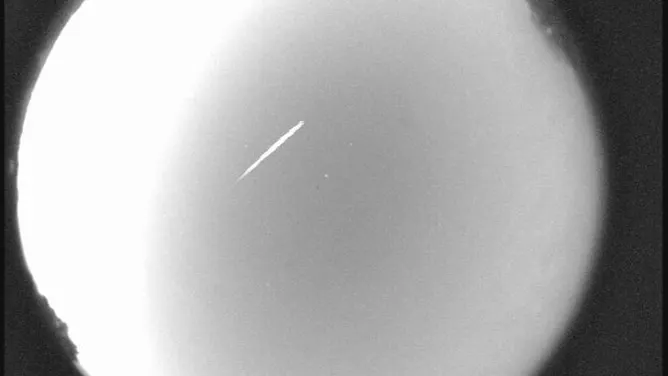
An Eta Aquarid meteor streaks over north Georgia on April 29, 2012.
(NASA / NASA)
Traveling at more than 40 miles per second, debris shed from Halley’s Comet hits Earth’s atmosphere, where intense pressure and heat create bright streaks of light across the sky.
Halley is often called the most famous comet because it marked the first time astronomers understood comets could be repeat visitors to our night skies,” NASA said, noting that records of its appearances date back more than 2,000 years.
Skywatching conditions and viewing tips
According to the American Meteor Society, the moon will be in its waning gibbous phase—meaning it will appear between 90% and 60% full, and in this case, specifically 84%—ultimately washing out some of the meteors as it reduces visibility to less than 10 meteors an hour.
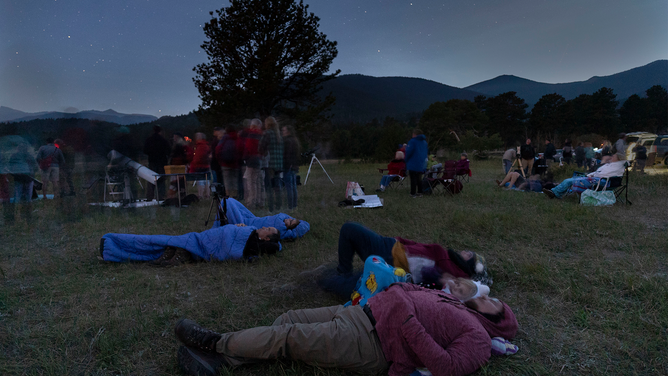
FILE – As darkness falls, people lie on the ground to view the Perseid meteor shower in Rocky Mountain National Park in Colorado at an astronomy night event on August 12, 2018.
(STAN HONDA / AFP / Getty Images)
The Planetary Society actually recommends not looking directly at the moon.
WHAT ARE THE PHASES OF THE MOON?
It’s also best to wait for your eyes to adjust to the darkness, roughly 30 minutes, and look for them during the pre-dawn hours.
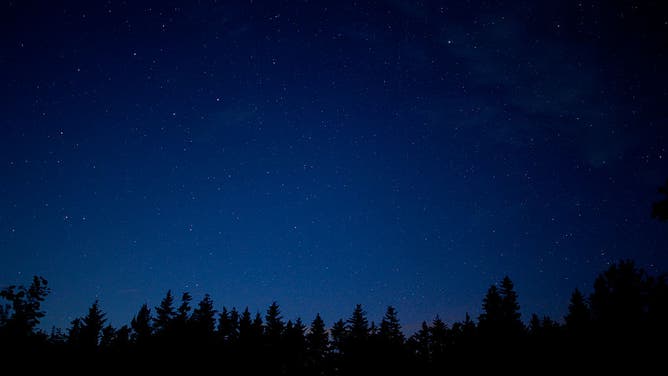
Starry Blue Sky, Pemaquid, ME.
(Education Images/Universal Images Group via Getty Images / Getty Images)
The Eta Aquariid meteor shower becomes visible once its radiant in the constellation Aquarius rises above the horizon. Space.com suggests finding a spot in the sky about 40 degrees away from your zenith—the point directly above your head—noting that this is where the meteors will be best viewed.
THE BEST CELESTIAL EVENTS IN 2026 YOU WON’T WANT TO MISS
Additionally, for those facing a cloudy night, some tips include looking for gaps in the cloud coverage and tracking cloud movement for temporary clearings.
That said, while the peak of the shower is expected from May 5 to 6, the full duration of the Eta Aquariid meteor shower lasts through May 28, so it may be better to try a different night.