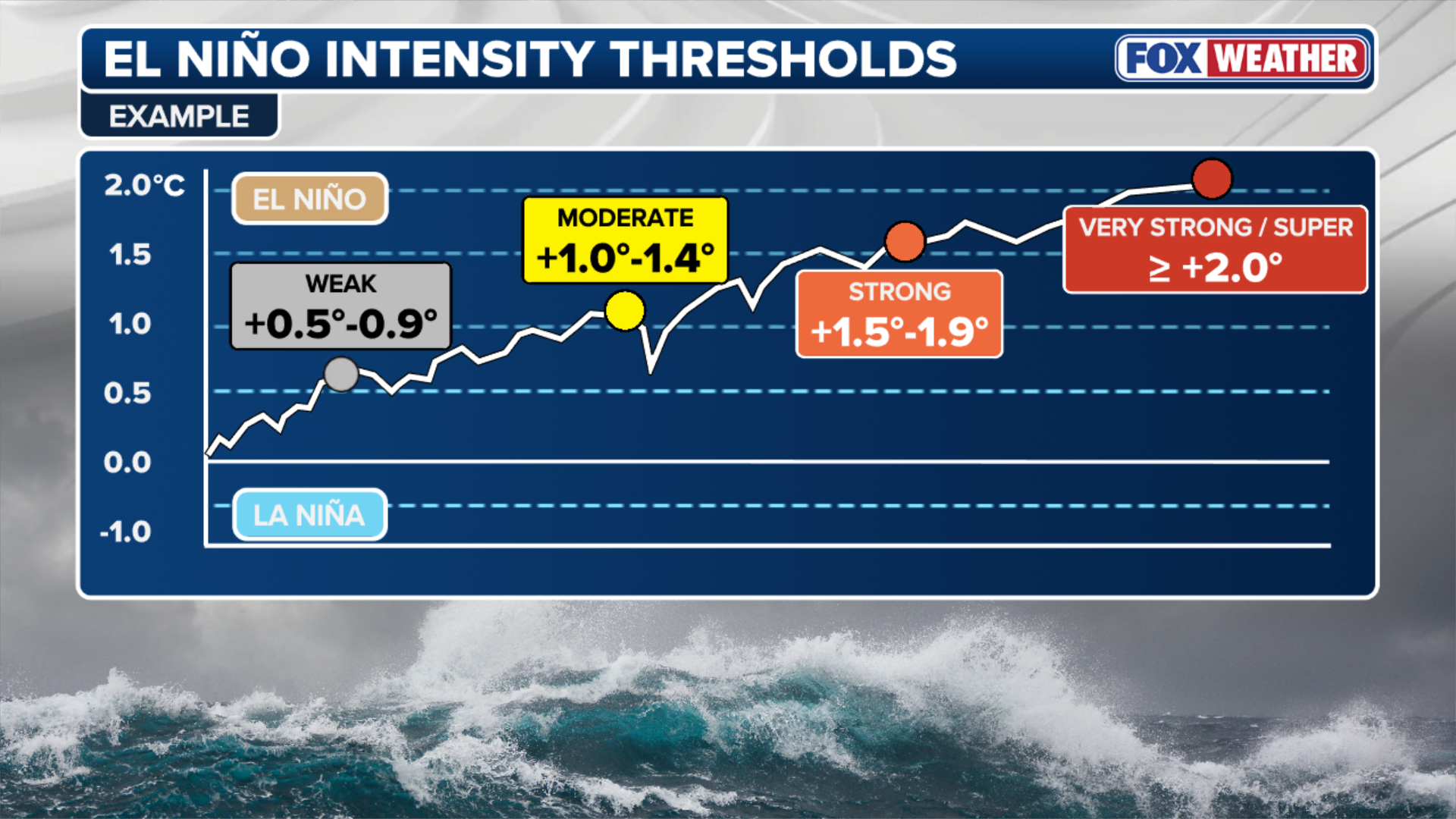
In order to have Super El Niño status, the Pacific Ocean must be 2 degrees Celsius above average for at least three months. So, while we’re a little ways away from achieving super status, but EL NIño is on track to hit it this fall or winter.
El Niño continues to get stronger as we get deeper into hurricane season, with long-range outlooks showing that we’re still on track to see potentially one of the strongest El Niño’s on record this fall or winter.
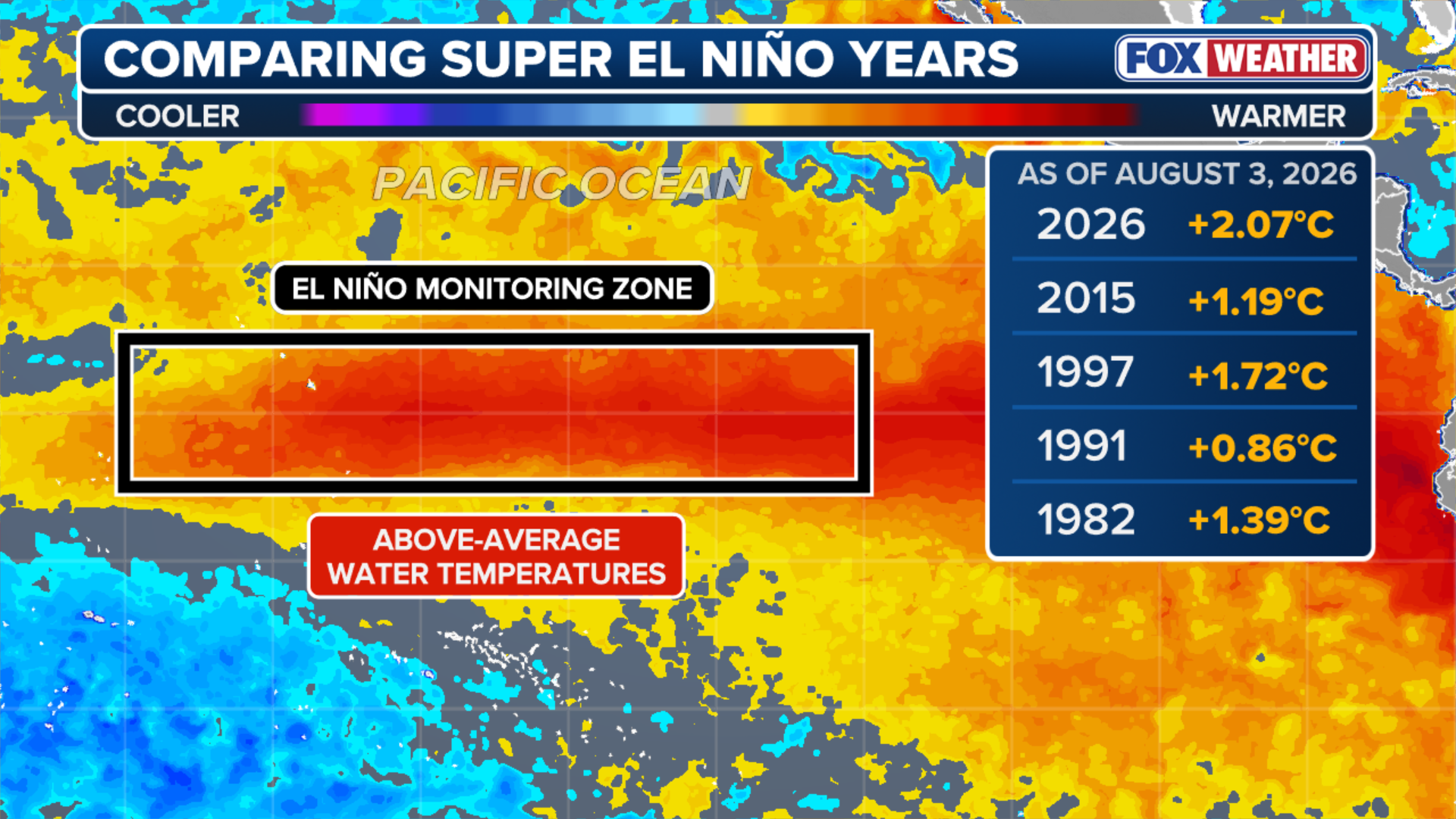
According to the FOX Forecast Center, there’s an imaginary box in the Pacific Ocean called the Niño 3.4, which agencies use to monitor ocean temperatures to help classify El Niño and La Niña conditions.
BRYAN NORCROSS: NO TROPICAL DEVELOPMENT IN THE ATLANTIC FOR THE FORESEEABLE FUTURE
(FOX Weather)
In order for El Niño to hit “super” status, water temperatures in the Pacific Ocean need to be 2 degrees Celsius higher than normal over a three-month period.
Currently, the three-month average for the Niño 3.4 region is only 1.5 degrees Celsius higher, which falls into the strong category.
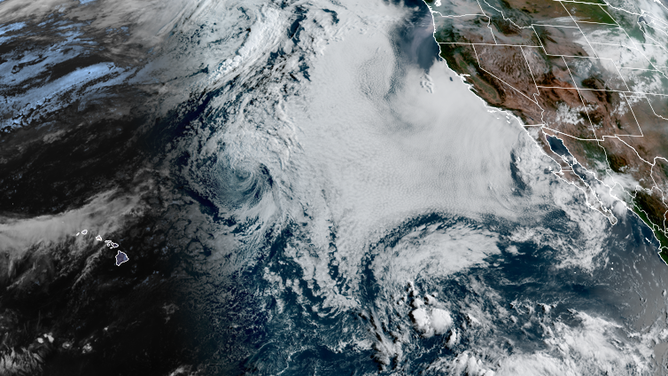
A look at the Pacific Ocean off the West Coast of the US
(CIRA/CSU)
As a result, the FOX Forecast Center does not expect a Super El Niño declaration anytime soon.
According to the FOX Forecast Center, since 1970, there have been five recorded Super El Niño events followed by a swift decline into either neutral or La Niña conditions.
EL NIÑO SURGES TOWARD ‘MONSTER’ TERRITORY, SIGNALING AN ACTIVE WINTER FOR EAST AND WEST COASTS
(FOX Weather)
The strongest was the Super El Niño of 1997, which is likely to be the closest comparison to this year’s El Niño, but forecast models show the 2026 El Niño could be the strongest ever recorded.
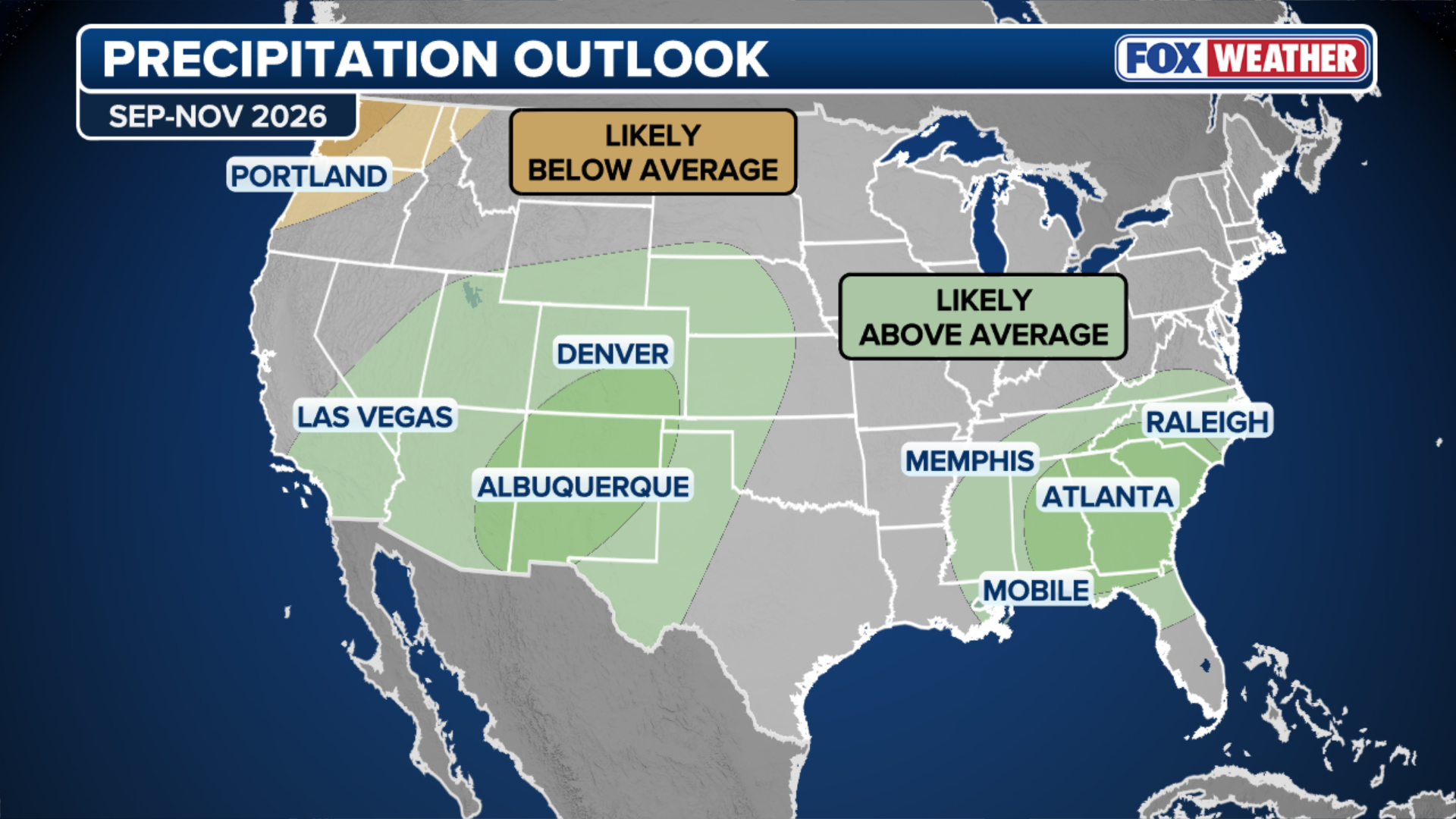
There’s no definitive timeline as to when Super El Niño status will be reached, but the Climate Prediction Center’s three-month outlook shows above-average precipitation across the Southeast, as well as portions of the Four Corners and the Southwest from September to November.
(FOX Weather)
The most severe effects from the Super El Niño are likely to occur in fall and winter.
El Niño continues to produce an active hurricane season for the Eastern and Central Pacific, while also limiting development in the Atlantic.