
Qatar’s Doha Film Institute (DFI) has announced the recipients of its 2026 Spring Grants cycle, spanning 48 projects at differing stages of creation from 39 countries.
Among the film projects is About Love & September Laws, the second feature by Mohamed Kordofani after Khartoum-set drama Goodbye Julia, which made history in Cannes in 2023 as the first Sudanese film to play in the festival.
With his last film exploring Goodbye Julia exploring the events of 2011 when South Sudan broke away from the north, his new drama is set in Sudan in 1983 as Sharia Law takes hold.
Palestinian director Muayad Alayan has also won support for Conversation with the Sea about a 60-year-old Palestinian man caught up in Israeli bureaucracy after he is ordered by an Israeli court to pay a large social security debt on behalf of his dead son who died in suspicious circumstances.
Other recipients include Greek-Lebanese-Palestinian director Theo Panagopoulos with documentary Before Our Diaspora. It follows his The Flowers Stand Silently, which won best short film at the International Documentary Festival Amsterdam in 2024 and was also Bafta nominated. The new work takes its cue from Scottish archival films of 1930s and 1940s Palestine.
The recipients also feature 2026 Cannes-selected films, post-genocide Rwanda drama Ben’Imana by Marie-Clémentine Dusabejambo, which won the Caméra d’Or for best first film across all sections; Strawberries and 9 Temples to Heaven.
Awarded biannually in the spring and fall, the grants support Qatari and Qatar-based filmmakers, as well as emerging and established voices from across the MENA region and beyond.
The program is one of the longest-running film development initiatives in the region, dedicated to identifying and empowering first and second-time filmmakers globally alongside established MENA directors in Post-Production.
The DFI said the2026 Spring Grants cycle reflected the diversity and global reach of contemporary cinema, with projects from MENA countries including Algeria, Djibouti, Egypt, Iraq, Jordan, Lebanon, Morocco, Palestine, Qatar, KSA, Somalia, Sudan, Syria, Tunisia and the UAE.
Internationally, the selected projects represent Cuba, Canada, Chile, France, Peru, Philippines, Rwanda, South Africa, Spain, Thailand, and the UK.
“In a world that is constantly changing, culture remains one of our most powerful anchors – preserving our memories, shaping our identities and connecting us across generations,” said Fatma Hassan Alremaihi, Chief Executive Officer of Doha Film Institute.
“More than ever, we need authentic stories that reflect the complexity of human experiences and safeguard the histories, perspectives and voices that might otherwise be forgotten.
The 2026 Spring Grants Recipients
MENA – Feature Narrative – Development
- Bayt Rabab (Lebanon/Estonia/Qatar) by Pedro Hasrouny: Marie flees with her children to reunite with her husband in exile. Struggling with displacement, she chooses to return home to southern Lebanon, risking everything to reclaim her life.
- About Love & September Laws (Sudan/France/Germany/Sweden/KSA/Qatar) by Mohamed Kordofani, set in 1983 Sudan, as Sharia law takes hold, a doctor, a translator and an African American reporter are entangled in love and resistance amid political upheaval.
- When Blood Calls (Egypt, Cuba, Brazil, Qatar) by Fady Gamal Soliman: two sons of the same man compete for their father’s approval on a crocodile-hunting expedition until his death forces them to confront the image they had of him.
MENA – Feature Documentary – Development
- Land Keepers (Lebanon/USA/Qatar) by Iyad Abou Gaida and Darine Hotait, is set in the Jabal Al-Shaykh ecological zone, and follows stewards in South Lebanon, occupied northern Palestine and the occupied Syrian Jawlan, resisting ecocide through care, cultivation and collective documentation.
- Searching for Nidal (Lebanon/France/Qatar) by Fatima Joumaa: on Fatima’s wedding day in southern Lebanon, war breaks out. Her husband documents the front, and their photojournalist friend goes missing in Gaza. Through all three cameras, she questions love, absence and images in wartime.
- Voy y Vuelvo (I’ll Be Right Back) (Palestine/Chile/Qatar) by Andrés Khamis Giacoman and Francisca Khamis Giacoman: Between Palestine and Chile, ‘Voy y Vuelvo’ moves across time and territories, weaving stories of migration and textile labour. Through archives, observation and fiction, it reconstructs a fragmented memory in which the past insists on returning.
- Before Our Diaspora (UK/France/Qatar) by Theo Panagopoulos: The discovery of never-before-seen Scottish archival films of 1930s and 1940s Palestine sparks a Scotland-based Palestinian filmmaker’s journey across Europe and the Middle East as a form of archival repatriation to a fragmented and scattered Palestine.
MENA – Shorts – Narrative – Development
- Moments We Lived (Qatar) by Ibrahim Albuainain, ‘Moments We Lived’ is a satirical stop-motion short series that humorously exposes everyday social, cultural and institutional idiosyncrasies.
- Harf Esem: Forced Landing (Qatar) by Mohammed A. Al-Suwaidi: after crash-landing on Earth, a desperate alien repairs his navigation system by stealing Arabic letters, accidentally erasing them from reality. To save their culture from silence, classmates Harf and Esem must stop him and protect their language.
- Spooky Saeko (Qatar/China) by Alhanoof Mubarak Alnaemi: haunted by her friend’s disappearance, Aya grows up desperate for answers—only to uncover a shocking truth tied to her past, forcing her to confront the horrors that shaped her.
MENA – TV Series – Development
- Sisters of Rap (Tunisia/France/Qatar) by Olfa Ben Achour: in a music genre historically shaped by power and male dominance, women rappers from the Arab world claim their voices.
- Off the Books (Libya/Qatar) by Muhannad Lamin: when a young graduate starts work at a private bank during Libya’s cash crisis, he discovers that access to money, not money itself, is the real currency.
MENA – Feature Narrative – Production
- Accept My Plea for Burial (Somalia/Djibouti/Qatar) by Mohammed Sheikh: after 12-year-old Warmooge dies while playing with his friend in rural Somalia, his family refuses burial. With no clear evidence and an unreliable witness, a community governed by customary law must preserve peace without sacrificing another child.
- The Tanjawi (Morocco/France/Qatar) by Zahoua Raji, Ayoub Layoussifi: Casablanca, Morocco. Hassan, a 61-year-old former heroin addict seeking redemption, is ready to do whatever it takes to leave his past behind, even if it means stealing the dowry for his only son’s wedding.
- Blue Card (Sudan/Egypt/KSA/Germany/Qatar) by Mohammed Alomda: after war breaks out in Sudan, Abdullah flees alone to Egypt, planning to smuggle his family later. To earn money, he takes a demeaning job at a nursing home, where unexpected relationships reshape his future.
- Faux Bijoux (Lebanon/France/Belgium/Qatar) by Jessy Moussallem: caught in debts and schemes, a family is dragged into a vicious cycle that tests their unity.
MENA – Feature Documentary – Production
- When Time Dissolves Into Silence (Morocco/France/Qatar) by Faiçal Benaghrou: in the Rif Mountains of northern Morocco, a filmmaker reunites with his father in their ancestral village to confront three generations marked by colonialism, military discipline and inherited silence, seeking to break a lineage of trauma.
- Testahbis (Syria/UAE/Qatar) by Waleed Al Madani: through survivors’ voices, silence and haunted detention spaces, ‘Testahbis’ explores Syria’s legacy of torture and exile, revealing the weight of memory and the need to face the past before imagining a future.
- Disappeared (Syria/France/Lebanon /Qatar) by Anas Zawahri: through memory and body, five Syrian women live with the ghosts of their forcibly disappeared sons, performing simple daily actions to keep their memory alive.
- Solo (Tunisia/France/Qatar) by Amine Boukhris about Akmel: abandoned at 15 when his entire family left to join Daesh in Syria, Akmel, now 27, rebuilds his life in Tunisia through rap. As he prepares to become a father, he confronts his past to free himself from it.
- +477 Night (Palestine/Qatar) by Aisha Adly: a documentary based on the director’s personal experience of nighttime displacement during the war on Gaza, presenting stories that were not covered by the media.
- Portrait of A (Jordan/Germany/Qatar) by Rand Beiruty: Over seven years, Portrait of A follows Andrea, a young Roma immigrant, as she navigates love, infidelity, and motherhood, blending intimate observation with imaginative re-enactment to reveal the complexities of her journey.
MENA – Web Series – Production
- Mehdi: Delivery Notice (Algeria/France/Qatar) by Oussama Bouacheria: a young postman, Mehdi, racing to support his family, discovers that his most important delivery is not a parcel, but human connection.
MENA – Shorts – Narrative – Production
- Qadar (Qatar) by Aisha Al-Khanji: haunted by childhood abandonment and driven by a need to prove his worth, a struggling Qatari coffee artisan clings to his failing business until he learns to stop forcing success and surrender to a greater plan.
- Until the Rain Stops (Jordan/Palestine/Qatar) by Jehad Hallaq: after a tragic attack, Haneen fights to save her Jerusalem home, forcing her to confront both her grief and the violence closing in.
- Khansa’s Nouba (Algeria/Qatar) by Kamir Abbas-Terki: Khansa, a young musician, bold and driven by her passion for music, decides to flee her town and go to Algiers to pursue her dream.
- The Pickle Jar (Lebanon/Qatar) by Joy Hallak: when a mother and daughter begin bonding by making pickles in their Southern Lebanese village, a phone call from the mayor disturbs their peace and forces prompt decisions about their safety.
- From Dhawi to Dhawi..Your Love (Sudan/Egypt/Qatar) by Shehab Satti: A young Sudanese artist flees to Cairo after his mother is killed in the war, only to live with a distant grandfather. Their tense coexistence revives buried violence and loss, forcing a fragile chance of reconciliation.
- What I Owe to My Mother (Egypt/Canada/Qatar) by Khaled Moeit: in a single night, thirteen-year-old Hana braves the harsh city streets after her mother is humiliated in public by a shop owner who scammed her, determined to reclaim her dignity.
- Intuition (Qatar) by Aysha Alabdulla: a young man enters a surreal trial to pursue his dream of becoming a chef, but must first confront the fear of failure and self-doubt that have been holding him back.
MENA – Shorts – Documentary – Production
- Ayta (Lebanon/Brazil/Qatar) by Nader Bahsoun: during a frail ceasefire that never held, a mother and her twin daughters return to Ayta, their village along the Southern Lebanese border, and to their father, who chose to stay. The documentary captures fragments of life beyond violence.
- Daughters of Al-Azeeb (Iraq/Qatar) by Budoor Al Abid and Ali Mohammed: in Iraq’s marshes, girls face daily challenges, despite their young age, balancing family responsibilities with their right to education while caring for water buffalo amid the pressures of climate change.
- In Limbo (Palestine/Canada/Qatar) by Rame Ibrahim and Asil Majed Al-Wadiya: capturing one young woman’s conflicted journey out of war-torn Gaza, while supporters in Canada work to facilitate her passage before it is too late.
MENA – Feature Narrative – Post-Production
- Conversation with the Sea (Palestine/KSA/Netherlands/Qatar) by Muayad Alayan: Kamal, a 60-year-old Palestinian man, is ordered by an Israeli court in Jerusalem to pay a large social security debt on behalf of his son Wael, who drowned in the Red Sea over 20 years ago, or so Kamal was told.
MENA – Feature Documentary – Post-Production
- Wilderness Of Dreams (Egypt/Belgium/France/Qatar) by Mona Lotfy: a poetic documentary exploring Egypt’s only coal mine in Sinai, unveiling a forgotten parallel history of revolutionary hopes, post-war disillusionment and resilience through voices shaped by darkness and dreams.
- You Don’t Die Two Times (Algeria/Netherlands/Germany/Qatar) by Ager Oueslati: One night, a strange dream awakens Gift. Is it the harbinger of the end? Thrown into the perilous odyssey of the quest for Europe, Gift recounts the memories that led to her departure.
- Getting Colder (Iraq/UK/Hungary/Qatar) by Koutaiba Al-Janabi: a filmmaker revisits memory, exile and return through a poetic journey between Baghdad and Europe, where personal history collides with time, loss and belonging.
MENA – Experimental/Essay – Production
- When the Sun Rises from the South (Syria/Sweden/Qatar) by Yaser Kassab: after the Assad regime falls, two Syrian filmmakers follow friends Saeed and Hiba between return and staying, exploring belonging and the meaning of home after years of exile.
Non-MENA – Feature Narrative – Post-Production
- Haven of Hope (Pakistan/France/Germany/Netherlands/KSA/Qatar) by Seemab Gul: Three inmates from a Pakistani shelter home for women dare to venture out for a day. It transpires that their families would rather brand them lunatics than give them their rights.
- Strawberries (Morocco/France/Spain/Belgium/Qatar) by Laïla Marrakchi: Two young women leave their native Morocco to work as seasonal laborers picking strawberries in Southern Spain. Hoping to return home and provide a better life for their families, their dreams clash with a harsh reality.
- 9 Temples to Heaven (Thailand/Singapore/France/Norway/China/Hong Kong/Indonesia/Qatar) by Sompot Chidgasornpongse: a family takes their grandmother to nine temples in one day, hoping to prolong her life. Throughout the day, their relationships are tested
- The Rift [L’Escletxa] (Spain/Belgium/Qatar) by Àlex Lora Cercós: In a small town, Pol Khaled, a teenager from a broken family with an absent Moroccan father and a Catalan mother, confronts social prejudice and his own anger as he seeks belonging through religion in a place that refuses to see him as its own.
- Ben’Imana (Rwanda/Gabon/France/Norway/Qatar) by Marie-Clémentine Dusabejambo: in post-genocide Rwanda, a survivor devoted to reconciliation must confront her buried trauma and contradictions when her daughter’s unexpected pregnancy reopens the darkest parts of her past.
Non-MENA – Feature Documentary – Post-Production
- Magnetic Letters (Philippines/Qatar) by Demie Dangla: a left-behind daughter confronts her distant relationship with her father by interweaving personal and collective memories from cassette tapes recorded by Filipino overseas workers in the 1980s and 1990s.
- Az Zeeb (Chile/Qatar) by Rafael Guendelman Hales: a Chilean filmmaker explores his mixed Palestinian-Jewish identity through hidden Super 8 family reels.
- The Lions of Canaan (UK/USA/Qatar) by Liam O’Hare and Lama Al-Arian, follows the gripping underdog journey of the Palestine national football team as they strive to unite a nation and carve out their place on the global stage in pursuit of 2026 World Cup qualification.
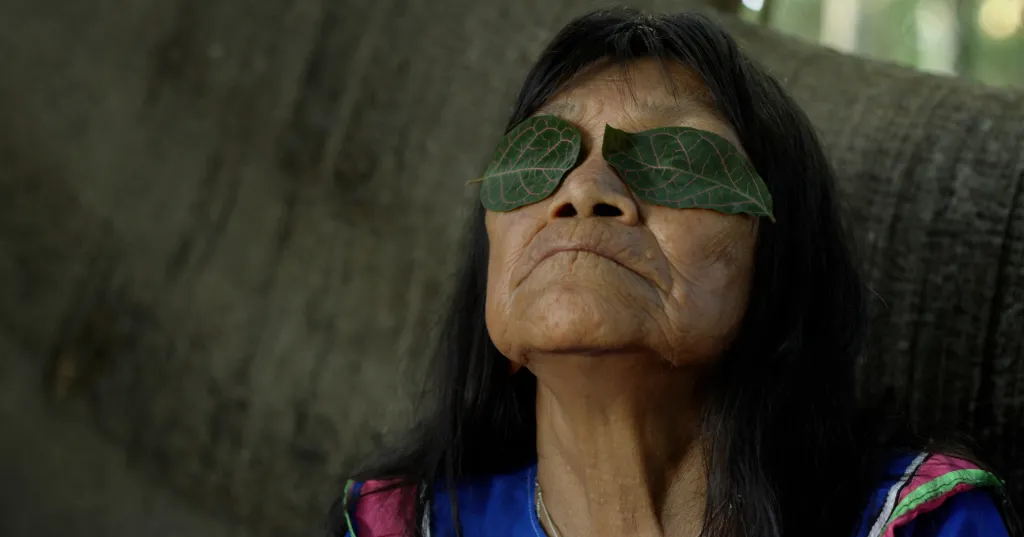
- The Hummingbird Paints Fragrant Songs (Peru/USA/Qatar) by Èlia Gasull Balada and Matteo Norzi: after a lifetime of hardship, 75-year-old Indigenous artist Sara Flores emerges from the Peruvian Amazon into the global art world, transforming her work into a force for Shipibo resistance.
Non-MENA – Experimental/Essay – Post-Production
- A Girl and a Gun (South Africa/France/Qatar) by Arya Amber Lalloo: lost in a ciné-trance, adrift in the ghost worlds of personal and colonial archives, filmmaker Arya explores her relationship with the camera while confronting its complex role in making and unmaking the historically colonised world.
- Where Life Holds (France/Germany/Algeria/Qatar) by Aude Fourel: two women from different backgrounds and generations share a belief in a people and in the political construction of the present.


