
In the early hours of another day of Israel’s genocidal war on Gaza, 20-year-old Hamza al-Ghazali, who lives in the Zeitoun neighborhood south of Gaza City, set out once again in search of an insulin pen.
It was not the first time he had moved between pharmacies and medical centres, looking for a dose. The effort has become a recurring part of his life since the outbreak of war in October 2023 and the tightening Israeli restrictions on the entry of medicines and medical supplies into the Gaza Strip.
Recommended Stories
list of 3 itemsend of list
Hamza knows that delaying an insulin dose is potentially life-threatening. Type 1 diabetes requires strict daily treatment and continuous monitoring. However, under war and blockade conditions, managing the disease has turned into a daily, high-risk struggle.
Hamza recalls how his health condition was more stable before the war. He used to obtain insulin from pharmacies at prices ranging between 25 and 35 shekels ($8.5 and $12) per pen, sometimes even less.
“I started to know all the pharmacies, and they also knew me, because I was always buying insulin pens,” Hamza says.
But this changed drastically with the war and the tightening of restrictions on the entry of medical supplies. The price of a single insulin pen rose to between 75 and 100 shekels ($25 and $34), and, as Hamza needs six to seven pens per month, he was forced to try to extend the use of each pen for as long as possible.

Fight for survival
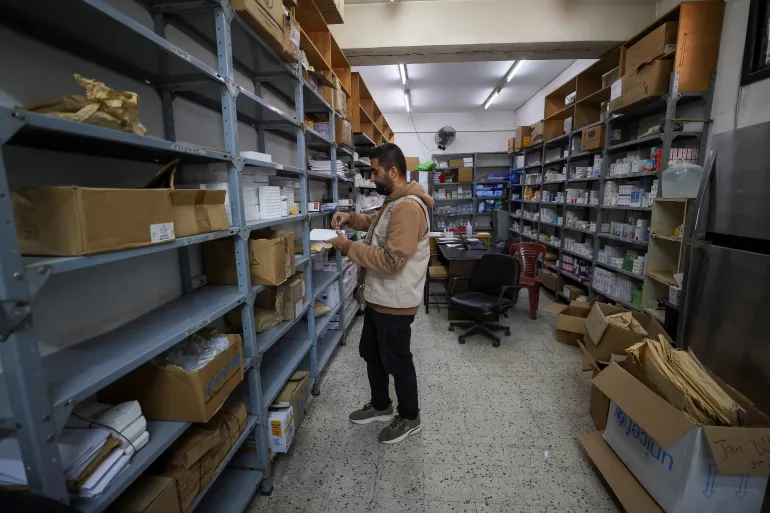
The suffering of diabetes patients in Gaza extends to restrictions on the entry of medicines through border crossings, measures that have led to a severe shortage of insulin, glucose metres, and test strips.
Hamza notes that this shortage has created an unstable medical reality, where, in some cases, medicines that may have been stored for long periods or in improper conditions appear on the market, raising concerns about reduced effectiveness or uncertain quality due to the lack of alternatives.
A year ago, when an Israeli blockade on the entry of food led to a famine in northern Gaza, Hamza was forced to eat anything he could find.
But for Hamza, it wasn’t just about securing enough nutrition for his body, but also about finding the right balance between the insulin he had access to and the food he could find.
If he ate more without sufficient insulin doses, then he could have dangerously high blood sugar levels. If he reduced his food intake out of fear of running out of insulin, then that could result in severe and potentially fatal hypoglycemia (low blood sugar).
“I was afraid for myself during the shelling in northern Gaza,” said Hamza. “We were under siege. If the house was bombed, I might survive under the rubble, but die from low blood sugar. And if I ate without insulin, my sugar could rise dangerously. I was living between two fears all the time.”
He adds that the fear was not only about losing insulin, but also about losing glucose metres and test strips, which he relies on daily to monitor his condition. Every time he was forced to evacuate, the first thing he would carry was his “diabetes bag”.

Equipment shortages
Glucose test strips have been in short supply, limiting Hamza’s ability to monitor his blood sugar levels on a daily basis and forcing him to rely on judging his physical symptoms.
Hamza notes that the cost of a glucose metre ranges between 250 and 300 shekels ($85 and $120), but the real problem lies in the availability of test strips.
Without them, the device becomes useless, forcing some patients to repeatedly buy new devices. Hamza estimates that more than 80 percent of diabetes patients in some areas are unable to test their blood sugar regularly, which he describes as a “medical disaster”, as it turns treatment into daily guesswork.
According to data from the Palestinian Ministry of Health in Gaza, between 70,000 and 80,000 diabetes patients in the Palestinian enclave are at risk due to the severe shortage of insulin and test strips, in addition to the collapse of medical follow-up services and poor nutrition.

Endocrinology and diabetes specialist Dr Adli al-Ghouti notes that about 2,500 children in Gaza are living with Type 1 diabetes, and are in a highly critical health condition.
As a result of insulin shortages, a lack of proper storage conditions, and power outages, a real crisis is unfolding.
Al-Ghouti warns that the deterioration of insulin quality, the expiration of the stock available in Gaza, and improper storage can all reduce effectiveness, creating a false sense of security while blood sugar levels remain uncontrolled, potentially resulting in severe complications such as diabetic ketoacidosis, a life-threatening emergency condition.
“Taking an expired dose of insulin may cause significant harm inside the body, while giving a temporary impression of improvement,” Dr al-Ghouti said.
Diabetes is therefore no longer a condition that can be managed easily in Gaza. Between the shortage of insulin, a lack of testing tools, rising prices, and deteriorating nutrition, even the simplest aspects of treatment turn into a daily struggle for survival.


