Comcast said on Monday that it planned to split off NBCUniversal into a separate publicly traded company, unwinding a 15-year corporate marriage that put celebrated films and TV shows like “Saturday Night Live” under the same roof as cable hookups and wireless internet service.
The deal is part of a trend in the media industry of separating faster-growing internet services from traditional TV. This year, Comcast spun off its cable channels, including MS NOW, CNBC and USA, into a separate company, called Versant, part of a bid to streamline its operations.
Comcast’s chairman, Brian Roberts, will be involved in the leadership of both companies after the deal, which is expected to be completed in a year, according to the announcement. Mike Cavanagh, a co-chief executive of Comcast, will become chief executive of NBCUniversal; Michael Angelakis, a former chief financial officer of Comcast, will become Comcast’s chief executive. NBCUniversal will be spun off tax-free to Comcast shareholders, with Comcast retaining a 19.9 percent stake for up to one year.
“Both companies come out of this better off than they started,” Mr. Roberts said in an interview with The New York Times. “It’s going to set us up for a very exciting future.”
Monday’s announcement sent a shock wave through the media industry and raised questions about the future of both Comcast and NBCUniversal, the renowned film and TV company behind “The Office” and “Jurassic Park.” In addition to the Universal Pictures movie studio and the NBC broadcast network, NBCUniversal will include the Universal Studios theme parks and Sky, the European media and telecommunications company.
During a conference call with analysts on Monday, Mr. Roberts said he would not prioritize putting NBCUniversal or Comcast up for sale and instead aimed to grow each business over time.
But analyst speculation immediately turned to potential merger partners for Comcast, which has turned to internet and wireless services for growth as its cable TV business slowly has deteriorated. At the top of the list is Charter, a giant in the broadband and TV industry, with nearly 30 million internet customers. The company’s stock rose 11 percent in trading on Monday.
A merger of NBCUniversal and one of its rivals in the media industry would be more complicated, since there are strict rules about the ownership of broadcast networks. Netflix recently lost its bid to buy Warner Bros. Discovery, a deal intended to expand the streaming giant’s footprint in Hollywood and its content offerings.
Comcast’s spinoff of NBCUniversal is the latest in a flurry of deal making in the media and entertainment industry. This month, Fox announced its plans to acquire Roku, the connected TV company known for its distinctive black-and-purple remotes. Paramount, the media company run by the tech scion David Ellison, is closing a deal to acquire Warner Bros. The local TV giant Nexstar is in the process of acquiring Tegna, a major station owner.
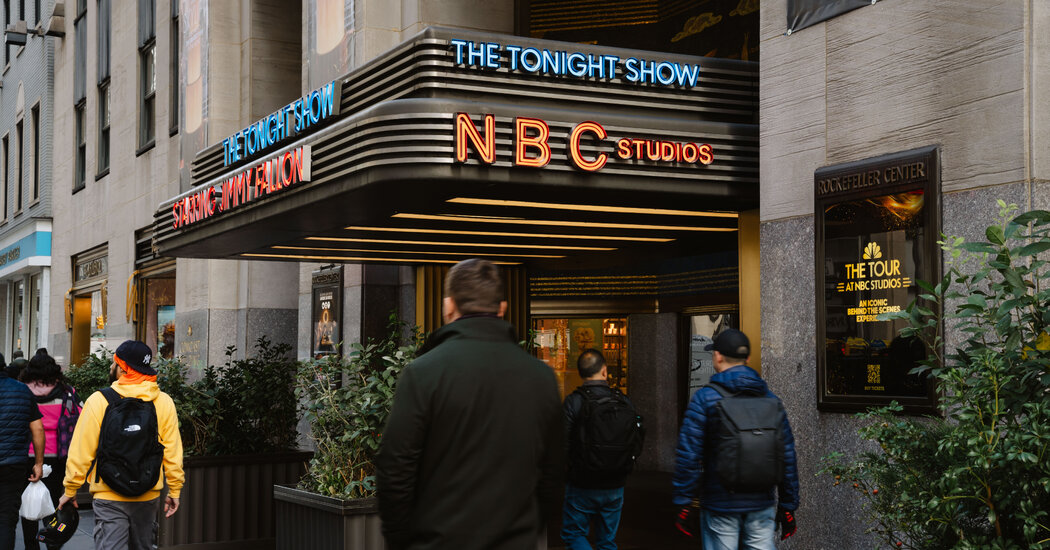
Comcast took control of NBCUniversal in 2011, paying its owner, General Electric, $6.2 billion. Two years later, Comcast paid $16.7 billion to acquire the remainder of the company, also buying the NBC studios and offices at 30 Rockefeller Plaza in New York.
Comcast’s union with NBCUniversal reflects the sensibilities of an earlier era, when moguls believed that the producers of film and TV belonged under the same ownership as the companies that delivered content. This often had disastrous results, as when AT&T’s merger with Time Warner resulted in an unwieldy clash of cultures. Comcast’s merger with NBCUniversal was for years held up by analysts as an outlier.
But as the fortunes of traditional media have waned, investors have become wary of such combinations. Comcast’s stock has fallen steadily over the past five years, along with much of the rest of the media industry; it jumped more than 7 percent in trading on Monday.
Monday’s announcement is a sign that Comcast has finally awakened to investor skepticism over its combination with NBCUniversal, said Rich Greenfield, an analyst at LightShed Partners, in an interview.
“Comcast stock hasn’t moved in 13 years,” he said. “I think this is an admission that the status quo was not working.”