Tropical Storm Lala is blasting Hawaii with wind gusts between 50 and 75 mph, leading to power outages across the island chain. FOX Weather Hurricane Specialist Bryan Norcross joins FOX Weather live with an exclusive analysis of what residents can expect on Sunday.
Last updated at 9:30 a.m. on Aug. 18, 2026
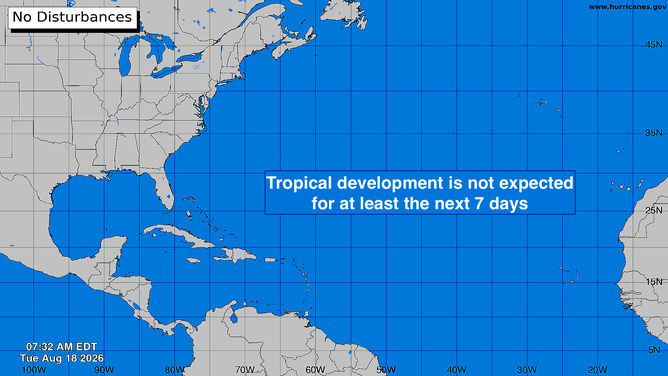
Saharan dust season is slowly coming to an end, but the regime of hostile upper-level winds across the Caribbean and the Atlantic continues. For now, the disturbances moving off Africa have no chance to develop.
Atlantic Basin
(FOX Weather)
Long-range computer forecasts show more robust disturbances moving into the Atlantic over the next couple weeks. Tentatively, a persistent dip in the jet stream along the East Coast of the U.S. will turn them north into the open ocean, but we’ll watch to be sure. In any case, nothing is imminent.
In the Pacific
Lala is now back to hurricane strength but will turn north into the open Pacific.
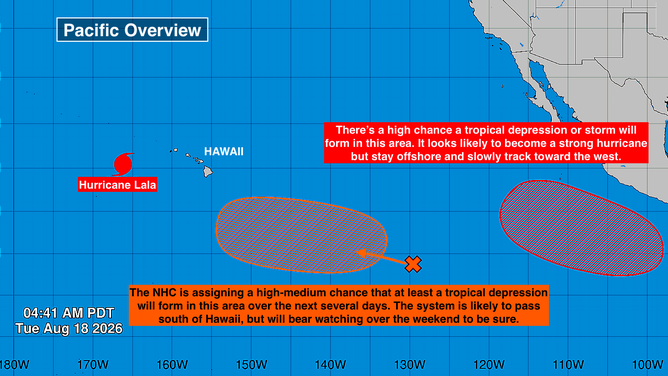
Pacific Basin
(Bryan Norcross)
A disturbance is forecast to develop into a tropical depression or tropical storm in the orange area. The National Hurricane Center gives it a medium chance of development. The computer forecasts do not show it getting terribly strong, but it could affect Hawaii over the weekend or early next week as at least a moisture surge.
The odds at this point favor the storm staying south of the islands, but we’ll watch it to be sure.
There’s a high chance that a tropical depression or tropical storm will form in the red area offshore of Mexico. Long-range computer forecasts develop the system into a strong hurricane and track it to the west away from the Mexican coast.
According to the long, long-range computer models, in about 10 days we might have to keep an eye on this system as well, as it heads in the general direction of the Hawaiian Islands.
LATEST FROM FOX WEATHER HURRICANE SPECIALIST BRYAN NORCROSS
All this is happening because of the unusually warm ocean water from Hawaii to Mexico and south to the equator. The El Niño tongue of superheated water along the equator south of Hawaii is just a part of the marine heat wave in that large sector of the Pacific. Any system that thinks about developing gets an extra charge of energy from the extra-warm ocean.
The bottom line is, Hawaii is going to have to stay vigilant for this entire hurricane season. The islands are relative dots in the vastness of the Pacific, so most storms will miss. But with so much warm water to the east and south of the islands, more hurricane threats are likely this year.