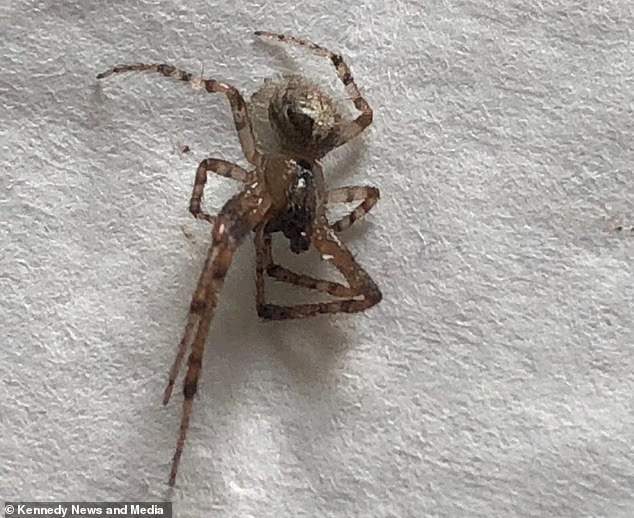
A woman in Kent was left with a ‘crater’ in her leg after multiple bites from a false widow spider.
Danni Virgo’s ordeal began back in 2020 when she brought her clothes in from the washing line and decided to put on her freshly–laundered pyjamas.
Within seconds, the 45–year–old felt a sharp pinch on her right thigh before seeing a small spider crawl out the bottom of her pyjama bottoms.
The mum–of–one noticed a small red lump appear on her leg, and immediately grew concerned when the mark turned black the following day.
The 10p–sized bite left a crater in Ms Virgo’s skin that doctors confirmed was caused by the venom of a false widow – the UK’s most dangerous spider.
Luckily, Ms Virgo’s wound healed without surgical intervention, but just weeks later the mum was bitten twice more by a false widow, only to discover her garden is ‘infested’ with the arachnids.
She tried to battle the beasties using peppermint spray on the fence along with natural oils and anti–spider sprays but nothing worked and the spiders won.
Horrified, Ms Virgo now refuses to go into her own garden or hang her washing outside – six years on from her terrifying ordeal.
A woman in Kent was left with a ‘crater’ in her leg after multiple bites from a false widow spider

Danni Virgo’s ordeal began back in 2020 when she brought her clothes in from the washing line and decided to put on her freshly–laundered pyjamas
NHS figures reveal that there were 100 hospital admissions in 2025 linked to spider bites – up from 47 in 2015.
This sharp rise is being attributed to the growing numbers of the noble false widow spider in the country.
Ms Virgo – who still has a scar from the incident – is now warning others to steer clear of the venomous creepy–crawlies, especially in light of rising spider–related hospitalisations in the UK.
Ms Virgo, from New Romney, Kent, said: ‘We have a washing line in my garden and they like to hide in the pegs.
‘I’d hung my pyjamas out and brought them in and decided I’d put them on basically straight away.
‘It must’ve crawled into my pyjamas bottoms. I sat down and felt the most almighty pinch. It was really painful.
‘I had a look at my right leg and straight away there was a red lump.
‘Then I saw this spider crawling out of the bottom of my pyjama bottoms.

The mum–of–one noticed a small red lump appear on her leg, and immediately grew concerned when the mark turned black the following day

The 10p–sized bite left a crater in Ms Virgo’s skin that doctors confirmed was caused by the venom of a false widow – the UK’s most dangerous spider
‘It escalated really quickly. Within a day, it had turned black and had this massive head on it.’
Ms Virgo consulted her doctor who confirmed she’d been bitten by a false widow spider – and the wound had become infected.
Luckily, Ms Virgo was able to recover with a course of antibiotics – but, shockingly, was bitten twice more by the spider just weeks later.
The mum has since discovered ‘around 100’ false widows lurking in her garden, that’s left her terrified to venture outside.
Ms Virgo said: ‘The doctor knew straight away it was a false widow. It closed on its own but it has left a scar.
‘A couple of weeks later, I was sat on the sofa and felt a tickling on the back of my neck. Then I felt a sharp pain and I was bitten twice on my back.
‘I found out they come out at night so I went into my garden with a torch and my fence is full of them.
‘We have an infestation. They’re really easily recognised. There’s around 100 in my garden. There’s nests everywhere.

MS Virgo consulted her doctor who confirmed she’d been bitten by a false widow spider – and the wound had become infected
‘We’ve tried peppermint spray on the fence, natural oils, spider sprays but there’s just no way of getting on top of it.
‘I won’t hang the washing outside now and my husband doesn’t put my clothes out, we use a dryer indoors.
‘I was already scared of spiders and that one incident was horrendous and then for it to happen again a few weeks later just cemented that fear.
‘It definitely left me traumatised. Now I won’t go in my garden because there’s that many.
‘I would normally be out there, I would’ve painted the fences and pottered about but I just don’t do that now.
‘People need to be aware of these spiders. They’re not that big so they’re easily missed.
‘It’s not surprised me that bites have gone up. I live in fear now.’