Warning: This post contains spoilers for the Lucky finale.
Morning is just reaching the shoreline when Lucky (Anya Taylor-Joy) walks barefoot toward the water. The waves slide over her feet, then her ankles. She looks up at a scatter of birds, spreads her arms wide, and the camera moves in close as her expression turns—eyes open, taking it in, then the beginnings of a smile. The ocean was the destination her father dangled in front of her as a child, the reward waiting at the end of a con. She reaches it without him, the only way she was ever going to get there.
These are the final moments of Lucky, an Apple TV limited series that follows Luciana “Lucky” Armstrong, a con artist raised inside the life by her charming grifter father, John (Timothy Olyphant). At John’s urging, Lucky and her husband, Cary (Drew Starkey), lift $10 million from Wayne Whittaker (William Fichtner), the crime boss they all answer to. The money was John’s own skim from the energy-fraud scheme that sent him and Priscilla (Annette Bening), Wayne’s second-in-command and Cary’s mother, to prison years earlier. Then Cary vanishes with the score, leaving Lucky to run from FBI agent Billie Rand (Aunjanue Ellis-Taylor) on one side and a newly sprung Priscilla on the other. By the finale, Cary is dead, the money has resurfaced as cryptocurrency locked behind a seed phrase only Lucky knows, and Lucky is walking into a meeting with Wayne wearing an FBI wire.
Behind all of it, the writers saw one repeating pattern. “The mechanics or the mechanisms of a con are a cycle of trust and betrayal,” says Cassie Pappas, the series’ co-showrunner, who wrote the finale episode. “She’s locked in this cycle of trust and betrayal with all the people in her life: with Cary, with Priscilla, with her father. And so we’re rooting for her to finally break free of that cycle.” The finale lets Lucky stop running, granting her the freedom to wipe the slate clean. “We wanted to make sure it wasn’t a happy ending or a bad ending,” creator and co-showrunner Jonathan Tropper says. “It was really important that she make a sacrifice to basically get to the point where she can start her life again.”
A performance for an audience of one
Before the meeting with Wayne, the episode lingers on Priscilla at her mirror. Dutch (Clifton Collins Jr.), her devoted enforcer, fastens the watch that belonged to Cary on her wrist. “Thought you’d want it,” he says. In the car, Priscilla gives Wayne exactly what he wants: gratitude for springing her from prison and an apology for how long it took to find the money. When he excuses his refusal to claim Cary as his son by saying it was Priscilla’s choice to have him, she absorbs it and keeps up the act, drawing internal strength from Cary’s watch on her wrist. The watch mattered beyond what the camera captured. “The whole car ride with Wayne up to the gas terminal, Annette was touching it, feeling it,” Pappas says. “She let that watch be a part of her performance. Like she could feel him on her wrist.”
Lucky arrives at the gas terminal with her own act to sustain: get Wayne on tape admitting he knew about the gas scam and profited from it, and stay alive long enough for it to matter. But the con she runs is aimed somewhere else entirely. “Who she’s really playing to in that moment is not Wayne, but Priscilla. It’s a performance for Priscilla,” Taylor-Joy says. “She’s performing for somebody else’s eyes.”
That’s why the scene’s most cutting line isn’t really for the man it’s addressed to. When Wayne muses that Lucky could have worked for him, she declines. “I know how you treat the women who work for you,” Lucky says. She tells him about the child Cary wanted: a girl, because he couldn’t imagine raising a son with a father-shaped hole where his own had been. Every word lands on the woman off to the side.
“It’s coded conversation directly to Priscilla, playing to her,” Pappas says. “She doesn’t know if she’s going to [turn on Wayne], but hoping that she will.” Lucky isn’t guessing blindly. In episode 6, Priscilla let slip that she once tried to leave this life and couldn’t. “In another life, if she had gone left instead of right, or if she had made a few different choices, Lucky could have easily become Priscilla,” Pappas continues. “I think that’s why Priscilla’s intrigued by her.”
Midway through the standoff, with Wayne demanding the seed phrase, Lucky drops a revelation she’s just pieced together: he already knew the money had been converted to crypto, she announces, knew how to find Cary in La Jolla, and knows the FBI is listening, because Kershaw (Eric Lange), the FBI supervisor stationed above with Rand, has been feeding him information. Up on the gas tank, Rand pulls her gun on the mole.
The gambit nearly dies anyway. Wayne, meanwhile, produces John, snatched from the hotel in episode 6 and beaten bloody, then hands Priscilla his gun: she can prove she’s “really ready” to be back by executing him herself. Instead, Priscilla presses the barrel to Lucky’s head. A tear runs down Lucky’s cheek. “Priscilla,” Lucky pleads.
“Hon, I’m sorry,” Priscilla says, then turns and shoots Wayne in the stomach. Whether she decided at the mirror, in the car, or in the half-second before the trigger, the episode declines to say.
The same moment splits the frame. Above, Rand, shoved over the tank’s edge by Kershaw and hauling herself back up, shoots him dead; below, Dutch, who trailed Priscilla to the site, emerges firing and cuts down Wayne’s remaining men. Wayne himself crawls. “If you had tried even once to be any kind of a father to my boy, you wouldn’t be in the position you’re in right now,” Priscilla tells him, and fires the last shot.
Wayne’s final rejection of Cary earlier in the finale sealed his fate for Priscilla. Tropper frames her life-saving gesture to Lucky as the episode’s strangest gift: alive, Cary could never make peace between his mother and his wife. “In death, he’s able to reconcile them in a way that he couldn’t in life,” he says. “His absence is the presence.”
When the shooting stops, Priscilla wonders aloud what she’s supposed to do with the two of them. Lucky makes an offer. “I’m asking you to do for me what they didn’t do for you,” she says. “Give me a chance. Or you can kill us, but I’m done running from you, from anyone.”
For Taylor-Joy, the plea is her character’s emotional exhaustion finding words. “Most people walk around waiting for the other shoe to drop without there being a shoe there. Lucky knows there’s a shoe,” she says. “Having the promise of a reality where there is no shoe that’s going to drop is where she would rather be.”
So Priscilla lets Lucky and John go, sending them off with a warning never to return and a parting verdict on John—“Lucky bastard”—as the Brian Jonestown Massacre’s “Anemone” plays, their SUV pulling away.
One hell of a bluff
Lucky’s mole reveal plays like a plan. It wasn’t one. Instead, it was Lucky’s oldest instinct: that in a game built on borrowed trust, even the feds might be playing dirty. At the motel afterward, Lucky admits she’d pieced Kershaw’s defection together from La Jolla (Priscilla couldn’t have found Cary unless Wayne had someone inside) but kept the theory to herself because she wasn’t sure. John is incredulous: she detonated a federal sting on a hunch? “Well, I was either right, or it was one hell of a bluff,” she shrugs.
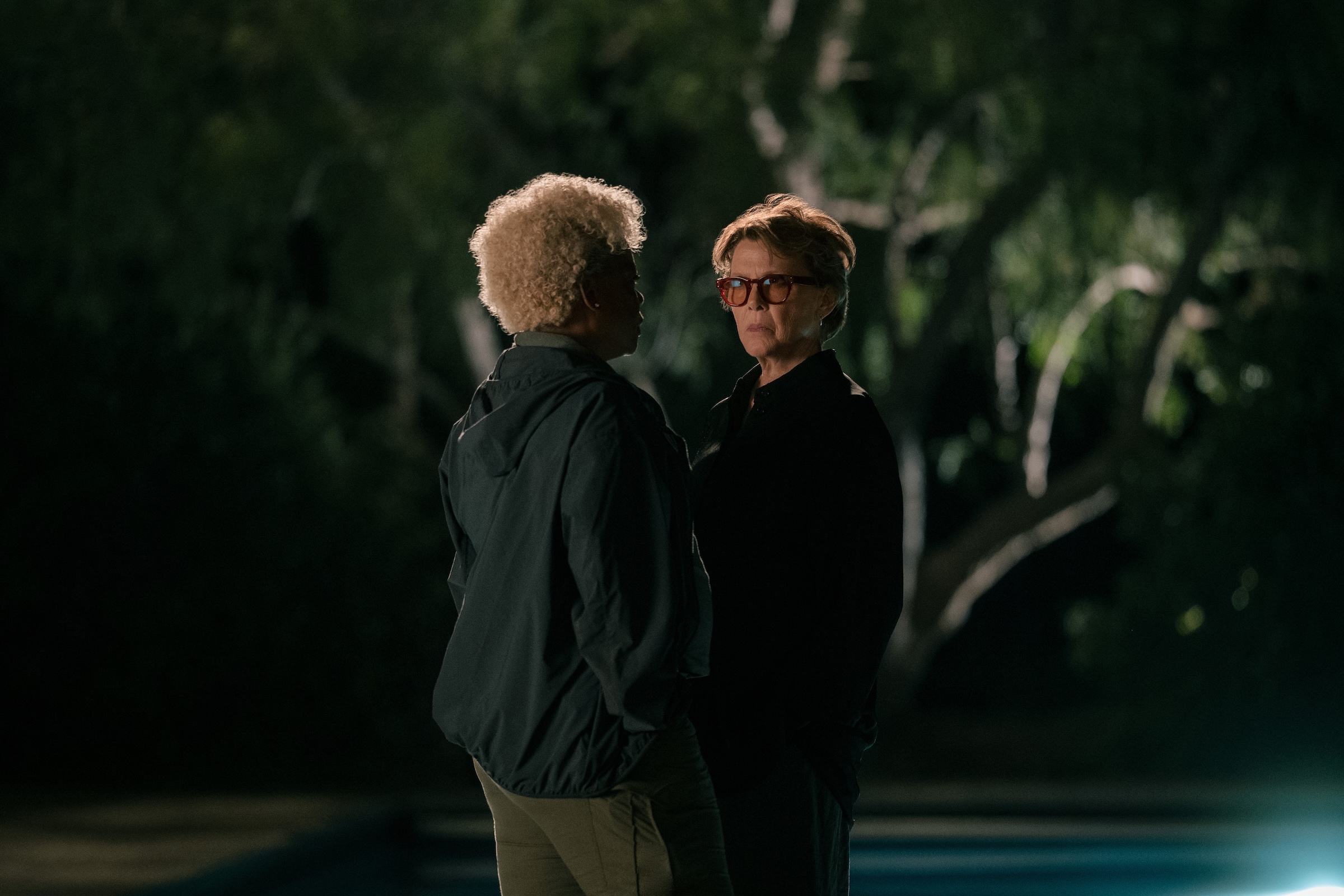
The day’s losses trail Rand into the finale’s quietest confrontation. That night, she finds Priscilla at home in her backyard, sunglasses on in the dark, at the edge of her pool. Rand isn’t there to arrest her; she’s there to promise that one day she will. Priscilla tells her to take the win: Wayne is dead, the FBI mole exposed. Rand refuses. “You killed my partner,” she says, referring to Gates (Mo McRae), the agent gunned down when Wayne’s men stormed the hotel for John. “You didn’t pull the trigger, but you killed him.”
Tropper reads the standoff between Rand and Priscilla as a diagnosis. “They’re both kind of trapped in their cycles,” he says. “These two are still going to be locked in this eternal struggle that Lucky has managed to extricate herself from. But neither of these women will be able to pull that off.” The images say it more simply: Priscilla ends her season the way Lucky ends hers, standing at the water’s edge.
The con after the con
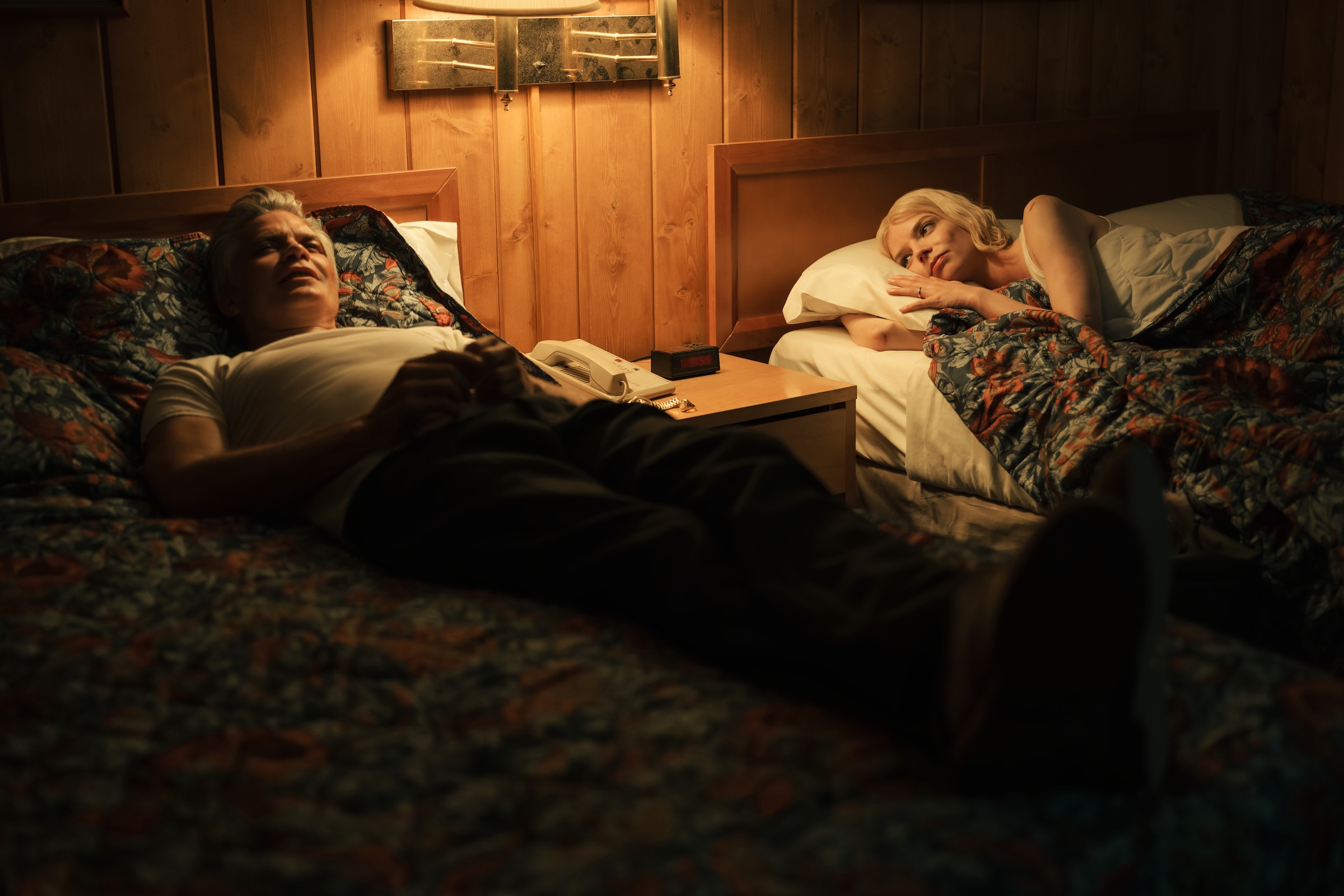
A conventional thriller would have rolled credits after the gunfire. But Lucky spends many of its final minutes at a motel instead. “We always looked at this as a character show that has a thriller element to it,” Tropper says. Pappas describes it the way the writers’ room did: the finale holds two cons: an “action set piece” with a con built into it, and an “emotional set piece.”
That second con trades on episode 6’s hotel-room reckoning, when Lucky told John the life she had as a child was never one she wanted, when she admitted she was the reason he went to prison years earlier, and when John apologized, at last, for the childhood he’d mistaken for a good one. The apology was slow in coming; John’s first reflex was to call her an idiot for ever trusting Rand. “You just see her become seven years old,” Taylor-Joy says of the moment. “It’s the face and the feelings of a child that’s been trapped in there the whole time.” Seven, not incidentally, was the age of Lucky’s first haul.
A deeper understanding of her father unfolds over a burger with him. John eats, as Lucky nibbles a pickle. They share their recurring dreams. His: a ball of sheets on his prison bed that turns out to be infant Lucky, whom he straps to his chest and carries past a charmed guard into the sunlight. Hers: “I’m underwater, and I can’t breathe, and then I wake up.”
Pappas, who wrote John’s monologue, built his dream from a question the writers kept circling: why is her nickname Lucky? “You can imagine growing up, he could probably use her as a baby as part of his cons,” she says. “She’s been his lucky charm for as long as she’s been alive.” Lucky’s dream sits at the opposite pole, “almost a nightmare connected to her childhood trauma of the drowning con,” and the fact that John never thought “that was traumatic for her.” When Lucky tries to say what the dream means to her, John cuts in with his own reading and pivots to the money.
Taylor-Joy explains that the father-daughter exchange reveals John for who he really is: a “narcissist.” The cruelty of the motel stretch is that its warmth is real. Tommy Tangles, the imaginary friend John invented to get a squirming girl through hair-brushing, gets a fond retelling. But none of it changes the long-held family dynamic. “She hopes that he will do the right thing, whilst making contingencies for what his actions in the past have told her about who he is,” Taylor-Joy says. By Pappas’ account, Lucky spends the scene deciding, and by the end of the scene, she knows “she’s going to set the trap.”
Ninety percent truth
Lucky wakes the next morning to an empty bed, an empty parking space, and no surprise. John is on the road with the teddy bear that held Cary’s recorded seed phrase riding shotgun. When he presses its stomach, Cary’s voice recording is gone; Lucky’s has replaced it.
“I had a feeling you’d do this,” the recording begins. “A feeling I’ve been ignoring most of my life.” As she speaks, the season’s most persistent image finally resolves. The childhood flashback threaded through the episode, young Lucky at the lip of a hotel pool, completes itself: she goes into the deep end, flails, is hauled out by a stranger while John rushes over performing paternal alarm, then threatens a lawsuit and gets their rooms comped. “You knew I couldn’t swim,” adult Lucky says. “But the best cons are 90% truth, right, Dad? And the truth was I was drowning.”
Taylor-Joy locates the wound in child psychology. “When you’re a kid, your parents are God,” she says. “You rely on them so much for survival that you never stop to think that there’s something wrong with them. You internalize everything as something being wrong with yourself. The one person who was supposed to take care of [Lucky] and value her above anything else was happy to let her almost drown in order to get a free room. And if you really think about that, it’s just so painful.”
Tropper is just as unsparing about what the memory indicts. “Lucky never had a choice,” he says. “[John] is sort of a classic narcissist where he loves her, but only in the way he can, which is as a reflection of himself.” The scene suggests this wasn’t a one-time con, and Tropper confirms it: “You get the sense that it had been done more than once.”
That’s what makes Lucky’s counter-con the season’s real climax. Both showrunners knew from the earliest drafts where the story had to arrive. “The end had to be that the student becomes the master,” Tropper says. Lucky’s final con inverts everything John taught her, building not on a lie but on an honest accounting of who he is. “He trained her so well that he trained her to be better than him,” Pappas says. “She outsmarts him.”
A proud father
The recording ends with a gift and a form of severance. “I’m not giving you the money, but I’m giving you your freedom. I hope you use it wisely,” Lucky says. “I love you, Dad. But you won’t see me again. Goodbye.” John thumps the bear against the dashboard, pulls over, gets out, stares at the horizon, and laughs.
Ask the showrunners what that laugh contains and they answer, independently, with the same word. “I saw it as pride,” Tropper says, with John thinking, “if she was able to pull this on me, I taught her well.” Pappas echoes the sentiment. “After absorbing the blow, he almost makes it again about himself. Like, look at how well I taught her,” she says. His laugh is also a reversal, of sorts: hours before his abduction, John told Lucky he was proud of the ways she isn’t like him. But the laugh is pride in the way she is.
For Taylor-Joy, the message is the closure the relationship never offered between father and daughter in person. “[John] is a person who will continuously dismiss her, not listen to what she’s saying,” she says, adding, “If she’s going to have a shot in hell of living a decent life, he just can’t come with her.” Pappas calls the goodbye a look at the “tension of opposites.” Two things can both be true: John can be bad for Lucky, and she can know it, but he’s also her dad, and there’s no undoing that. Tropper, meanwhile, has no illusions about what John does with his life. “He’ll be back in jail in a year or two,” he says.
The money goes where the father couldn’t: away. Rand opens a FedEx package at the bureau to find a laptop and the seed phrase taped to it on an index card. The fortune, Tropper argues, was the tether. “John stole this money, and so for Lucky to really be free of her father, she has to get rid of that money,” he says. Pappas reads the FedEx package as a proposed truce. “You stop hunting, and I’m going to stop running,” she says, pointing to the flicker on Ellis-Taylor’s face as Rand takes in the card. “Rand kind of smiles too, in a way. It makes you wonder if Rand is secretly maybe happy that she’s out from underneath her father as well.”
The great big blue
Which leaves the beach Lucky arrives at in the finale’s final moments. The show planted it in that same episode 6 hotel room, in a promise Lucky recited back to her father. “Remember when you used to tell me about the ocean?” she said then. “How some people can go their entire lives without ever seeing the water, but we weren’t going to be like that? One day, Lucky, our feet will be in the sand, and we’ll be looking at the great big blue and we’ll finally be still.” Then she tells him why she’s bringing it up: “I’m ready to be still, Dad.”
In the end, the ocean John teased throughout her childhood became the image that unlocked the season, and also became its sharpest irony, since Lucky must claim the promise alone. “It starts off in trauma in water, and it ends with water being this cleansing, purification moment,” Pappas says. Even the nickname goes. Dropping the alias is what Pappas calls the “last mask” Lucky has to shed.
An alternate finale ending existed on paper. “We did have one that jumped ahead in time, where she’s taking her daughter to school in a very sort of simple suburban life,” Tropper says. They cut it for the same reason they refused her the money: the show should hand her a new beginning, not a future. Still, every version they ever sketched, Pappas says, shared one property: “It was always some image of freedom, and it was always somewhere in nature.”
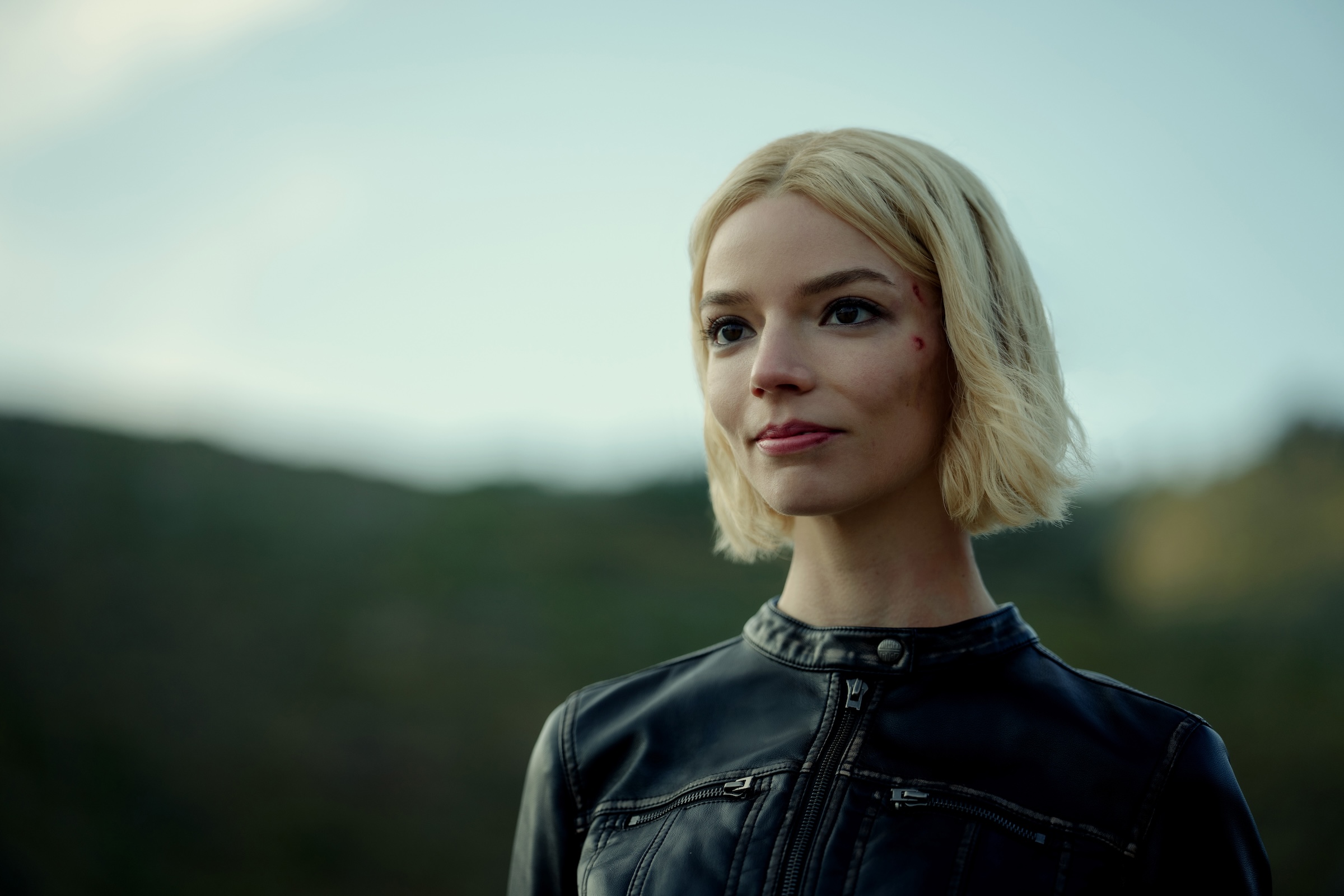
That the finale spends its last beat on Taylor-Joy’s face in extreme close-up, as Phantogram’s cover of Phil Collins’ “Take Me Home” swells, is no accident. As an executive producer, Taylor-Joy pushed the series toward its visual extremes: faces or vistas, almost nothing between. “It felt like you had to either be seeing thoughts as they were forming on somebody’s face, or be reminded of the scope of the world and the scope of the responsibilities that were about to come crashing down on Lucky,” she says. Her creative fingerprints run through the Americana-inspired color palette—“these places that seem very desolate,” sprinkled with the “touch of the American dream”—and a costume philosophy of making “found clothing” still express a “point of view.”
Taylor-Joy also helped choose the final frame. “I remember when we were picking what the ending shot was going to be, and I was like, it’s got to be this one,” she says. In it, Lucky’s expression is unguarded: the look of someone who’s “genuinely never imagined that they could possibly get to where they are.” It’s also the “first time where she doesn’t have a shoe that’s gonna drop.”
Tropper points out the series returns to a shot of Lucky, transformed. “We started the show with a close-up of Lucky, and we end the show with a close-up of Lucky, because the world has shifted around her, but it’s always been her,” he says. John knew the game, but what he never imagined was a daughter who would run it on him, then walk away for good. That is the con he couldn’t see coming: Lucky trusting what she knows about him over what she wants from him. And the show grants her a glimpse of life on the other side. “It kind of feels like the first inhale of a new life,” Pappas says of that final close-up. “We cut away before she gets to exhale.”
That exhale belongs to Lucky now, somewhere past the edge of the frame. What it took for this woman to stop running turns out to be everything she had: the money, the long-running nickname, her narcissistic father. She gives up all three, and the ocean, which was never really John’s to promise, comes to meet her anyway, with whatever follows finally hers to choose.