They’re often seen as healthy alternatives to meat, but a new study might put you off plant–based foods.
Scientists from the Institute for Optimum Nutrition analysed 71 like–for–like pairs of animal–based and plant–based products from a UK supermarket.
They tried to match products as closely as possible for comparison – for example almond milk with normal milk, vegan brownies with dairy–based brownies, and plant–based meat with regular meat.
Other products tested included lasagne, coleslaw, pesto, mayonnaise, yoghurt and cake.
Overall, they discovered that plant–based products contained more additives, ingredients and E–numbers compared to their animal–based counterparts.
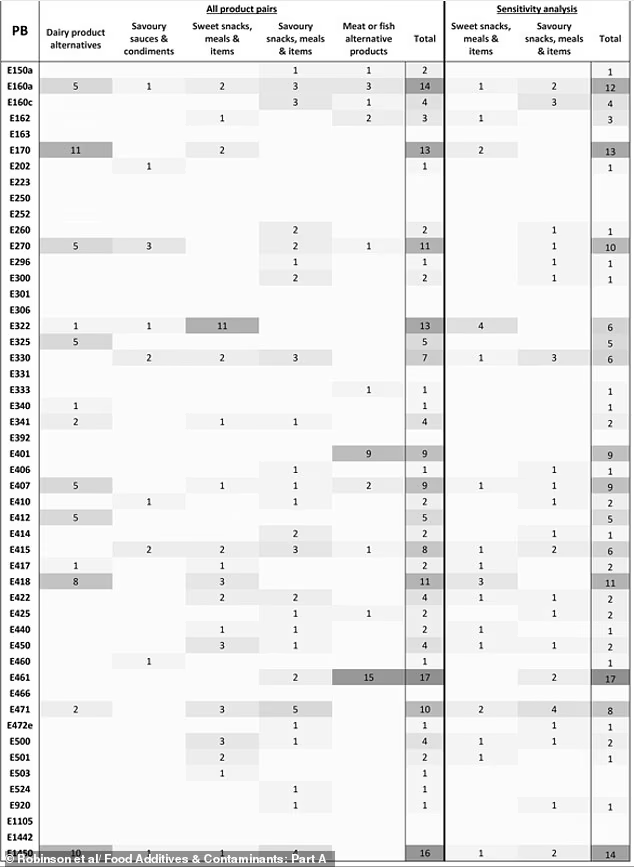
‘We found roughly twice as many food additives in the total sample of plant–based products compared to animal–based ones – 199 versus 100,’ senior author Joseph Whittaker, from the Institute for Optimum Nutrition, said.
Based on the findings, the researchers are urging vegans to be cautious about the foods they consume.
Mr Whittaker added: ‘I would argue that plant–based dieters should focus on whole–foods that are naturally plant–based, rather than trying to replicate animal–based foods.’
Plant–based products contained a high amount of carotenes (E160A), calcium carbonate (E170), lactic acid (E270) and methyl cellulose (E461). These additives are used for things like food colouring, to provide extra nutrients and to create texture
For years, vegan and vegetarian diets have been widely considered healthier than those which contain meat.
Research suggests these diets can lower the risk of heart disease and chronic illness, and they are generally associated with lower rates of obesity.
However, concerns have been raised over nutrient deficiencies as excluding all animal products can put you at higher risk for low levels of Vitamin B12, Vitamin D, calcium, iron, iodine and omega–3 fatty acids.
Many commercial meat and dairy alternatives are also highly processed and may contain as much salt, sugar and saturated fat as traditional products.
In the first–of–its–kind study, the team found that the total ingredients in the plant–based range was 1,566 compared to 1,110 in the animal–based range.
Meanwhile there were 39 E–numbers in the plant–based products compared to 31 in the meat and dairy equivalents.
In terms of additives, plant–based products featured high levels of carotene – an orange–yellow pigment commonly used to give alternative cheese products their colour.
There was also a high use of E170 – also called calcium carbonate – that likely made the products appear lighter and to provide nutrient fortification.

The researchers found that plant–based products, such as vegan burgers, contained more additives (stock image)
Lactic acid was regularly used in dairy product alternatives, presumably as an acidity regulator, while methyl cellulose was recorded 15 times within meat and fish alternative products to give them their texture.
‘Our study comes at a particularly important time as plant–based diets are increasing in popularity and more people are turning to plant–based alternative products, but people are also concerned about the number of food additives in their food,’ Mr Whittaker said.
The authors suggest future research should aim to see if the findings are replicated in other product ranges, including different brands and products available in other countries.
‘If future findings are consistent with ours, we could start to generalise more about plant–based products and be more certain in our conclusions,’ Mr Whittaker said.
However, he cautioned that the findings, published in the journal Food Additives & Contaminants: Part A, can’t be generalised to all plant–based products.
‘Second, we didn’t assess the quantity or concentration of food additives used, nor how much or how often people eat these products, so, essentially, we don’t know the level of exposure of food additives from these products,’ he added.
‘And last, all food additives used in these products have passed UK food safety regulations.’
It may be the case that many of the products analysed are highly–processed, meaning people switching to a plant–based foods end up on a highly–refined diet.
Mr Whittaker said: ‘By necessity many plant–based alternative foods use food additives and refined ingredients, as foods like plant–based meat do not exist in nature.’
According to a separate major Chinese study, meat eaters are actually more likely to reach the age of 100 than their plant–eating counterparts.
Even after accounting for factors like exercise and smoking, people who cut meat out of their diet were 19 per cent less likely to make it to 100 compared to omnivores.
This trend was the most pronounced among vegans, who are a staggering 29 per cent less likely to become centenarians.
Vegetarians, who still eat eggs and dairy, were only slightly more likely to make it to 100, with their odds being 14 per cent worse than those of meat eaters.
Even trendy pescetarian diets, which include fish, were linked with reduced odds of reaching 100.
The researchers suggest that these stark differences could be because older people need more nutrients than vegetarian diets can provide.
WHAT SHOULD A BALANCED DIET LOOK LIKE?

Meals should be based on potatoes, bread, rice, pasta or other starchy carbohydrates, ideally wholegrain, according to the NHS
• Eat at least 5 portions of a variety of fruit and vegetables every day. All fresh, frozen, dried and canned fruit and vegetables count
• Base meals on potatoes, bread, rice, pasta or other starchy carbohydrates, ideally wholegrain
• 30 grams of fibre a day: This is the same as eating all of the following: 5 portions of fruit and vegetables, 2 whole-wheat cereal biscuits, 2 thick slices of wholemeal bread and large baked potato with the skin on
• Have some dairy or dairy alternatives (such as soya drinks) choosing lower fat and lower sugar options
• Eat some beans, pulses, fish, eggs, meat and other proteins (including 2 portions of fish every week, one of which should be oily)
• Choose unsaturated oils and spreads and consuming in small amounts
• Drink 6-8 cups/glasses of water a day
• Adults should have less than 6g of salt and 20g of saturated fat for women or 30g for men a day
Source: NHS Eatwell Guide