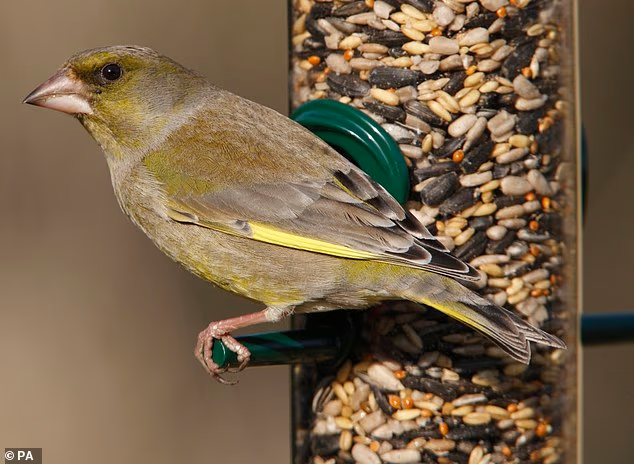
Greenfinch numbers in Britain have plummeted – leaving the species at risk of extinction, the RSPB has warned.
The charity’s Big Garden Birdwatch found that numbers of these beloved garden birds have fallen by 67 per cent since the annual survey began in 1979.
That is equivalent to a loss of two million birds since the mid–1990s, according to some studies.
While the charity maintains it is ‘extremely unlikely’ that the greenfinch will go extinct, the ‘severe population drop’ has put the common bird on the UK Red List for endangered species.
According to the charity, this decline is due to the spread of trichomonosis, a parasitic disease transmitted at bird feeders.
While putting out food for birds can have some benefits, the experts say that there are still risks that they ‘don’t fully understand’.
The RSPB is encouraging gardeners to be careful how they feed birds this summer to avoid spreading the fatal infection.
‘Feeding birds is something millions of us love and value, but the science shows us that birds such as Greenfinches have been affected by the spread of disease at feeder,’ said RSPB’s chief executive, Beccy Speight.
The Greenfinch is now at risk of extinction as numbers plummet by over 67 per cent, according to an RSBP survey
The Big Garden Birdwatch recruited over 650,000 people from across the UK, counting more than nine million birds of over 80 species.
The House sparrow remains the UK’s number one garden species, with an average of 3.57 birds per garden.
The Blue tit came in second, with 3.21 birds per garden, followed by the Starling, which had an average of 2.23 birds per UK garden.
The Woodpigeon and Blackbird rounded out the top five most common garden birds in the UK.
However, the most shocking finding was just how fast the population of some once-common birds have declined due to the spread of the trichomonosis parasite.
The charity warns that this decline has largely been driven by large groups of birds meeting at the feeder.
While the RSPB isn’t asking gardeners to stop feeding birds altogether, the charity is now changing its advice to recommend ‘safe and seasonable’ feeding.
The disease spreads most easily in the warmer months between May 1 and October 31.

The Big Garden Birdwatch recruited over 650,000 people from across the UK, counting more than nine million birds of over 80 species. This shows that the Blue Tit (pictured) remains the most common garden bird
During these times, the RSPB suggests that gardeners stop filling up feeders with peanuts and seeds to prevent too many birds gathering and increasing the risk of infection.
However, small amounts of mealworms or fat balls can still be offered safely throughout the year.
Ms Speight says: ‘We’re not asking people to stop feeding, just to feed in a way that protects birds’ long–term health.’
In addition to reducing feeding, the RSPB also recommends growing bird–friendly plants such as sunflowers and ivy, which attract insects and offer birds a place to hide.
Likewise, the Royal Horticultural Society recommends plants such as field scabious, dog rose, and lavender to attract insects or berry–producing shrubs like hawthorn, elder, and honeysuckle.
Helen Bostock, Royal Horticultural Society Senior Wildlife Expert, says: ‘Garden birds rely heavily on the food, water and shelter found in UK gardens, making them one of the most rewarding forms of wildlife to support at home.
‘Even small changes can make a meaningful difference to local bird populations and with spring now well underway it’s the perfect time to get sowing and planting with birds in mind.’
But it is not only the Greenfinch which has shown a dramatic decline in numbers over recent years.

Starlings, known for their displays called murmurations (pictured), are also at risk of vanishing from the UK. The RSPB warns that numbers are now 85 per cent lower than when the survey began in 1979
While Starlings are still one of the UK’s most common birds, their numbers are 85 per cent lower than when the survey began in 1979.
Prior to the year 2000, they were often the most common bird recorded in the annual survey.
Last year, the RSPB warned that the migratory birds risked vanishing from the UK as sightings hit their lowest point since records began.
The migratory birds, known for their spectacular aerial displays or murmurations, are suffering from the loss of food and appropriate habitats.
Increased use of pesticides is killing the insects on which Starlings feed, while the loss of short and long grass is removing places for them to hide from predators.
Starlings are now a red–listed species in the UK, as studies show the breeding population has fallen by 82 per cent between 1970 and 2022.