Ten years ago, Ceera Washington had just picked up some food at an American Deli restaurant near her home in Stone Mountain, Georgia, when two teen boys sitting in front of the restaurant followed her to her car. One came up behind her and put a gun to her head, robbed her, and then they stole her car.
The boys were soon caught and sent to jail. Washington says the violent incident “hurt me in so many ways. Because I was like, ‘Y’all did that to me? I’m the auntie that everyone loves, who would have tried to help them with an entrepreneurial opportunity or something, so they don’t have to do that.”
“And I didn’t have any protection, had never owned a gun before,” she says. “That traumatic experience made me go and get one.”
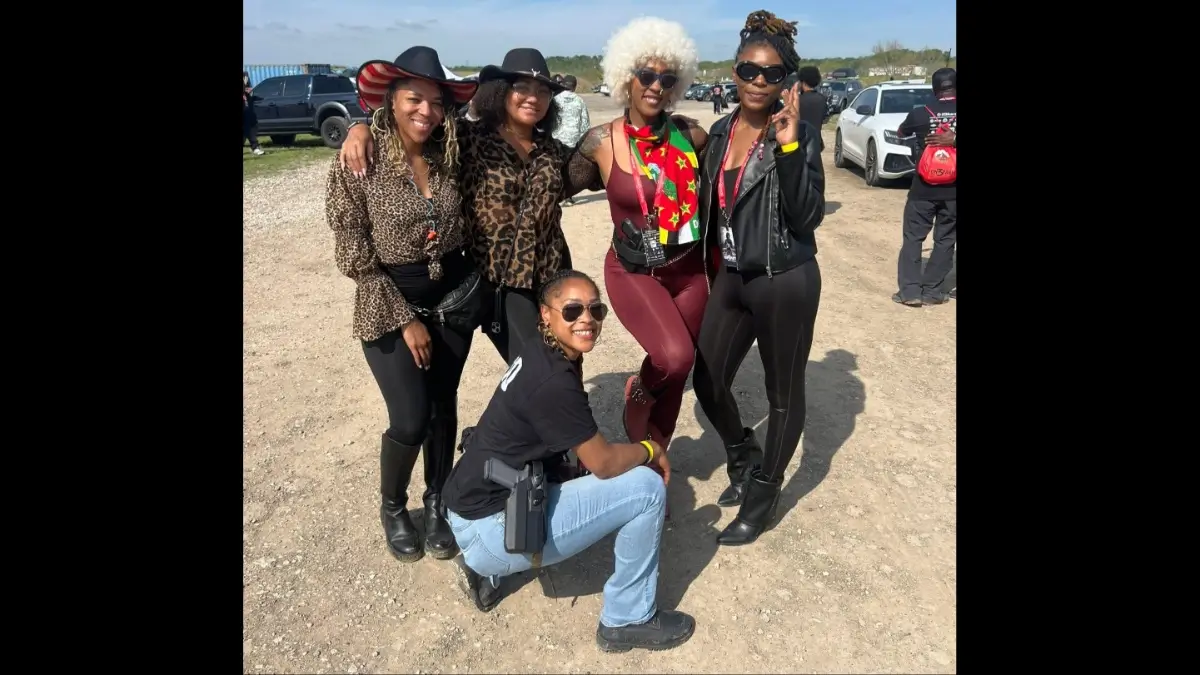
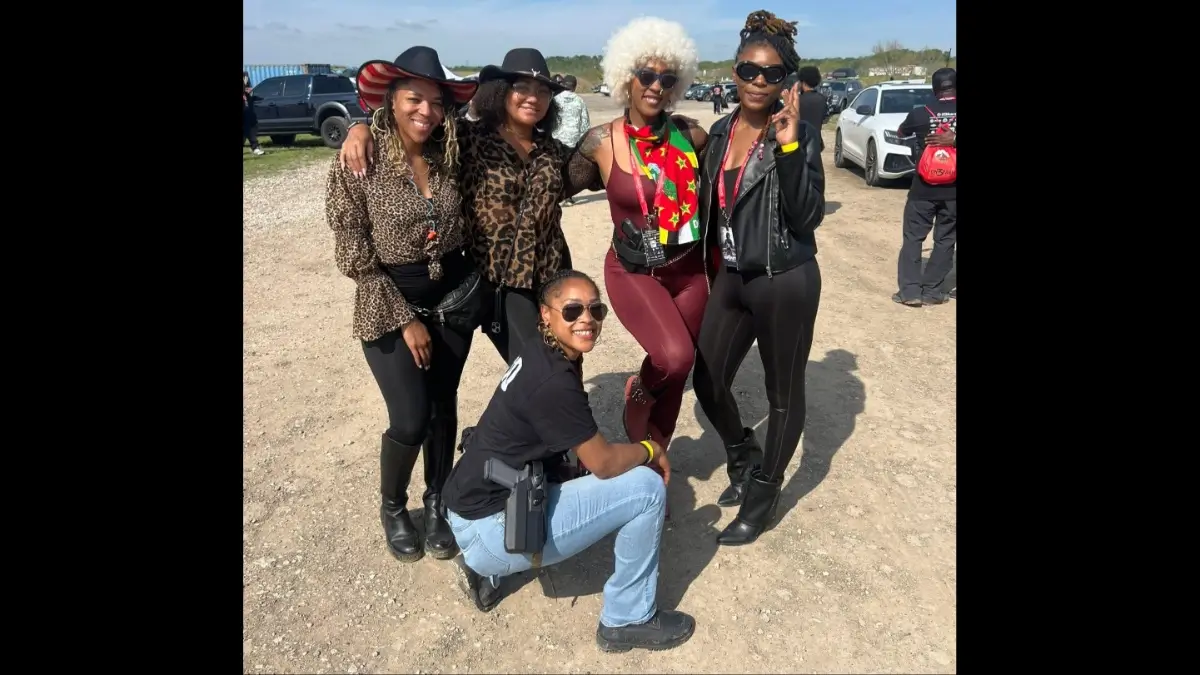
Now 37, Washington, a hairstylist, also runs Queens on a Mission, a firearms training and survival-skills business aimed at Black women and children. A certified firearms instructor since 2019, she teaches the basics of handling, shooting and safely storing guns, with an approach that caters to Black women, combining tactical training with the flair of a fashionista and the camaraderie of a social outing.
Going by “FoxCee Washington” in her training mode, in homage to Pam Grier’s fierce film heroine, and often sporting a short curly white wig and thigh-high boots, she organizes “Brunch and Bullets” outings in Atlanta, Miami, and other cities.
They usually start with a tutorial on firearms fundamentals in her Sprinter party van on the way to a shooting range, where she shows her clients, many of them learning to shoot for the first time, how to handle and shoot semi-automatic pistols and rifles with confidence, while concentrating on making them feel comfortable.
“I like to focus on breath work before they even shoot,” she says. “I talk very softly, put my hand on their shoulder. A lot of men that I’ve trained with just put the gun in your hand and say, ‘Go for it.’ And I’m like, ‘This is not what women need, you know? We’ve got a lot of fear and trauma we’re dealing with. We need calm.’ And I’ve had so many amazing responses. Some women cry because they feel relieved.”
Several hours later, the women end up at an upscale eatery, where they dine on salmon, lobster, omelets and mimosas, get to know each other, do some business networking, and often, share the rough experiences and anxieties that led them to buy a gun.
Pandemic Prompts Black Women To Buy Guns
Washington and the several hundred Black women she has trained over the past decade are part of a national movement that gained serious traction amid the uptick in violent crime and social unrest during the coronavirus pandemic, when gun ownership surged among Americans, and particularly among Black and Hispanic women.
From 2021 to 2024, nearly 30 million adults in the U.S. acquired guns. Of the 11.2 million among them who became new firearm owners, 46% were women, 20% were Black, 20% were Hispanic, and another 5.6% were Hispanic and/or people of color, according to a study by the Harvard Injury Control Research Center published in the Annals of Internal Medicine in March 2026.
A disproportionately large share of historically underrepresented population subgroups became gun owners during that period — 7% of Black adults, most living in urban or suburban areas, became new owners, compared with 3.7% of white adults. Because they’ve long possessed firepower, white people still own the majority of firearms in America, comprising 73% of the country’s 77 million gun owners. Black people now make up about 11% of all gun owners, according to the study.
But Black Americans getting into gun owning are doing it largely for safety reasons, unlike white gun buyers, whose reasons for their first firearm purchase are two or three times more likely to also include hunting and recreational shooting, according to the annual survey of the National Sports Shooting Foundation (NSSF) in 2024.
“A lot of our ladies, they say, ‘I’m not really into it, but the world is dictating that I know how to protect myself,’” says Larry Brown, Jr., the president of the Bass Reeves Gun Club in Atlanta, which was the founding chapter of the National African American Gun Club (NAAGA) in 2015.
The Atlanta club’s membership surged during the pandemic, he said, from 300 to 800 members. Most of the new members who signed up for training classes were women.
“People saw that period as ‘I need to stop playing and know what I’m doing with a gun,’” he said.
NAAGA, which now has more than 100 chapters across the U.S., offers training that supports “safe gun use for self-defense and sportsmanship,” and also advocates for gun rights and “the inalienable right to self-defense for African Americans.” About 40% of its approximately 45,000 members are women.
Female-Focused Self-Defense
Besides becoming more agile and accurate with a gun through target practice and a variety of drills, NAAGA training places a strong emphasis on situational awareness, Brown says. Women learn to assess threat levels while carrying groceries to the car, or perhaps a child, with only one hand available.
“Being at home, when the door is kicked in — where do you keep a gun in your home, and how do you safely retrieve it? Should you? Every situation is different, and you need to quickly assess whether a gun will help or hurt your chances of survival,” he said.
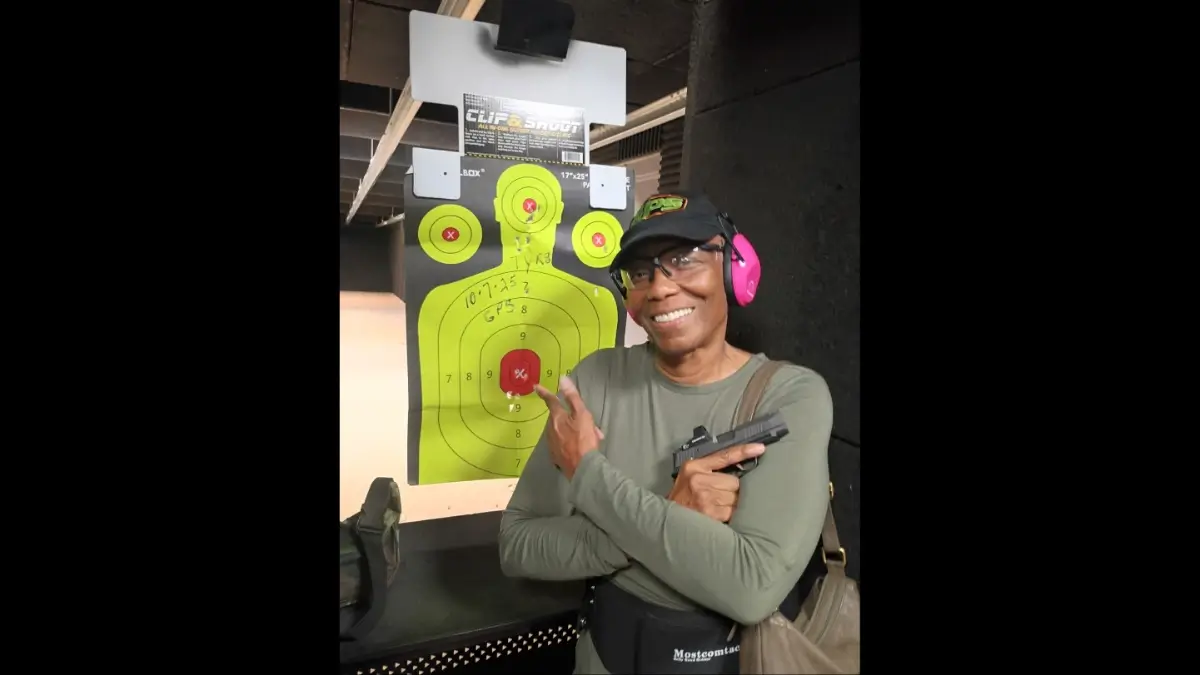
Cohowa Edney, 72, is among those Black women who are upping their game when it comes to firearm literacy in response to just such a frightening scenario.
In 2023, her 51-year-old daughter was shot in the face on her front porch by a man believed to be retaliating against Edney’s son, who had shot and killed a man in their North Philadelphia neighborhood. Her daughter suffered severe head and eye injuries and a stroke that left her partly blind and living with aphasia, which limits her ability to talk and communicate.
Now one of her primary caretakers, Edney lives with her still-recovering daughter and other relatives in a new home in South Philly, where she girds herself against further violence by carrying a 9mm Sig Sauer pistol in her waistband, along with a concealed carry license.
Edney, who retired from the IRS in 2007 on disability for a back injury, has learned how to handle and use her compact semi-automatic handgun at regular training sessions with members of the That Gun Talk Firearms Club in Philadelphia, part of the NAAGA network.
Last Sunday she spent three hours at a gun club meeting, where she practiced shooting at targets from three, five, and seven yards away, one of a series of monthly drills that she says, “helps me to keep sharp in shooting.”
She says though she joined the firearms club at a point when she was seething with anger over her daughter’s shooting, “They’ve helped me to become a responsible gun owner. The right mindset is key. I realized that even though I was angry, I couldn’t look at the target and put a face to it.”
While becoming adept at handling and shooting her gun, she’s learned important safety fundamentals, such as treating all firearms as if they are loaded, never putting her finger on the trigger when she picks up a gun, being hyperaware of her surroundings, and learning how to de-escalate potentially dangerous situations.
She recently joined NAAGA’s female subgroup, Queens of Defense, which sponsors women-only training and social activities and holds monthly calls for members to share self-defense strategies and air concerns.
Last week the group discussed an incident at a Walmart in Fort Lauderdale on July 2 where a Black woman shot a white man during an argument over a parking space. The woman claimed self-defense, but the ongoing investigation could result in criminal charges and jail time.
“She used a gun, and she used it without thinking,” Edney said. “We talked about what to do to never let it get to that point.” They also discussed what to do if one is caught up in an incident where their gun is discharged, including calling 911, putting the gun on the ground, and how to fully cooperate with police while invoking the right to remain silent and asking for a lawyer.
She has also learned first-aid skills, including how to apply a tourniquet if someone is shot and bleeding.
“I never wanted to own a gun,” Edney said, noting that her first boyfriend was killed in a gang war in Philadelphia when she was 16. She says she was also accidentally shot in the leg by her uncle, who was drunk and playing with a gun, when she was 26 and still feels the pain of the bullet lodged near her femur.
“Life has taught me that danger is out there and you have to be prepared. I’ve always been kind of a loner, so it’s nice to being in a group where we help each other out. The idea is we’ll be stronger together.”
Guns Acquired For Protection Also Pose Risks
There is no doubt that Black women in America are overexposed to violence, in their communities and through personal relationships. In comparison with their white counterparts, Black women are three times as likely to be murdered; twice as likely to be killed by an acquaintance; and almost twice as likely to be fatally shot by an intimate partner, according to recent studies reported by The Cut.
But owning and carrying a gun also presents serious risks.
A 2016 study co-authored by Michael Siegel, a public-health researcher at Tufts University, found that a state’s rate of gun ownership accounts for 40 percent of its femicide rate. And with each 10 percent state-level increase in gun ownership, the femicide rate by firearm increases by 10.2 percent.
“To some extent, whether or not the partner has [access to] a gun is the single most important factor in whether the woman is able to live or die,” Siegel said.
The Harvard University study noted that the surge in gun ownership since 2021 means that roughly 7.8 million new gun owners brought their firearms into homes that previously had no guns — exposing 9 million other adults and 6.6 million children to the risks of living in a household with guns. It said, “the risk for violent death, particularly from suicide, unintentional firearm injury, and intimate partner femicide has likely increased substantially.”
Child advocates and public health officials also caution parents about the dangers of keeping a gun at home.
According to a 2023 study by the Centers for Disease Control and Prevention, the majority (85 percent) of 1261 children who died from unintentional firearm injuries between 2003 and 2021 were fatally injured at a house or apartment, including 56 percent in their own home. Approximately half of fatal unintentional firearm injuries to children were inflicted by others; 38 percent were self-inflicted.
About two-thirds of shooters were playing with or showing the firearm to others when it discharged. Overall, firearms used in unintentional injury deaths were often stored loaded and unlocked and were most commonly accessed from nightstands and other sleeping areas.
Gun Industry Catering To And Increasingly Led By Women
Firearms trainers say they try to mitigate those risks by emphasizing the importance of safe gun handling and storage.
The Bass Reeves Gun Club in Atlanta offers free gun safety cable locks and training on safe storage. Their trainers also lead drills on quickly retrieving a gun from a lock box so people can feel confident keeping a loaded gun secured in their homes, rather than within arm’s reach in a nightstand drawer.
Black people pursue more formal gun training before and after they purchase their first gun than adults of other races, and purchase more gun safes, according to the 2024 NSSF report.
Brown, the Atlanta gun club leader, said that Black women in their firearms training classes “are eager to learn and like to listen. They take it all in and actually put in the effort. Women are blank slates. Men often come in with a lot of ego, and they might have some preconceived notions and bad habits that you have to break.”
Washington, who teaches women and children about gun safety, including her own 15-year-old daughter, says she emphasizes the importance of safe storage with her female clients, many of whom are single moms who carry handguns for self-defense.
“A lot of people leave their firearms out or in their purses. When kids want to ask for the phone, they go into your purse. Or a child may come across a firearm at a friend’s house. It’s so easy for them to accidentally pull the trigger, because they’re curious, especially for the teenage boys. So we talk about always keeping the safety on, using a locked safe, and never losing track of where you put your firearm.”
After decades of taking a macho marketing approach that appeals to traditional shooters, who were largely white men, the gun industry is now catering to women who carry guns, offering a feminine spin on gun accessories, from holsters that fit female bodies, conceal carry corsets and leggings, and cross-body bags that look like purses.
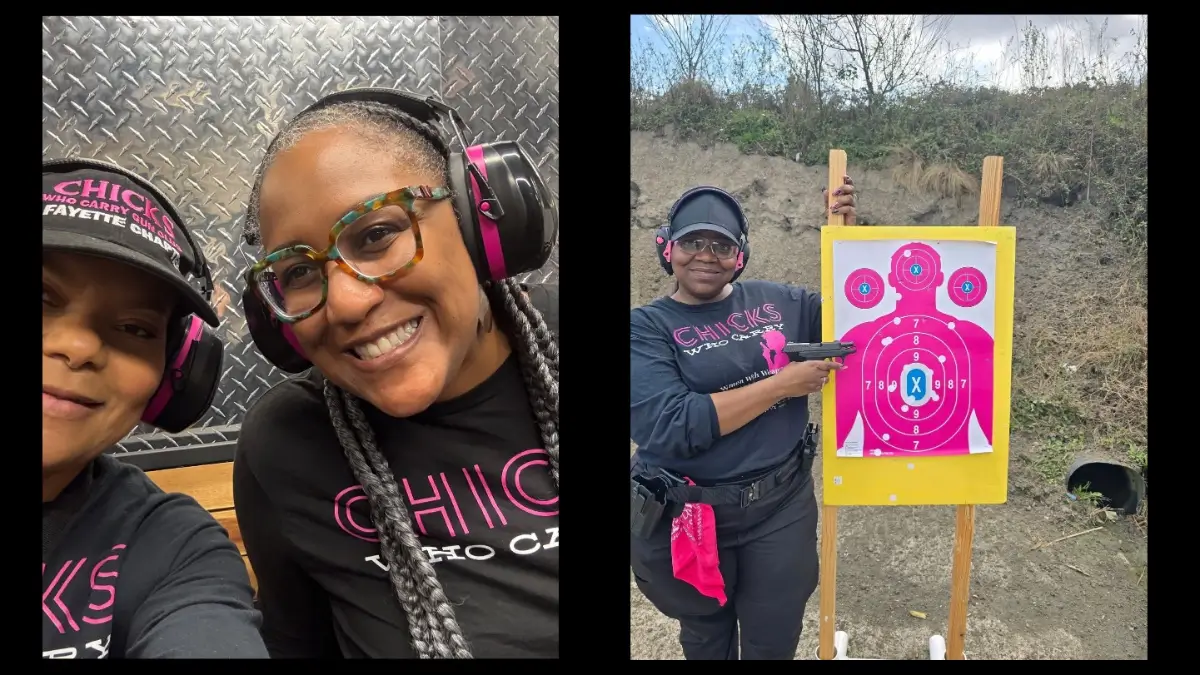
Members of Chicks Who Carry, a social gun club for Black women over 35 with 13 chapters in 11 states, are often decked out in pink-and-black branded shirts and paraphernalia, including pink-striped ear protectors for the shooting range. Their social media pages show members gathering for a range of social “bonding” events outside of gun-related activities, from country line dancing to high teas.
Ne’Shara Arclese, a firearms instructor in Lafayette, Louisiana who goes by GAT Girl, recently demonstrated how to draw and shoot a gun from “The Vixen Crossbody” bag on her Facebook page, noting that it is “feminine, functional and now part of my everyday rotation.”
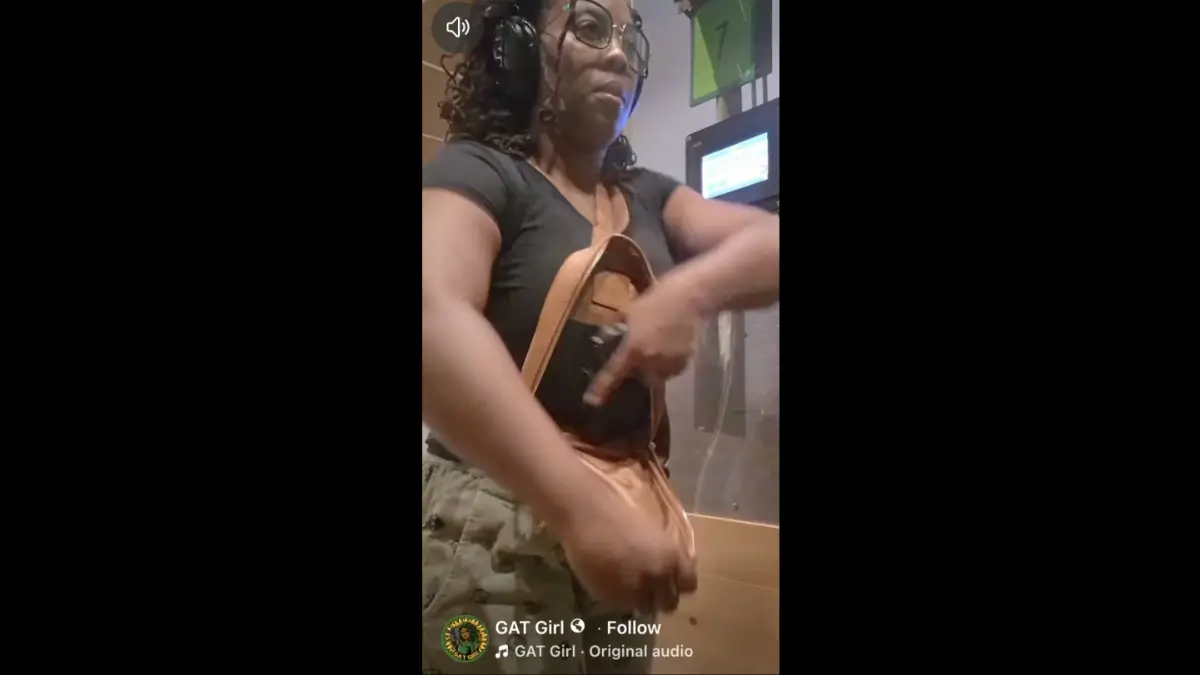
She also posted a frank video about “a negligent discharge that almost made me quit shooting forever. In that moment, I felt fear, embarrassment, and anger. I made a vow that no one who trained with me would ever experience what I did.”
For $125 over six hours, her concealed carry and home defense class covers shooting fundamentals, developing a personal and home protection plan, gear and gadgets, the legal use of force, and reacting to home invasions and other violent encounters.
She says while self-defense training has long been designed for “men in combat,” her classes are designed to help women defend themselves in the places where they actually face threats: “in parking lots, on dates, in our own kitchens and our own backyards. The threat isn’t a soldier. It’s a coworker who won’t take no for an answer. An ex who knows your schedule.”
“When a woman learns how to fire a firearm with discipline, confidence and absolute control, she becomes a force,” Arclese said. “I teach so they don’t have to learn the hard way.”