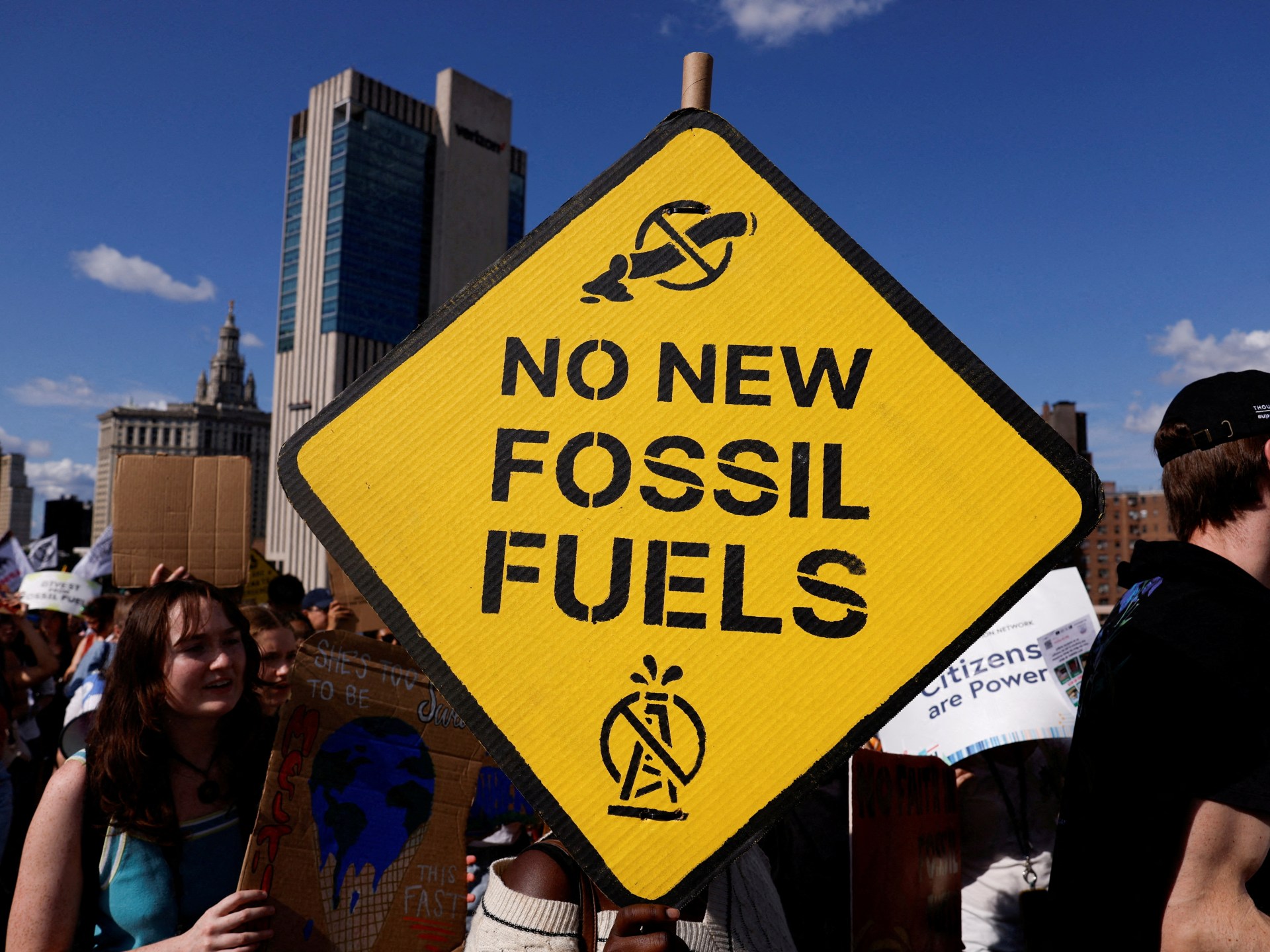
Amnesty International warns fossil fuel infrastructure is a ‘major source of human rights violations’ around the world.
The expansion of fossil fuel infrastructure is threatening billions of lives around the globe, Amnesty International has said in a new report, urging world leaders to halt an “obsession” with energy sources that fuel the climate crisis.
Released on Wednesday, the report found that at least 2 billion people – about one-quarter of the world’s population – live within 5km (3.1 miles) of more than 18,000 fossil fuel infrastructure sites currently in operation.
Recommended Stories
list of 3 itemsend of list
More than 3,500 new sites are also being developed that will affect 135 million more people, Amnesty International chief Agnes Callamard told reporters.
“This ever-expanding industry is endangering billions of lives, irreversibly altering the climate system and destroying critical natural ecosystem[s],” Callamard said at a news conference on the sidelines of the COP30 UN climate conference in Brazil, where the report’s findings were unveiled.
Living near fossil fuel infrastructure – such as oil-and-gas extraction sites and coal mines and plants – has been associated with elevated risks of cancer, asthma, cardiovascular illnesses and other health problems, Amnesty said in its report.
The industry has also been linked to human rights abuses, including killings and enforced disappearances, particularly against environmental activists and Indigenous peoples defending their territories against fossil fuel projects.
Wednesday’s report noted that “despite representing less than 5 percent of the global population, at least 16.1 percent of known global fossil fuel infrastructure is sited on Indigenous territories” around the world.
“We are presenting those findings here at COP to warn of the current harm, to warn of the immense damage that the fossil fuel obsession is doing to many peoples and to warn against what they are going to do to future generations,” Callamard said.
“The age of fossil fuel must end now. It is a major source of human rights violations. It may be one of the main source[s] of human rights violations historically speaking.”
World leaders, human rights activists, climate experts and others have been gathering in the Brazilian city of Belem for COP30, the UN’s annual climate conference.
While countries have pledged to tackle the climate crisis, observers have questioned how they plan to meet their commitments to reduce greenhouse gas emissions while fossil fuel projects continue to expand.
Indigenous activists also stormed the summit this week to demand that their voices be heard in the discussions.
Kumi Naidoo, president of the Fossil Fuel Non-Proliferation Treaty campaign, called on world leaders to leave COP30 with “a clear statement that you are going to support a roadmap for the phase-out of fossil fuels”.
“It’s high time that we recognise that, for 30 years … we’ve been mopping up the floor and treating the symptoms of the problem without turning off the tap,” Naidoo said during Wednesday’s news conference.
“Let’s be very clear and say it over and over again, that the primary cause of the climate emergency is our addiction and our dependency on fossil fuels.”
According to the UN, coal, oil and gas “are by far the largest contributor[s] to global climate change”, responsible for about 68 percent of the world’s greenhouse gas emissions.
Meanwhile, more than 80 percent of people around the globe want their leaders to take stronger action to mitigate the effects of the climate crisis, according to a 2024 UN Development Programme survey.
Seventy-two percent of people also said they supported a rapid phase-out of fossil fuels, the same survey found.