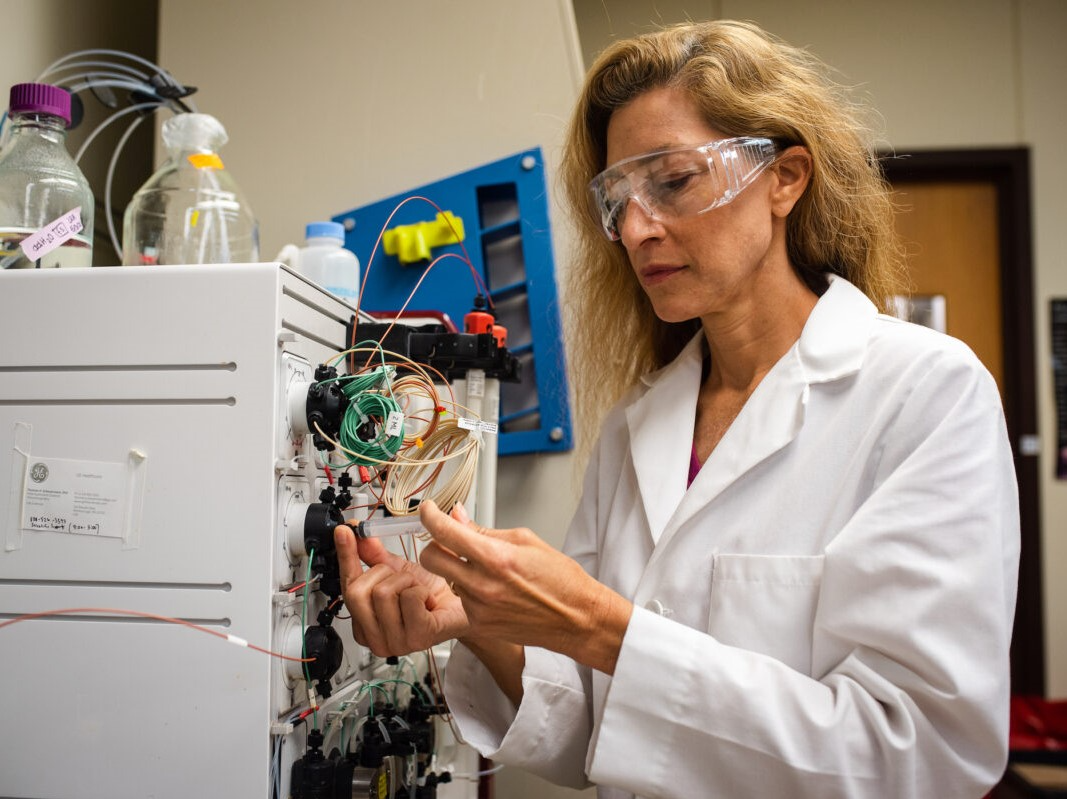
AUSTIN (KXAN) — Researchers at Texas Biologics at The University of Texas at Austin recently made a discovery that they believe could “represent a paradigm shift” in virus treatment, according to the university.
UT researchers, working with international scientists, have developed a new type of antibody with a modified structure that can outsmart human cytomegalovirus (HCMV) and neutralize its ability to evade the immune system, according to a press release from Texas Biologics.
Texas Biologics described HCMV as a “common but overlooked virus that poses serious risks to vulnerable populations, including people with compromised immune systems.” According to the Centers for Disease Control and Prevention, the virus is the most infectious cause of birth defects in the United States.
A healthy person’s immune system usually keeps the virus from causing illness, according to the CDC. For those it does affect, like organ transplant recipients, cancer patients and newborns, it’s hard to treat because it can “evade the immune system,” per Texas Biologics.
However, the research team developed a new type of antibody with a modified structure that can outsmart the virus and neutralize its ability to evade the immune system, according to the release. The team includes leading scientists and engineers from the University of Freiburg and Cardiff University.
“Our engineered antibodies are like a lock that the virus can’t pick,” said Jennifer Maynard, a professor in the Cockrell School of Engineering’s McKetta Department of Chemical Engineering and one of the lead authors on the new research published in Cell. “They retain their ability to activate the immune system but are no longer vulnerable to the virus’s tricks.”
The virus is widespread and has global infection rates above 80%, according to estimates from the National Library of Medicine.
Texas Biologic said that despite the prevalence of HCMV, there’s no vaccine for it, and recent efforts to develop one stalled. Current treatments rely on antiviral drugs that can have “toxic side effects and lead to drug resistance, creating an urgent need for safer and more effective therapies,” according to Texas Biologic.
HCMV spreads from person to person through body fluids, and like all herpesviruses, such as canker sores and chicken pox, it stays in the body for life after infection.
But in the UT research teams’ experiments, the modified antibody prevented the virus from spreading between cells, which researchers said is a feature of HCMV that makes it difficult to control. Those antibodies “significantly reduced viral dissemination in infected cell cultures, showing the ability to slow the spread of the virus,” the release said.
“It’s like a tug-of-war between the virus and the immune system,” said Ahlam N. Qerqez, lead author of the study, a former doctoral student in Maynard’s lab, and now a senior scientist at Denali Therapeutics. “The virus has evolved clever strategies to pull antibodies away from their intended targets, making it harder for the immune system to do its job.”
HCMV is difficult to treat because it produces special proteins (vFcγRs) that interfere with the body’s natural defence mechanism, Texas Biologics explained. Those proteins bind to antibodies, which are immune system molecules that usually help fight infections, and prevent them from activating immune cells that clear out infected cells (these immune cells are called natural killer, or NK cells). But HCMV’s vFcγRs essentially “hijack” antibodies, rendering them ineffective, Texas Biologics explained.
The antibodies engineered by the research team were designed to avoid HCMV’s vFcγRs while still activating NK cells to attack infected cells, according to the team.
Texas Biologics said the team “focused on a specific type of antibody called IgG1, which plays a key role in fighting infections. By studying how HCMV interacts with IgG1, the researchers identified the exact regions of the antibody that the virus targets and altered them to prevent the virus from binding.”
According to Texas Biologics, the antibody engineering techniques developed by the team could be applied to other viruses that use similar immune evasion strategies, such as other herpesviruses and certain bacterial infections. The findings also highlight the importance of targeting infected cells — not just the virus itself — in developing effective treatments.
“This work represents a paradigm shift in how we think about antiviral therapies,” said Jason McLellan, a professor in the College of Natural Sciences’ Department of Molecular Biosciences at UT and co-author of the paper. “Instead of just trying to neutralize the virus, we’re focusing on empowering the immune system to clear infected cells. It’s a more holistic approach that could lead to better patient outcomes.”
The engineered proteins will require several more rounds of testing before they can be used in clinical settings, according to Texas Biologics. The team is also investigating combining their approach with other therapies, such as antiviral drugs or vaccines, to create a comprehensive treatment strategy.
Other team members included: George Georgiou, Sumit Pareek, George Delidakis, Amjad Chowdhury and Annalee W. Nguyen of the McKetta Department of Chemical Engineering; Alison G. Lee, Kelli Hager, Akaash K. Mishra, Mica Cabrera and Truong Nguyen of the Department of Molecular Biosciences at UT; Kirsten Bentley, Lauren Kerr-Jones and Richard Stanton of Cardiff University’s School of Medicine; and Katja Hoffmann, Rebecca L. Göttler, Philipp Kolb and Hartmut Hengel of the University of Freiburg.