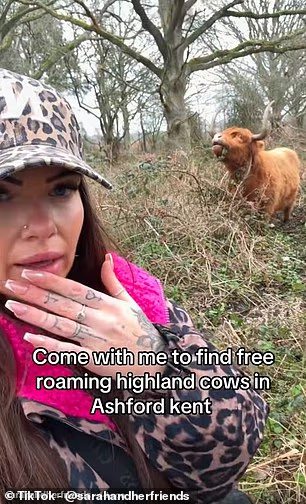
A flock of Highland cows have become unexpected social media stars, but wildlife experts are urging Brits to keep their distance.
The rustic cattle can be found ‘free grazing’ on the Hothfield Heathlands Nature Reserve near Ashford, Kent.
However Kent Wildlife Trust, which manages the site, says a recent viral video has led to a surge of TikTokers trying to film themselves with the adorable animals.
Animal experts have now issued a stark warning to anyone considering capturing a close-up of the star cattle, saying: ‘These are not pets!’.
Several TikTok clips show visitors walking up to the cattle, leaving the path to stand with them as they graze, and even trying to pet them.
As Kent Wildlife Trust points out, these videos often show the cows in clear signs of distress – shaking their horns as the filming influencers approach.
Jessica Allam, Senior Wilder Grazing Ranger at Kent Wildlife Trust, told the Daily Mail: ‘Please do enjoy walking around the site, but just give them some space.
‘We’re asking people to remember that these are not pets – they are conservation grazers doing an important job.’

Wildlife experts have urged visitors to stay well back from a herd of Highland cows in Ashford, Kent, as a surge of TikTokers descends on the site
On TikTok, videos featuring the stunning Highland cows in Hothfield Heathlands have gone viral, with some racking up hundreds of thousands of views.
As one TikToker visiting the site wrote in her post: ‘We found some Highland cows in Kent, this made my morning! They was so friendly and calm too.’
As commenters gushed over the majestic animals, the popularity of these posts has driven a surge in visitors to the nature sanctuary.
Ms Allam says there were over 50 cars filling the small car park yesterday afternoon, while a normal weekday might only bring three or four visitors at a time.
While the conservation expert says it has been ‘lovely’ to see so many people taking an interest in nature, the influx of eager fans has also had a downside for the animals.
While the eager visitors might mean well, wildlife experts warn that the cows don’t appreciate being touched or ‘petted’ under any circumstances.
‘They’re not quite semi-wild, but they’re pretty much untouched,’ explains Ms Allam.
Because Highland cows are so hardy, they spend their entire lives outside and are almost never handled by humans unless they need medical treatment.

Wildlife experts say that visitors are welcome to enjoy the site and see the cattle, but should remain at least 10 metres back from the large animals, and allow them to continue grazing undisturbed
Ms Allam says: ‘When an animal hasn’t been handled, it is always a shock and quite stressful for them for somebody to suddenly reach out to them.
‘Animals don’t even touch each other unless they’re friends. This is like a stranger walking up to you and trying to pet your head.’
That increased stress doesn’t just disturb the animal in the moment, but also has the risk of creating more long-term issues.
Stress can lead to reduced grazing and weight loss, increased risk of injury from running, and increasingly defensive behaviour.
Anne-Marie Carruthers, Breed Secretary of the Highland Cattle Society, told the Daily Mail: ‘Approaching free grazing cattle is considered harmful because it stresses the animals, can trigger defensive behaviour, and disrupts their normal grazing patterns.’
In addition to being stressful for the cattle, antagonising a semi-wild, half-tonne animal while it’s trying to eat can also be dangerous for the humans involved.
Several TikTok videos show the cattle shaking their horns at approaching visitors, which is their way of warning people to give them more space.
Ms Allam says: ‘They have massive horns and they know how to use them.

The Highland cattle are almost never handled by humans, so touching them can be very stressful – even if it looks like they are trying to be friendly
‘It can be dangerous, so we ask that people keep a distance of 10 metres or 10 big steps.’
Kent Wildlife Trust also asks that visitors refrain from approaching, touching, or feeding the animals and that dogs be kept under control on a short lead.
If the animal does approach, visitors are advised to move away calmly without running.
While the Highland cows at Hothfield Heathlands may be extremely cute, Kent Wildlife Trust stresses that they are actually doing an important job.
The cows are essentially a natural management method to keep encroaching trees under control and ensure a diversity of plants and animal species.
Hothfield Heathlands is one of Kent’s very last valley bogs and heathland ecosystems.
To maintain this unique environment, conservationists need to keep out the fast-growing birch trees that would otherwise suck up all the water and dry out the bog.
Thankfully, Highland cattle love eating the new birch shoots as they emerge, naturally keeping the bog clear and healthy.
Likewise, in the woodland itself, the cows use their large horns to pull down small trees to reach the tasty leaves at the top.
This ensures that the woods have a wide range of ages of plants, which helps birds and other species thrive.
Ms Allam says: ‘We really enjoy seeing people learning about what the cows are doing, but just give them some space.
‘Let them do what they need to do, because they are working animals at the end of the day.’