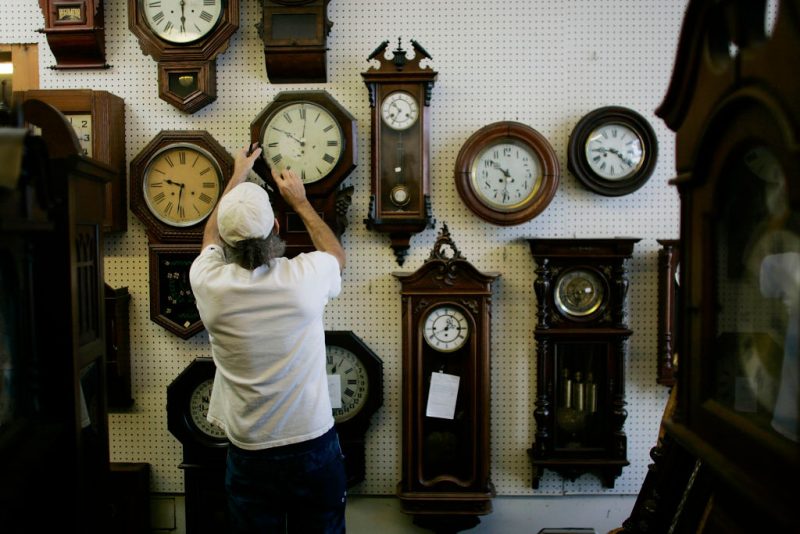
Roughly a month ago, most Americans lost an hour of precious Sunday sleep as daylight saving time began and our clocks jumped forward. The U.S. again could be on the precipice of ending what some call an “antiquated tradition.”
The Senate Committee on Commerce, Science, and Transportation is scheduled to hold a hearing — titled “If I Could Turn Back Time: Should We Lock The Clock?” — on Thursday to “examine the various issues around whether the country should continue ‘springing forward’ and ‘falling back’ each year with time.”
“The antiquated tradition of changing our clocks has a very real impact on Americans’ businesses, health, and happiness, particularly for parents of young children,” committee chairman Sen. Ted Cruz (R-Texas) said in a statement. “People on both sides of the aisle have supported previous legislative efforts to ‘lock the clock,’ and understanding the implications of the time change is a priority for me as Chairman. I’m looking forward to a thoughtful discussion on the benefits and challenges to sticking with one national method for keeping time.”
Witnesses scheduled to appear during the hearing include representatives from the Insurance Institute for Highway Safety, the American Academy of Sleep Medicine, the National Golf Course Owners Association, and the Lock the Clock Movement — all of which have previously expressed interest in the changing of the clocks.
While this is a hearing and not the signing of a bill, it could be a sign that Congress may take action on daylight saving time-related legislation.
Companion bills to make daylight saving time permanent have been introduced in Congress, including one bill referred to Cruz’s committee, while another bill would give states the power to observe daylight saving year-round — more on that in a moment.
The U.S. has had a back-and-forth relationship with daylight saving time for over a century. It started as a wartime measure in 1918, only to be rolled back after a year. It returned in 1942 during World War II but was vastly more chaotic than it is today. Seasonal clock changes were enacted in 1966, but seven years later, the U.S. again observed year-round daylight saving time due to a national energy crisis.
Americans broadly supported the practice at first, until dark winter mornings prompted safety concerns, especially among parents. The nation returned to twice-a-year clock changes in 1974 and has largely stayed on the same schedule.
Over the last several years, there have been numerous efforts to put the U.S. back on permanent daylight saving time, a move with which many health experts disagree. They instead recommend permanent standard time, which would provide us more sunlight in the mornings — a factor that can positively impact our sleep and circadian rhythm, which have further been connected to other health outcomes.
States that have proposed or enacted legislation targeting the changing of the clocks have generally split between locking them on permanent standard time or daylight saving time.
Only two states observe year-round standard time, an option afforded them by Congress’ 1966 Uniform Time Act. States cannot opt for permanent daylight saving time. In most cases, the states standing on that side of the clock have introduced or passed measures calling on Congress to enact permanent daylight saving time or outlining conditions in which the state would observe daylight saving time permanently (typically based on actions by Congress or neighboring states).
A House bill to give states the power to observe daylight saving time all year has been introduced and referred to committee.
Multiple other states, however, have seen legislation introduced during their current legislative session to put the state on permanent standard time or exempt it from daylight saving time. None have passed as of early April.
Any current widespread action regarding daylight saving time would depend on Congress taking action. President Donald Trump previously expressed support for ending daylight saving time but signaled in March that he would not push for it, calling it “a 50/50 issue.”
“It’s a 50/50 issue, and if something is a 50/50 issue, it’s hard to get excited about it,” Trump told reporters in the Oval Office. “It’s something I can do, but a lot of people like it one way. A lot of people like it the other way. It’s very even. And usually, I find when that’s the case, what else do we have to do?”
The Senate Committee on Commerce, Science, and Transportation hearing on daylight saving time is scheduled for 10 a.m. ET on Thursday, April 10.