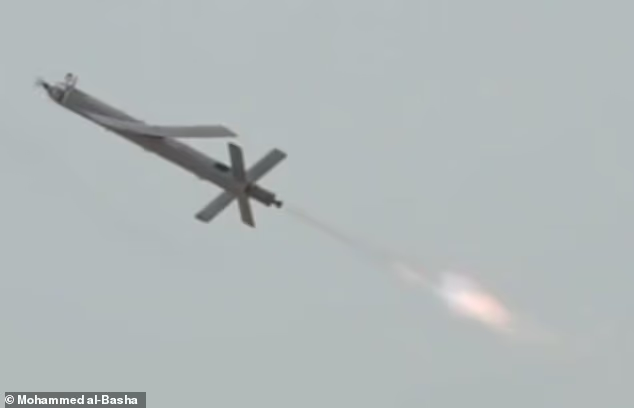
Iran has unveiled a stealthier version of its infamous Shahed ‘kamikaze’ drone, potentially making it harder for air defense systems to detect.
Images of the modified Shahed-101 loitering munition were shared Tuesday by Middle East security analyst Mohammed al-Basha, who highlighted several structural changes suggesting the drone may operate more quietly than earlier variants.
Drones have emerged as one of the most influential weapons in the Middle East conflict, allowing forces to carry out long-range attacks at relatively low cost while overwhelming air defenses.
Unlike most Shahed drones, which rely on rear-mounted gasoline engines that produce a distinctive buzzing sound during flight, the new version appears to feature a nose-mounted propeller powered by an electric motor.
This configuration pulls the aircraft through the air rather than pushing it from the rear, a design change that could reduce both acoustic and thermal signatures and potentially make the drone more difficult for radar and infrared detection systems to detect.
The aircraft also appears to feature a rocket booster mounted at the rear of the fuselage, which helps accelerate the drone during launch before detaching once it reaches operational speed.
The development comes as Secretary of War Pete Hegseth warned that Tuesday could be the ‘most intense day’ of US strikes.
Hegseth, who made the comments during a press briefing, also said that ‘Iran stands alone, and they are badly losing.’
Images of the modified Shahed-101 loitering munition were shared Tuesday by Middle East security analyst Mohammed al-Basha, who highlighted several structural changes suggesting the drone may operate more quietly than earlier variants

Unlike most drones in the Shahed family, which rely on rear-mounted gasoline engines that produce a distinctive buzzing sound during flight, the new version appears to feature a nose-mounted propeller powered by an electric motor
The Shahed-101 is an autonomous, electric-powered loitering munition designed to carry a high-explosive warhead.
It can remain in the battlespace while searching for targets before striking by flying directly into them and detonating, using a rocket-assisted launch system to take off.
The drone is designed to strike enemy targets while remaining difficult to detect.
Its small size and limited radar signature make it harder for conventional air defense systems, including surface-to-air missiles and radar networks designed to track larger aircraft, to identify and intercept.
The Shahed-101 is also characterized by low acoustic and thermal signatures, further complicating detection by traditional surveillance systems.
Unlike many other Shahed models that rely on gasoline piston engines, the Shahed-101 uses an electric motor, a design choice that significantly reduces noise and makes the drone difficult to hear from the ground.
The modified version appears to feature several design tweaks intended to make the drone more difficult to detect, Defence Blog reported.
Most notably, analysts say the aircraft now uses a nose-mounted propeller powered by an electric motor rather than the rear-mounted propulsion systems typically seen on other Shahed drones.

Iran has revealed the new version of the Shahed-101 drone as the US and Israel enter the 1tth day of strikes
This configuration pulls the drone through the air instead of pushing it from behind, a change that could alter its aerodynamic profile and potentially reduce noise during flight.
The electric propulsion system may also produce a smaller thermal signature compared with gasoline engines, which could make the drone harder for infrared sensors and other detection systems to identify.
Despite these changes, the overall airframe remains largely unchanged, retaining the fixed-wing design and X-shaped tail configuration commonly seen across Iran’s Shahed drone family.
The modification highlights Iran’s continued efforts to refine its one-way attack drones, which have been widely used in regional conflicts and by Russia in its war against Ukraine.
Analysts say the design changes in the new version could influence how the drone is detected and deployed on the battlefield.