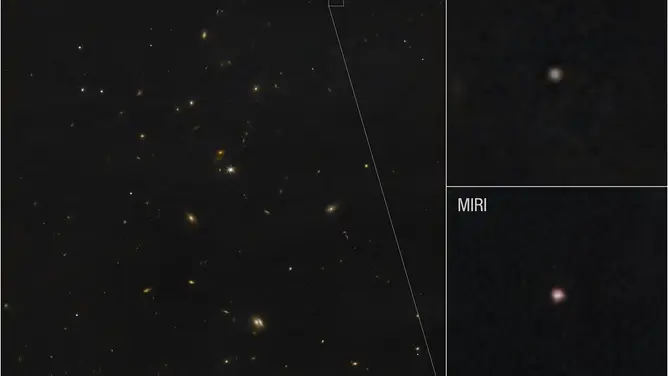
A NASA asteroid tracker explains how scientists are calculating the risk to Earth from asteroid 2024 YR4.
There’s some welcome news for astronomers as a threatening asteroid is no longer expected to impact the moon.
For a brief time, the space rock called “Asteroid 2024 YR4” was considered to be the most dangerous asteroid discovered in the last 20 years, after its discovery in late 2024.
SMASHING SUCCESS: NASA’S FIRST PLANETARY DEFENSE TEST CHANGES ASTEROID’S ORBIT BY 32 MINUTES
In early 2025, there was a slight chance it could impact Earth, but with additional observations over time, NASA concluded the object would pose no significant impact risk to the planet.
According to NASA, about once a year, a car-sized asteroid hits Earth’s atmosphere and burns up before reaching the ground.
New data suggests that Asteroid 2024 YR4 will not impact the moon.
(NASA / FOX Weather)
About every 2,000 years, a meteoroid the size of a football field hits Earth, causing significant damage. Once every few million years, an object large enough to threaten Earth’s civilization comes along.
Typically, space rocks smaller than about 82 feet will most likely burn up as they enter the Earth’s atmosphere and cause little or no damage.
Using data from the James Webb Space Telescope on Feb. 18 and 26, experts at NASA’s Center for Near-Earth Object Studies have since refined their course of the asteroid and completely ruled out the chance of a lunar impact in 2032.
TOP 10 MUST-SEE IMAGES FROM NASA’S JAMES WEBB SPACE TELESCOPE
Since the spring of 2025, the asteroid has been unobservable from both Earth and space-based observations. It was assumed that it would not be visible again until 2028.
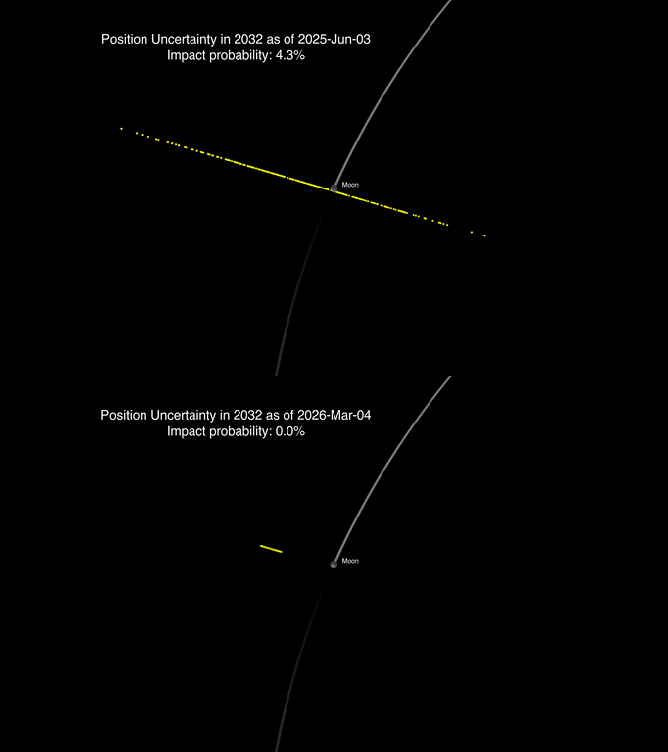
A visual of asteroid 2024 YR4’s potential locations on December 22, 2032.
(NASA/JPL Center for Near-Earth Object Studies)
The James Webb Space Telescope delivered the faintest-ever observations of the asteroid, according to NASA.
SEE IT: JAMES WEBB TELESCOPE CAPTURES DETAILED IMAGES OF DYING STAR
Overall, there was only a 4.3% chance of a lunar impact.