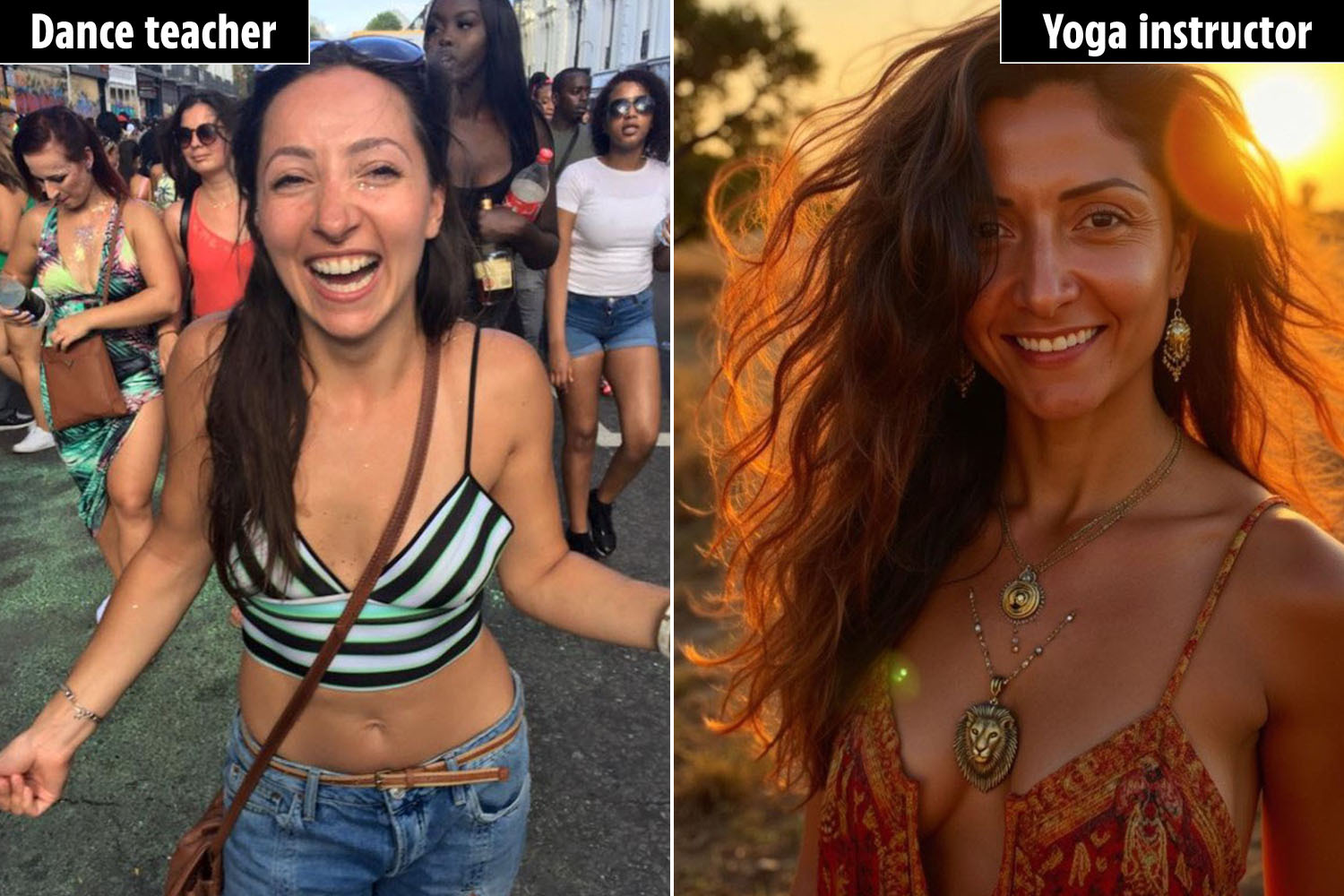
A DANCE teacher who claims she had to stop working after an “emotional meltdown” at a yoga retreat has won a court fight for compensation.
Melissa Revell paid out £2,250 for a teacher training course in 2019 in Goa run by Brit yoga guru Jamie Clarke and Mexican instructor Dulce Aguilar.
She claimed the intense self-exploration exercises brought on a breakdown which has left her unable to work or look after herself.
The dance teacher and personal trainer said her weight ballooned from a size 6 to a size 16 and sued The Yoga People International Ltd for £200,000 compensation.
Revell has now won her battle after Clarke told the High Court the company has dropped its defence over liability for what happened to her.
It means she is in line for a payout but the amount has not been confirmed yet.


Revell previously claimed the course involved unadvertised psychological exercises, which led to her being “re-traumatised” when memories relating to her being adopted were triggered.
She said that as a result, she went from being fit, active and working to being “not able to care for herself”.
But at the time, lawyers for the yoga company insisted Clarke, Aguilar and its other staff did nothing wrong.
They also denied there was any “psychological” element to the training and say the emotional collapse Revell claims to have suffered was not a foreseeable risk of a yoga course.
The High Court was told she paid for the 200-hour training course in September and October 2019, with the aim of becoming a qualified teacher of Ashtanga yoga.
But she ended up leaving India early after having a meltdown triggered by an exercise in exploring childhood memories, her barrister said.
He added: “On 24 September 2019, Ms Aguilar instructed the claimant and the other students on the course to participate in a somatic touch session led by her.
“Ms Aguilar explained that the purpose of the exercise was for the students to explore their childhood memories and their relationship with their parents so that they could forgive them for things they had done, heal and move forward.
“As part of the exercise, the students were instructed to pair up and sit in a circle with one person sitting in front of the other. They were told to take turns in their pairs to hold the other person.
“Whilst holding the other person, they were instructed to imagine that the other person was their parent and massage their shoulders, hold their hands and stroke their hair. Ms Aguilar said words such as ‘I love you, you are my teacher, my carer, my nurturer and I forgive you’.”
The barrister said following the session, Revell “started shaking and feeling ill” and was gripped with “overwhelming anxiety”.
Revell reportedly spoke with Clarke about how she was feeling and was offered one-to-one therapy sessions back in the UK as he “could not spend all his time with one student”.
Her lawyer said this “dismissive response” along with “coercive pressure to participate” in further “psychology focused exercises” caused Revell to “become very ill” and fly home.
She was subsequently diagnosed with “significant and severe complex PTSD and comorbid depersonalisation/derealisation disorder” and “functional neurological disorder”, the court heard.
Her barrister said: “She remains significantly incapacitated by her injuries. Her long-term relationship with her partner failed as a result of her psychological illness.
“Now she lives alone and leads an extremely reclusive, impoverished and dysfunctional life.
“She does not go out much. She is not able to care for herself. She cannot cook or clean or do grocery shopping. Her home is untidy and dirty as a result. She struggles with self-care.
“She can go for days without changing her clothes or washing her hair. She doesn’t eat properly. As she is unable to exercise, she has gained weight; she used to be a UK size 6-8 and now is a size 14-16.”
Although she had a history of mental health problems going back to to her childhood, she had been in good mental and physical health between 2013 to 2014 and the yoga course, he added.
The court was also told there was no warning about “possible re-traumatisation”.
But the company’s lawyers argued there was no psychological or psychotherapy element to the course.
It also claimed Revell attended a party where students danced and sang karaoke on a beach while in India, with staff unaware of her alleged symptoms.
The judge made a so-called “unless order” directing the company’s defence on liability be struck out unless Clarke confirmed by the end of November 17 he intended to personally turn up and fight his company’s case in court in the absence of lawyers.


But lawyers for Revell said Clarke, on behalf of the company, had confirmed it would not be attending trial, meaning judgment will be entered for the claimant on liability, with damages to be assessed.
The value of her claim will now be assessed during the next stage of the case.