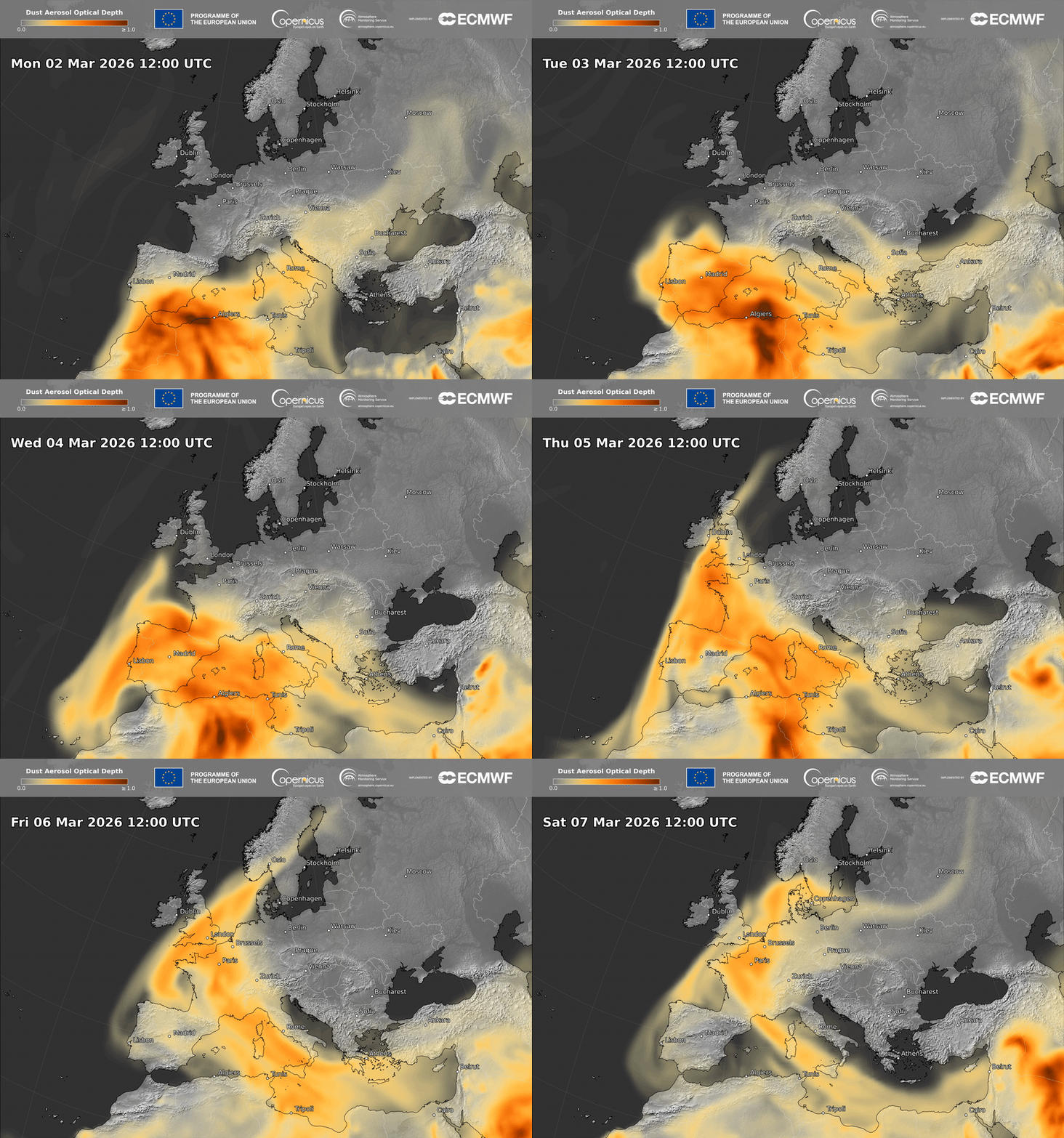
Hopefully you were able to get out and enjoy the sunshine yesterday – as Britain is set to be hit by ‘blood rain’ over the coming hours.
Dust made up of sand and mineral particles has been blown from the Sahara Desert in North Africa and transported thousands of miles towards the UK.
The plume has already brought fiery sunsets and hazy skies to parts of the country.
But with downpours forecast today it could also mean ‘blood rain’ will fall from the heavens, leaving rusty smears on cars, windows and garden furniture.
This rain, which takes on a reddish hue, is not an immediate cause for concern from a health perspective, the Met Office said.
But it could be worth holding off washing your car until it has passed.
‘Forecasts of rain, particularly over England on Friday, may produce “blood rain”,’ Dr Claire Ryder, Associate Professor in Mineral Dust Processes at the University of Reading, said.
‘As rain falls through air thick with Saharan dust, it picks up tiny particles of reddish–brown sand, leaving rusty orange smears on cars, windows and garden furniture. If your car looks like it’s been lightly coated in mud after a shower this week, this is why.’

Dust made up of sand and mineral particles has been blown from the Sahara Desert in North Africa and transported thousands of miles towards the UK

The sun sets behind the rigging of boats moored in London as clouds of Saharan dust, made up of fine sand and mineral particles lifted from the deserts of North Africa, drifts north over much of the country
Satellite images show the dust plume first ‘lifted off’ north–west Africa around February 27, swept up by a weather front moving through the region.
Once it is lifted from the ground by strong winds, clouds of dust can reach very high altitudes and be transported worldwide, covering thousands of miles.
It has since been carried northwards over France and southern England, triggering deep gold, amber and burnt orange sunsets.
While there has already been some rain across northern and western England and Wales earlier this morning, the Met Office predicts further downpours in southeast England later this afternoon.
Concentrations of dust are expected to remain relatively low, meaning rainfall itself is unlikely to appear noticeably red, the organisation said.
‘Instead, where dust mixes in, the impact is more likely to be seen after showers have passed, with a light film of yellowish or brownish residue on surfaces,’ it explained in a blog post.
The weather service said ‘genuinely red rain is extremely rare’, adding: ‘While dust–laden rain is not uncommon in the UK, the concentration of particles is usually low, resulting in rain that looks normal to the naked eye.’
Forecasters also said the effects of dust–laden rain this week may include slightly reduced visibility at higher altitudes.

While red skies and blood rain might sound rather apocalyptic, the only likely lasting impact will be on cars

Residential buildings in Wimbledon, southwest London, covered in a haze at sunrise thanks to the dust plume
Recent examples of visible ‘blood rain’ include in the early 2000s in Kerala, India, where rain containing unusually high concentrations of red particles stained clothes and surfaces.
Another in Burgos in Spain in 2022 saw people wake up to find cars covered in Saharan sand.
Forecasts suggest the dust could linger until late on Sunday, when it will eventually have dissipated.
Meanwhile, the Department for Environment, Food & Rural Affairs (Defra) have warned of ‘moderate to very high’ air pollution levels for the south and east of England ‘as elevated Saharan dust is drawn northwards across parts of the UK’.
In Defra’s advice for ‘high’ and ‘very high’ levels, it warns that short–term exposure to air pollution over hours or days can cause a range of health effects.
These include coughing, chest tightness and pain, difficulty breathing, eye, nose and throat irritation and worsening of asthma symptoms.
It could also trigger the worsening of heart–related symptoms, such as heart palpitations, and worsening of chronic obstructive pulmonary disease (COPD) symptoms.
People are advised to reduce their exposure to air pollution, especially if they are experiencing symptoms – and speak to their doctor or nurse if they have new symptoms, their symptoms get worse or their symptoms do not get better after a week.

St. Paul’s Cathedral and Tower Bridge visible through orange hues, as blood rain hit the capital in 2022

Defra have warned of ‘moderate to very high’ air pollution levels for the south and east of England
For adults and children with lung or heart conditions, and older people, Defra says: ‘You should adapt physically demanding activities outdoors, especially if your symptoms get worse.
‘Follow your agreed management plan if you have one – for example, an asthma action plan. Ask your doctor or nurse for a plan if you do not have one.’
It comes as temperatures hit 19.2C (66.6F) at Northolt in West London today, which made it the warmest day of 2026 so far – beating the 18.7C (65.6F) last Wednesday.
Explaining today’s forecast Alex Burkill, meteorologist at the Met Office, said: ‘We have further rain coming in from the south and so for much of the day across a large chunk of England and Wales it is going to be cloudy and yes, there will be some rain at times.
‘It does look like it is going to spread across some southern and eastern parts as we go through the afternoon.’